P-351. Mastering HIV: The Full Spectrum of Training During ID Fellowship
Douglas S Kepko, Mohammad Madhee Sobhanie, Susan L Koletar, Ashley Lipps

TL;DR
This study examines how Infectious Disease fellows at OSU manage newly diagnosed HIV patients, showing rapid care linkage and high viral suppression rates.
Contribution
Demonstrates a model for training ID fellows using newly diagnosed HIV patients, balancing clinical education with effective patient outcomes.
Findings
90.7% of newly diagnosed HIV patients achieved viral suppression within a median of 70 days.
91.4% of patients were retained in care, indicating successful long-term management.
30.2% of patients had CD4 counts < 200 cells/mm³, highlighting the complexity of the patient population.
Abstract
The American College of Graduate Medical Education (ACGME) requires that all Infectious Diseases (ID) Fellowship programs provide an ambulatory experience that includes the care of people living with HIV (PLWH). Data is limited on how best to ensure fellows gain experience across the HIV care continuum. Despite HIV being a manageable chronic illness with majority of patients maintaining long term viral suppression, it is vital that ID fellows gain experience managing more complex patients, including those who are newly diagnosed. At The Ohio State University (OSU), all HIV referrals are reviewed by a core group of ID Faculty and newly diagnosed PLWH are preferentially scheduled to be seen by the ID fellows. The objective of our study is to assess the clinical characteristics and complexity of newly diagnosed PLWH cared for in the ID Fellows clinic. Demographics This was a…
Click any figure to enlarge with its caption.
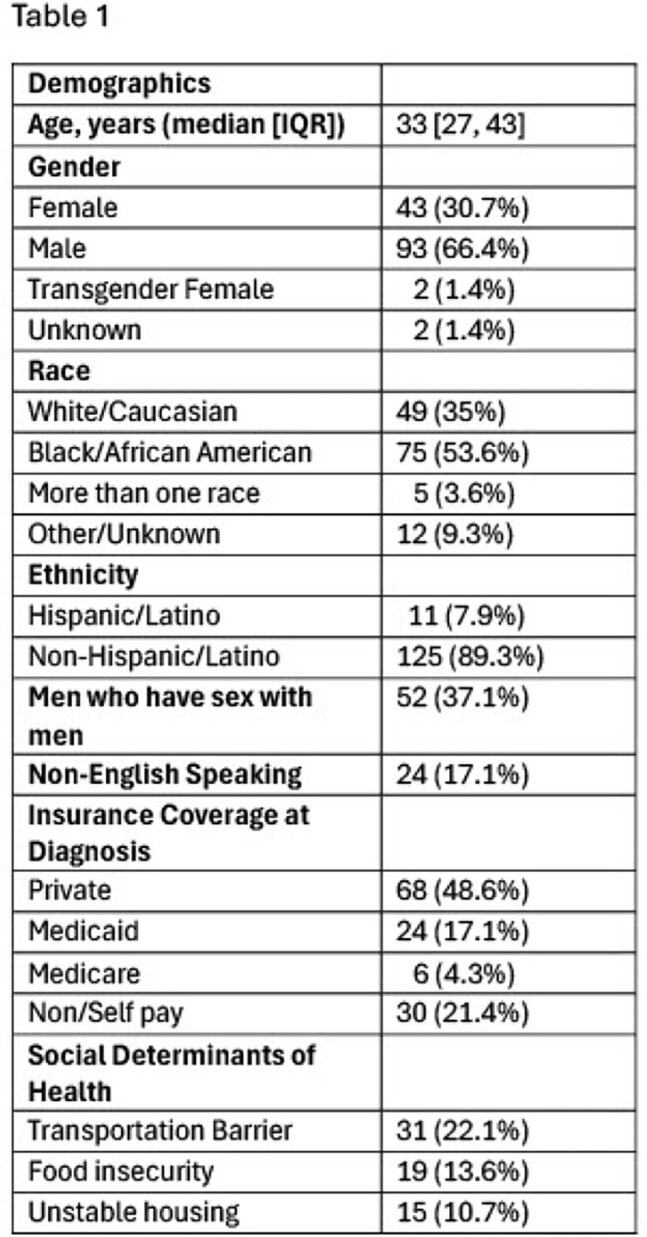 Figure 1
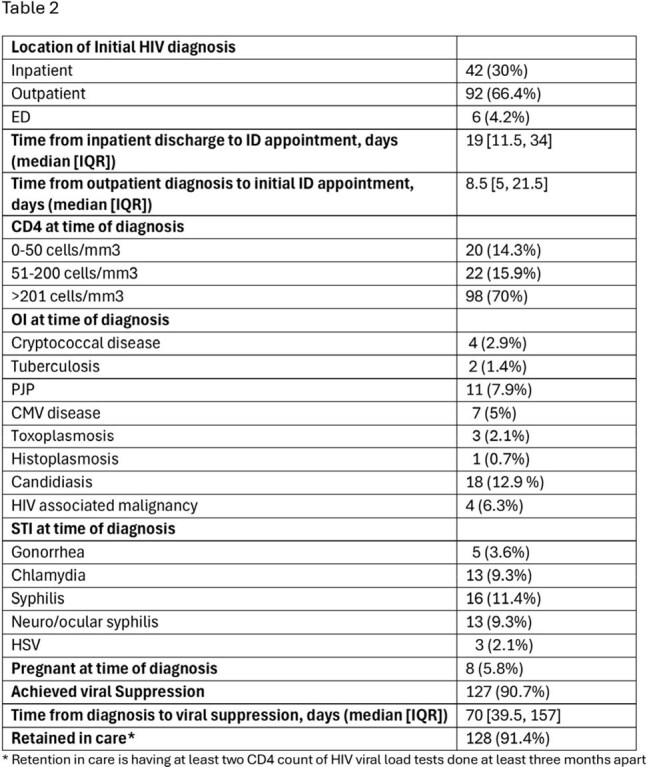 Figure 2
Peer Reviews
No public reviews on file for this paper yet. If you reviewed it on a platform where reviews are public (OpenReview, ICLR, NeurIPS, ICML), you can paste yours below so the community can read it here.
Videos
No videos yet. Explain this paper in a talk, walkthrough, or lecture? Add one.
Taxonomy
TopicsHIV/AIDS Research and Interventions · Cytomegalovirus and herpesvirus research · HIV Research and Treatment