P-1039. Cost of CAUTI: A Retrospective Study of 314 catheterized patients
Silpita Katragadda, Bismarck Bisono Garcia, Saffa Nadeem, John C O’Horo

TL;DR
This study analyzed 314 catheterized patients to assess the cost and outcomes of catheter-associated urinary tract infections (CAUTI) in a hospital setting.
Contribution
The study identifies key predictors of adverse outcomes in CAUTI and suggests refining NHSN surveillance definitions for better prevention strategies.
Findings
17.5% of patients met criteria for healthcare-associated infection (HAI).
HAI patients had higher rates of fever, bladder pain, and bloodstream infections.
Fever and imaging evidence of infection were significant predictors of adverse outcomes.
Abstract
Catheter-associated urinary tract infection (CAUTI) is one of the most prevalent nosocomial infection reported and is associated with significant resource expenditure across health care facilities. We conducted a retrospective review of newly catheterized patients at a tertiary hospital over 12-months period. Demographic, clinical, and diagnostic data were collected. Based on the National Health Safety Network (NHSN) criteria, patients were divided into two groups: health care associated infection (HAI) and criteria not met (CNM). Outcome measures included secondary bloodstream infections, hospital re-admission, death, and microbiological relapse at 30 days of hospital discharge. These outcomes were compared between groups. A total of 314 patients were identified, of whom 55 (17.5%) met the criteria for HAI. Demographic, clinical and microbiological data are summarized in Tables 1-3.…
Click any figure to enlarge with its caption.
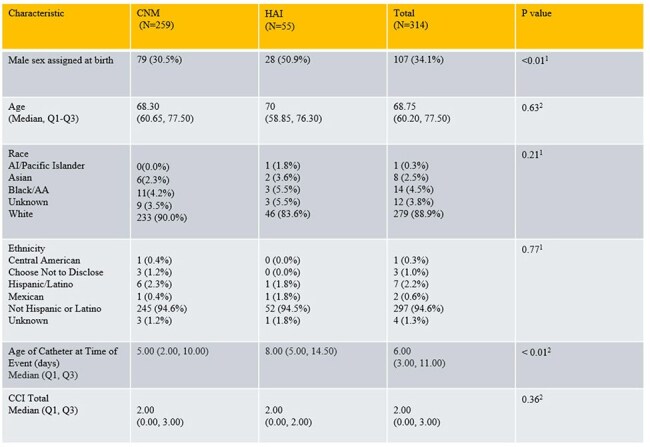 Figure 1
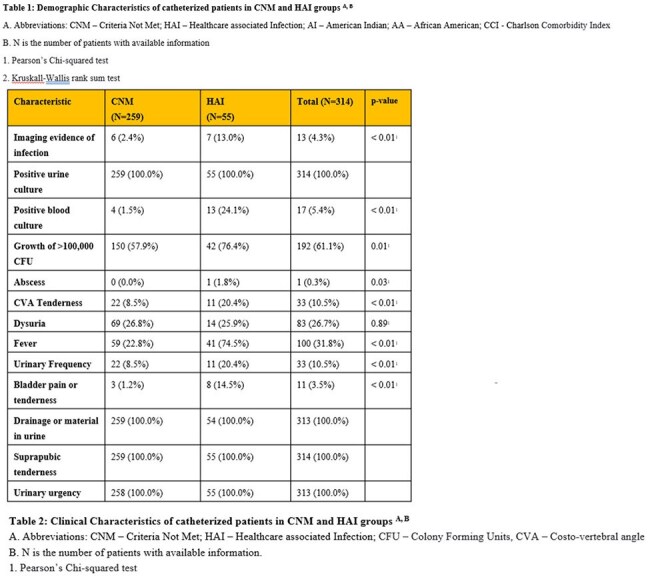 Figure 2
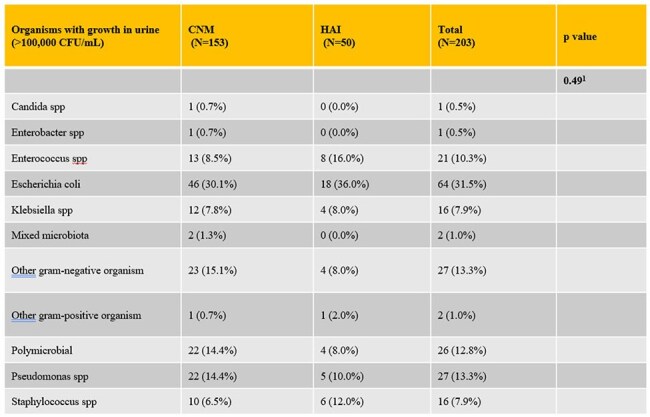 Figure 3
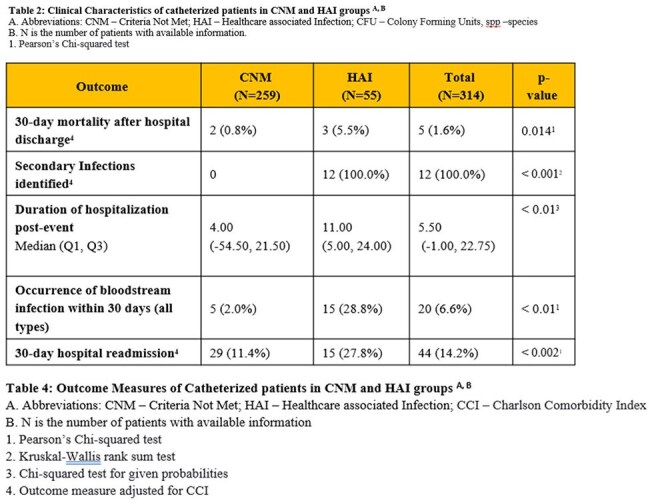 Figure 4
Peer Reviews
No public reviews on file for this paper yet. If you reviewed it on a platform where reviews are public (OpenReview, ICLR, NeurIPS, ICML), you can paste yours below so the community can read it here.
Videos
No videos yet. Explain this paper in a talk, walkthrough, or lecture? Add one.
Taxonomy
TopicsUrinary Tract Infections Management · Surgical site infection prevention · Central Venous Catheters and Hemodialysis