P-1436. Respiratory syncytial virus vaccine uptake among Medicare fee-for-service beneficiaries, 2023-2025
Amanda B Payne, Josephine Mak, Shannon Novosad, Heng-Ming Sung, Yue Zhang, Ryan E Wiegand, Andrea J Chavez, Danica J Gomes, Morgan Najdowski, Yixin Jiao, Yenlin Lai, Yangping Chen, Yoganand Chillarige, Kelly M Hatfield, Sujan Reddy, Amber Kautz, Michael Melgar, Ruth Link-Gelles

TL;DR
This study tracks RSV vaccine uptake among older Medicare beneficiaries, showing modest adoption rates and variation by age, health conditions, and living situation.
Contribution
The paper provides updated empirical data on RSV vaccine uptake following revised CDC recommendations for older adults.
Findings
RSV vaccine uptake increased sharply in 2023 but slowed in 2024, reaching 27% of eligible beneficiaries by early 2025.
Uptake was higher among those aged ≥75 years (31%) compared to those aged 65–74 years (24%).
Beneficiaries with lung disease had the highest uptake (34%), while those with end stage kidney disease had the lowest (18%).
Abstract
Respiratory syncytial virus (RSV) causes substantial morbidity and mortality in older adults. In June 2023, CDC’s Advisory Committee on Immunization Practices recommended adults aged ≥60 years receive one RSV vaccine dose under shared clinical decision making. The recommendation was updated in June 2024 as follows: adults aged ≥75 years and adults aged 60–74 years at increased risk for severe RSV disease are recommended to receive one RSV vaccine dose. Monitoring RSV vaccine uptake informs vaccine effectiveness studies and the impact of updated vaccine recommendations.Figure 1:Biweekly cumulative RSV vaccination coverage, by age group, community-dwelling Medicare Fee-For-Service beneficiaries aged ≥65 Years and enrolled in a Part D plan, United StatesFee-for-Service: enrolled in Medicare Parts A/B (and not Part C) for 365 days prior to reporting period.*6-week reporting lag; data may be…
Genes, proteins, chemicals, diseases, species, mutations and cell lines named across the full text — each resolved to its canonical identifier and authoritative record.
Click any figure to enlarge with its caption.
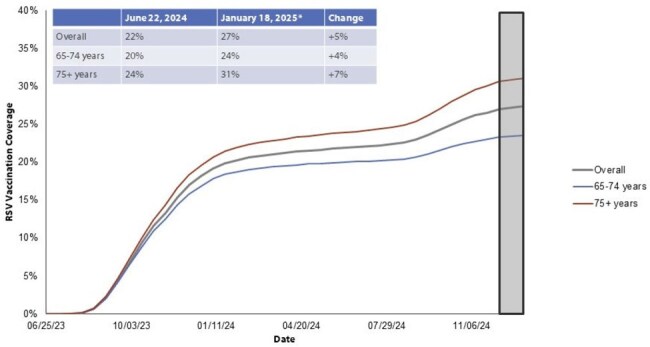 Figure 1
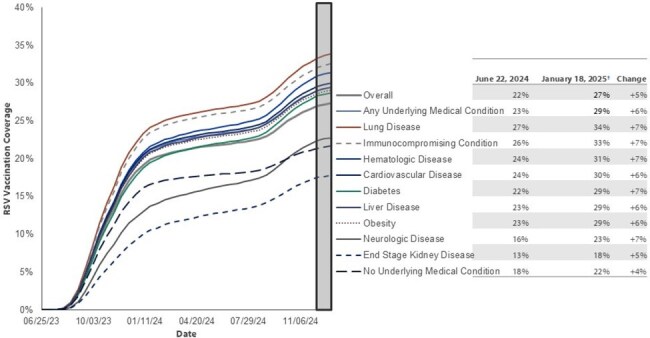 Figure 2
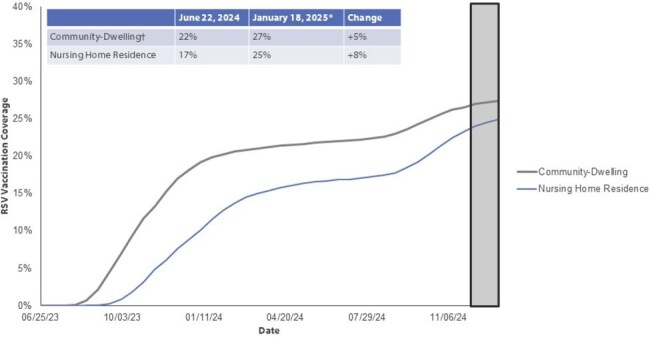 Figure 3
Peer Reviews
No public reviews on file for this paper yet. If you reviewed it on a platform where reviews are public (OpenReview, ICLR, NeurIPS, ICML), you can paste yours below so the community can read it here.
Videos
No videos yet. Explain this paper in a talk, walkthrough, or lecture? Add one.
Taxonomy
TopicsRespiratory viral infections research · Pneumonia and Respiratory Infections · Virology and Viral Diseases