663. Long COVID Phenotype Risk Score Reveals Protective Effect of Physical Activity
Bennett Waxse, Evelynne S Fulda, Josh Denny

TL;DR
This study shows that higher physical activity levels are linked to lower risk of long COVID, using a new method to identify long COVID cases.
Contribution
The first use of incident PheWAS to create a long COVID phenotype risk score that outperforms existing methods.
Findings
Higher daily step counts are independently associated with lower odds of long COVID risk.
The new long COVID PheRS outperforms previous methods with an AUC of 0.85.
Maintaining high activity levels across all time periods is more protective than activity during a single period.
Abstract
Long COVID is a heterogeneous and debilitating disease that affects 10-35% of adults after SARS-CoV-2 infection, but little is known about how activity level before and after COVID-19 affects long COVID risk. Using the NIH’s All of Us Research Program, we constructed a phenotype risk score (PheRS) predicting long COVID and examined associations between daily step counts and long COVID risk. We identified participants with SARS-CoV-2 infection using EHR data. Using phenome-wide association studies (PheWASs), we compared those with and without long COVID billing codes (U09) 30-365 days post-infection. We constructed a long COVID phenotype risk score (PheRS) from phenotypes with higher effect sizes in the incident versus prevalent PheWAS, comparing it to PheRSs constructed from established long COVID phenotype sets. We assessed relationships between mean daily step counts and long COVID…
Click any figure to enlarge with its caption.
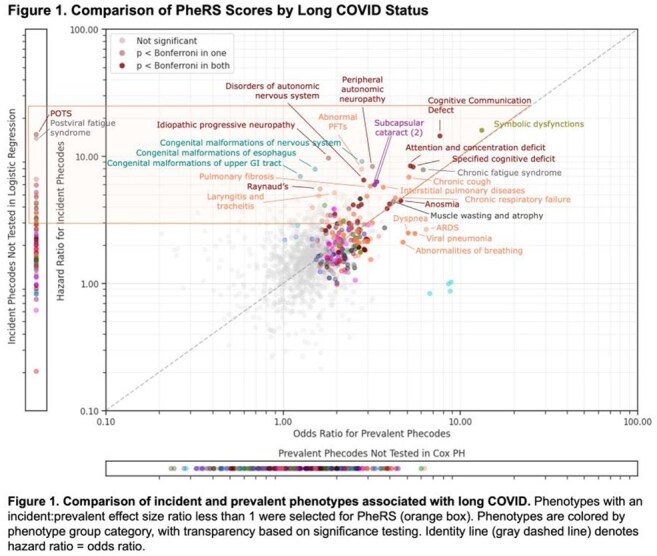 Figure 1
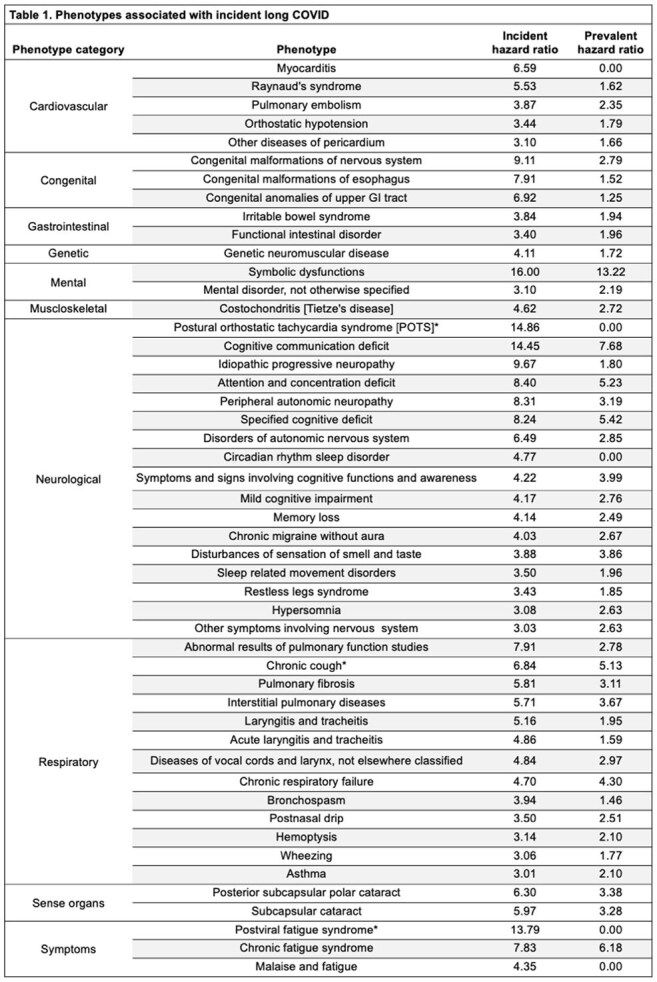 Figure 2
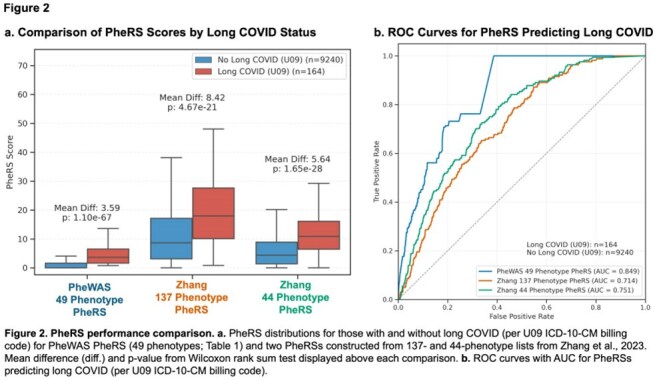 Figure 3
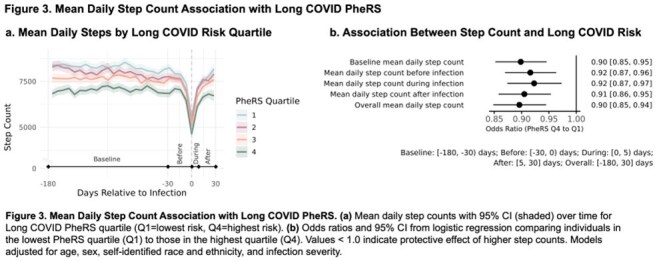 Figure 4
Peer Reviews
No public reviews on file for this paper yet. If you reviewed it on a platform where reviews are public (OpenReview, ICLR, NeurIPS, ICML), you can paste yours below so the community can read it here.
Videos
No videos yet. Explain this paper in a talk, walkthrough, or lecture? Add one.
Taxonomy
TopicsLong-Term Effects of COVID-19 · COVID-19 Clinical Research Studies · Health, Environment, Cognitive Aging