P-1528. Investigating Patient and Microbiological Factors to Unravel the Path to Septic Shock
Christian Hendrix, Andrea M Heredia Castillo, Jennie H Kwon, Andrew Atkinson, Maria Cristina Vazquez Guillamet

TL;DR
This study identifies patient and microbial factors that predict progression from sepsis to septic shock, finding that prior infections and certain pathogens increase risk.
Contribution
The study introduces a novel analysis of host-microbe interactions and comorbidities in predicting septic shock severity.
Findings
Previous history of pneumonia increases septic shock risk for gram-positive cocci (OR 2.14), gram-negative bacilli (OR 2.02), and Candida spp (OR 4.89).
Methicillin-resistant S. aureus and C. krusei are strongly associated with septic shock.
Antimicrobial resistance was not linked to septic shock severity in this cohort.
Abstract
Sepsis is a clinical syndrome with variable progression, where some cases evolve into septic shock. This project aims to identify features -host-related, microbial, or interactions between the two- that drive the progression from sepsis to septic shock.Table 1.Cohort Description with Host and Microbiological Characteristics Categorized by Microorganism1 n (%); Median (Q1,Q3).Overall sepsis episodes categorized by microorganism category within individual columns. This table is also organized by microorganism specific factors as well as host factors outlined above within rows.Figure 1.Univariable and Multivariable Generalized Linear Models for Patients with Sepsis Episodes and Gram-Positive Cocci Culture DataGram-positive cocci (GPC): Enterococcus faecalis, Enterococcus faecium, methicillin-sensitive Staphylococcus aureus, methicillin-resistant Staphylococcus aureus, Streptococcus spp.The…
Genes, proteins, chemicals, diseases, species, mutations and cell lines named across the full text — each resolved to its canonical identifier and authoritative record.
Click any figure to enlarge with its caption.
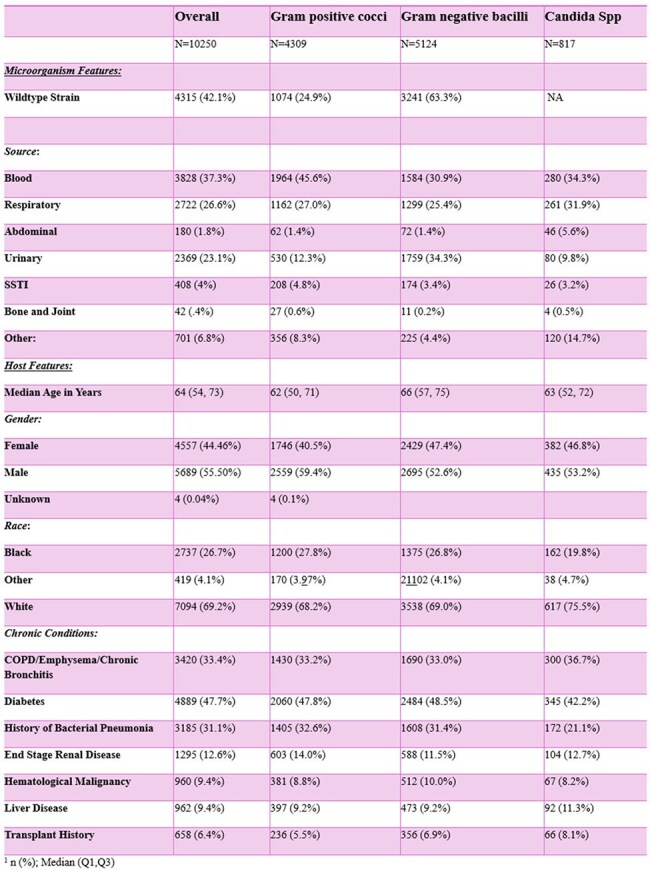 Figure 1
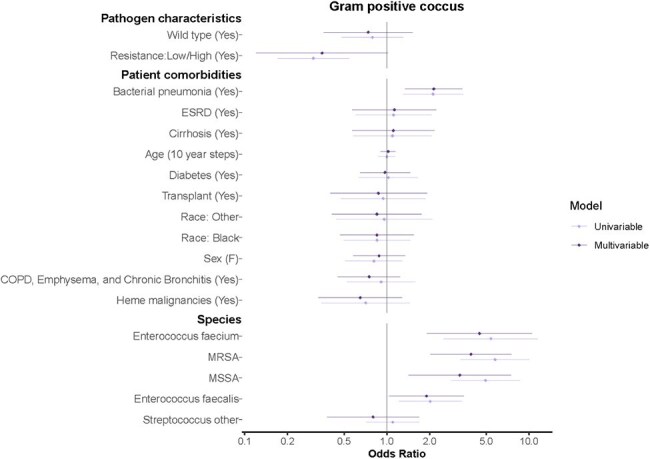 Figure 2
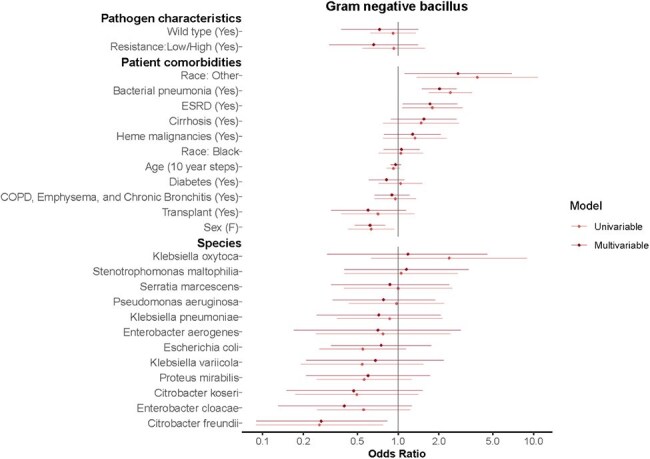 Figure 3
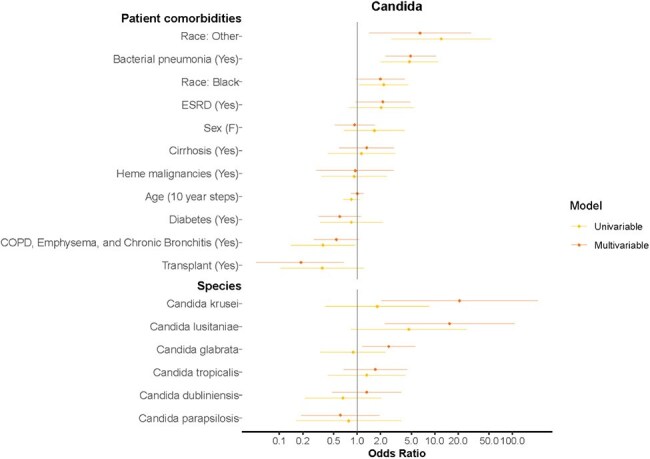 Figure 4
Peer Reviews
No public reviews on file for this paper yet. If you reviewed it on a platform where reviews are public (OpenReview, ICLR, NeurIPS, ICML), you can paste yours below so the community can read it here.
Videos
No videos yet. Explain this paper in a talk, walkthrough, or lecture? Add one.
Taxonomy
TopicsSepsis Diagnosis and Treatment · Neonatal and Maternal Infections · Immune Response and Inflammation