661. Phase 1, dose-escalation trial of the safety and pharmacokinetics of SARS-CoV-2 DNA-encoded monoclonal antibodies (DMAb) in healthy adults
Pablo Tebas, Ami Patel, Joseph Agnes, Elizabeth M Parzych, Amanda Baer, Maria Caturla, Sukanya Ghosh, Mansi Purwar, Nicole Bedanova, chungdhak Tsang, Knashawn Morales, Dinah Amante, Paul D Fisher, Joe Francica, Laurent Humeau, Jesper Pallesen, Paul Eric Leon, Mark T Esser

TL;DR
This study tested a new DNA-based method to deliver antibodies against SARS-CoV-2 in healthy people, showing it is safe and can produce functional antibodies over time.
Contribution
First-in-human demonstration of durable in vivo production of functional DNA-encoded monoclonal antibodies against SARS-CoV-2.
Findings
DMAbs were detected in 100% of evaluable participants with sustained expression over 72 weeks.
No serious adverse events were reported, and no anti-drug antibodies were detected in over 1,000 serum samples.
DMAbs showed binding and neutralizing activity against multiple SARS-CoV-2 variants.
Abstract
Local intramuscular administration of synthetic plasmid DNA (pDNA) encoding monoclonal antibodies (mAbs) offers a promising alternative to traditional recombinant protein-based mAb delivery. This approach may enable durable in vivo expression of functional antibodies and overcome limitations related to cost, production, and cold-chain logistics. AZD5396 and AZD8076 are modified versions of the SARS-CoV-2 neutralizing antibody cocktail Evusheld, encoded as DNA-delivered monoclonal antibodies (DMAbs). CONSORT diagram and trial schematicLongitudinal serum concentration of in vivo-expressed DMAbs AZD5396 and AZD8076 CONSORT diagram and trial schematic Longitudinal serum concentration of in vivo-expressed DMAbs AZD5396 and AZD8076 In this Phase 1, dose-escalation study (ClinicalTrials.gov identifier: NCT05293249), we evaluated the safety, tolerability, and pharmacokinetics of a pDNA…
Genes, proteins, chemicals, diseases, species, mutations and cell lines named across the full text — each resolved to its canonical identifier and authoritative record.
Click any figure to enlarge with its caption.
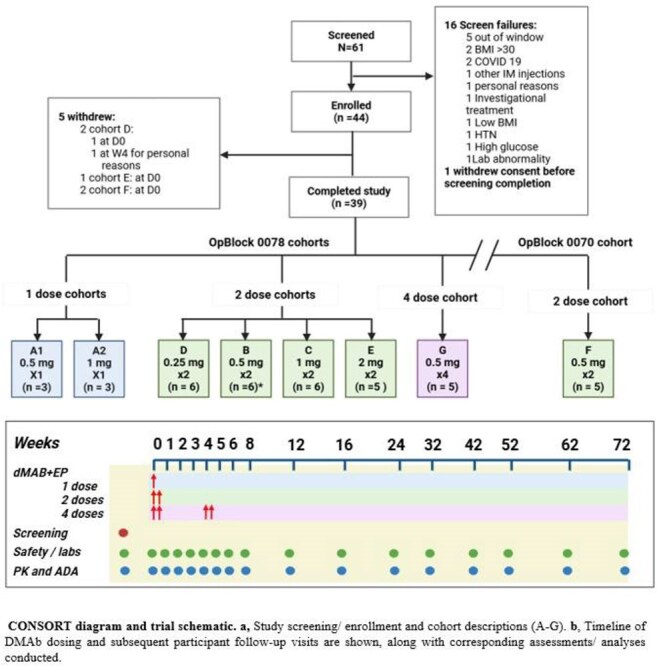 Figure 1
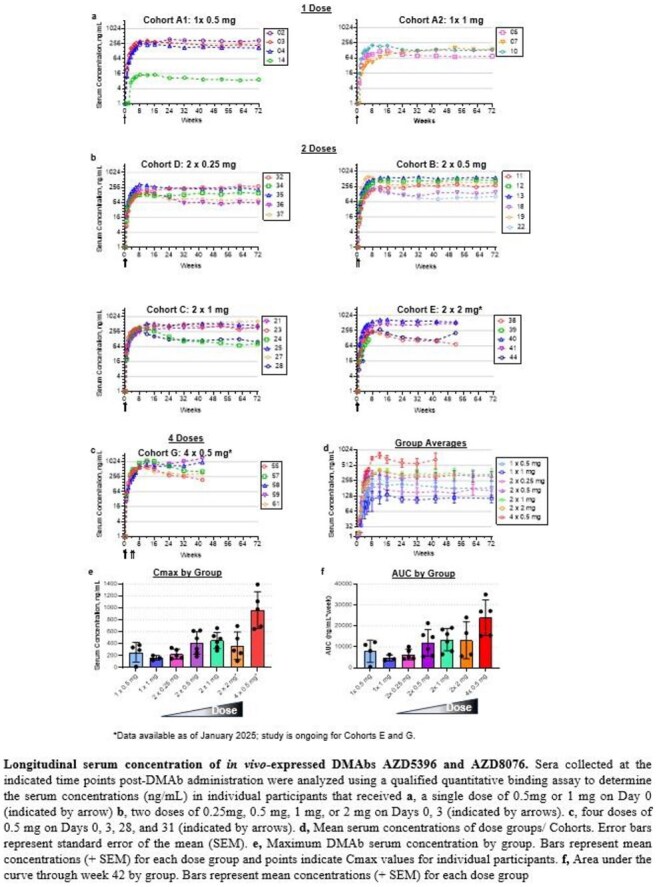 Figure 2
Peer Reviews
No public reviews on file for this paper yet. If you reviewed it on a platform where reviews are public (OpenReview, ICLR, NeurIPS, ICML), you can paste yours below so the community can read it here.
Videos
No videos yet. Explain this paper in a talk, walkthrough, or lecture? Add one.
Taxonomy
TopicsMonoclonal and Polyclonal Antibodies Research · Transgenic Plants and Applications · Protein purification and stability