P-287. Real-World Sexually Transmitted Infection (STI) Testing Patterns Among Individuals Using Pre-Exposure Prophylaxis (PrEP) for HIV-1 Prevention in the United States
Xiwen Huang, Juan Yang, Edward Gemson, Wenyi Wang, Li Tao, Dylan Mezzio, Chris Nguyen, Sandra I McCoy, Joshua Gruber

TL;DR
This study examines how often people on HIV prevention medication get tested for STIs in the US and finds that while testing increases after starting the medication, most still don't follow the recommended schedule.
Contribution
The study provides real-world data on STI testing patterns among individuals using PrEP in the US, highlighting gaps in adherence to CDC guidelines.
Findings
STI testing rates increased from 26% before to 47% after starting PrEP.
Only 33% of PrEP users tested every 6 months as recommended, with 67% testing less frequently or not at all.
STI prevalence slightly increased from 12% pre-PrEP to 18% post-PrEP, likely due to more frequent testing.
Abstract
The Centers for Disease Control and Prevention recommends routine sexually transmitted infection (STI) testing every 3–6 months for people taking HIV-1 pre-exposure prophylaxis (PrEP), as part of comprehensive HIV-1/STI prevention services. However, real-world patterns of STI testing among individuals using PrEP in the US remain unclear.Table 1.STI Testing in Adults Newly Prescribed PrEP Within the 12 Month Observation Window Pre- and Post-PrEP InitiationSTI testing and prevalence were assessed 12 months pre- and post-PrEP initiation. STI tests conducted within 15 days of PrEP initiation (before or after) were counted in post-PrEP categories.PrEP, pre-exposure prophylaxis; STI, sexually transmitted infection.Figure 1.Frequency of STI Testing Among Individuals With ≥ 1 STI Test Within the 12 Month Observation Window Pre- and Post-PrEP InitiationSTI tests conducted within 15 days of PrEP…
Genes, proteins, chemicals, diseases, species, mutations and cell lines named across the full text — each resolved to its canonical identifier and authoritative record.
Click any figure to enlarge with its caption.
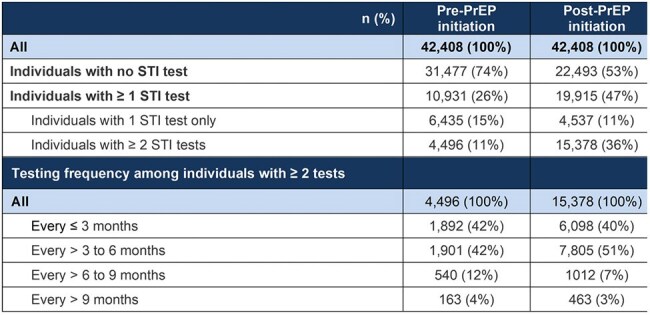 Figure 1
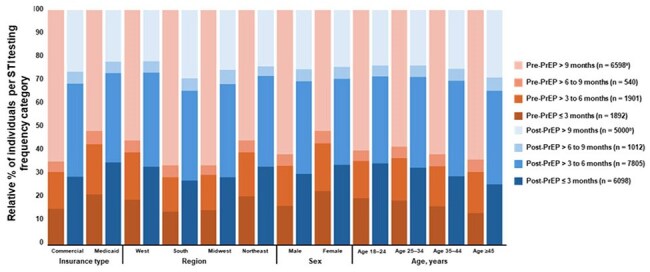 Figure 2
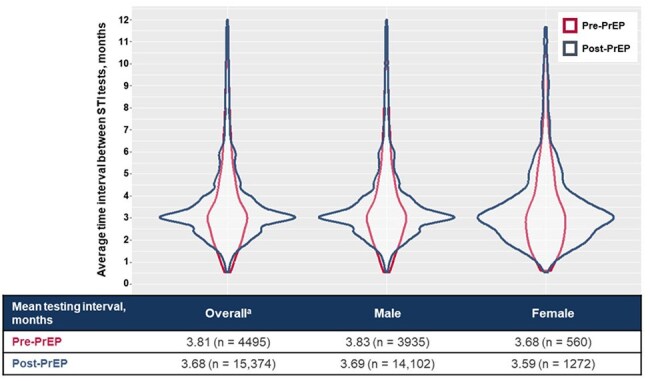 Figure 3
Peer Reviews
No public reviews on file for this paper yet. If you reviewed it on a platform where reviews are public (OpenReview, ICLR, NeurIPS, ICML), you can paste yours below so the community can read it here.
Videos
No videos yet. Explain this paper in a talk, walkthrough, or lecture? Add one.
Taxonomy
TopicsHIV/AIDS Research and Interventions · HIV Research and Treatment · Reproductive tract infections research