P-151. Epidemiology of Vibriosis Cases in Los Angeles County, 2014-2023
Joy Suh, Marifi Pulido, Dawn Terashita, Sharon Balter, Jemma Alarcón

TL;DR
This study analyzed vibriosis cases in Los Angeles County from 2014 to 2023, finding higher-than-expected rates and risk factors like raw seafood consumption.
Contribution
The study provides a detailed epidemiological analysis of vibriosis in Los Angeles County, identifying demographic trends and exposure sources.
Findings
The average annual incidence rate of vibriosis in LAC was 0.48 per 100,000, exceeding the Healthy People 2020 goal.
V. parahaemolyticus was the most common species, with cases peaking in August.
Non-Hispanic white males aged 35-44 were disproportionately affected.
Abstract
Vibriosis caused by non-toxigenic Vibrio bacteria is a reportable foodborne illness responsible for 80,000 infections in the United States each year. It is contracted from marine or brackish waters and eating undercooked or raw seafood. In this study, we examined the demographic characteristics and incidence trends of vibriosis in Los Angeles County (LAC) from 2014 to 2023. The table summarizes key characteristics of probable and confirmed vibriosis cases including age, sex, race/ethnicity, exposure sources, and the distribution of Vibrio species identified in LAC from 2014 to 2023.Figure 1:Vibriosis annual incidence rate per 100,000 in Los Angeles County, 2014-2023The graph depicts annual incidence rates for vibriosis over a ten-year period from 2014 to 2023 in LAC. The average annual incidence rate and Healthy People 2020 goal rate for Vibrio are shown. Vibriosis annual incidence…
Click any figure to enlarge with its caption.
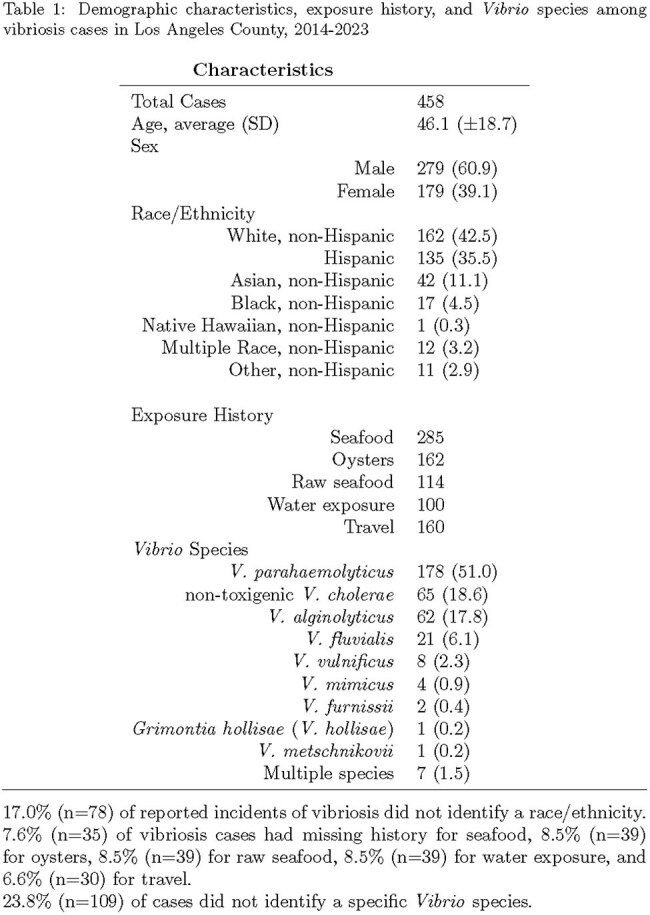 Figure 1
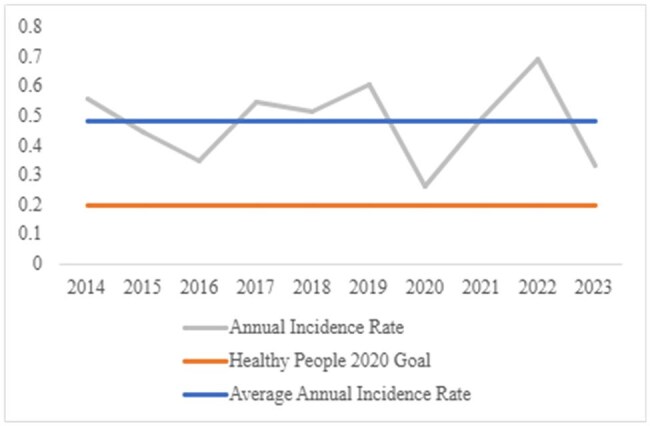 Figure 2
Peer Reviews
No public reviews on file for this paper yet. If you reviewed it on a platform where reviews are public (OpenReview, ICLR, NeurIPS, ICML), you can paste yours below so the community can read it here.
Videos
No videos yet. Explain this paper in a talk, walkthrough, or lecture? Add one.
Taxonomy
TopicsVibrio bacteria research studies · Melamine detection and toxicity · Listeria monocytogenes in Food Safety