P-1199. Well-Balanced Dual-Targeting of Gepotidacin against Neisseria gonorrhoeae Gyrase and Topoisomerase IV in Cells and in vitro
Alexandria A Oviatt, Jessica A Collins, Jianzhong Huang, Karen Mattern, Pan Chan, Neil Osheroff

TL;DR
Gepotidacin, a new antibiotic, effectively targets two enzymes in Neisseria gonorrhoeae, offering a promising treatment for gonorrhea with low resistance risk.
Contribution
The study reveals gepotidacin's balanced dual-targeting of gyrase and topoisomerase IV in Neisseria gonorrhoeae, explaining its resistance profile and mechanism of action.
Findings
Gepotidacin targets both gyrase and topoisomerase IV in Neisseria gonorrhoeae cells.
Resistance to gepotidacin requires mutations in both enzyme targets, suggesting low resistance potential.
Gepotidacin inhibits DNA supercoiling and decatenation by purified enzymes at similar low concentrations.
Abstract
Gonorrhea, a sexually transmitted infection caused by Neisseria gonorrhoeae, poses a significant public health challenge. Fluoroquinolones (FQs) once served as first-line therapy for gonorrhea, but rising resistance led to their removal from treatment guidelines. FQ resistance stems primarily from mutations in their enzyme targets, gyrase and topoisomerase IV. In response to the growing threat of antibacterial resistance, gepotidacin (Fig.), a first-in-class triazaacenaphthylene, offers a promising new treatment strategy. Gepotidacin also targets gyrase and topoisomerase IV but is chemically and mechanistically distinct from FQs. In a phase 3 clinical trial, oral gepotidacin demonstrated non-inferiority to ceftriaxone + azithromycin for uncomplicated urogenital gonorrhea with no new safety concerns [Ross et al (2025) Lancet]. Structure of the triazaacenaphthylene gepotidacin with key…
Genes, proteins, chemicals, diseases, species, mutations and cell lines named across the full text — each resolved to its canonical identifier and authoritative record.
Click any figure to enlarge with its caption.
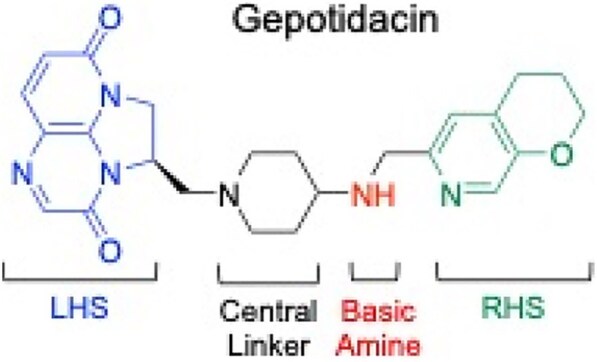 Figure 1
Peer Reviews
No public reviews on file for this paper yet. If you reviewed it on a platform where reviews are public (OpenReview, ICLR, NeurIPS, ICML), you can paste yours below so the community can read it here.
Videos
No videos yet. Explain this paper in a talk, walkthrough, or lecture? Add one.
Taxonomy
TopicsCancer therapeutics and mechanisms · Reproductive tract infections research · Neuroblastoma Research and Treatments