P-676. Epidemiology and Burden of Respiratory Syncytial Virus in Hong Kong, 2013–2024: Insights into Temporal Trends, Risk Factors, and Clinical Outcomes
Ophelia Wong, Ming Hong Choi, Fan Ngai Ivan Hung

TL;DR
This study analyzes RSV trends in Hong Kong from 2013 to 2024, showing how the virus affects children and older adults, and how the pandemic disrupted and later intensified its spread.
Contribution
The study provides detailed epidemiological insights into RSV in Hong Kong, including post-pandemic resurgence and the use of STL decomposition for trend analysis.
Findings
RSV incidence peaked in 2017 and 2023, with children ≤2 years and adults ≥65 years most affected.
The pandemic disrupted RSV transmission, but a sharp resurgence occurred in 2023 with severe outcomes.
Prematurity and COPD were significant risk factors for RSV-related hospitalizations.
Abstract
Respiratory syncytial virus (RSV) imposes a significant burden on global health, particularly among young children and older adults. Despite extensive global surveillance, granular epidemiological data from Hong Kong—a densely populated subtropical region—remain sparse. This study bridges this gap by analysing 11 years of population-level data, including the unprecedented impact of COVID-19 and post-pandemic resurgence.Clinical Outcomes of Hospitalized RSV Cases and RSV Cases by Comorbidity Type (2013-2024)Cumulative Incidence (2013-2024) Clinical Outcomes of Hospitalized RSV Cases and RSV Cases by Comorbidity Type (2013-2024) Cumulative Incidence (2013-2024) We conducted a retrospective population-based study using surveillance data from 2013 to 2024 in Hong Kong. RSV cases were extracted monthly, and the cumulative incidence (per 100,000 population) was calculated annually,…
Genes, proteins, chemicals, diseases, species, mutations and cell lines named across the full text — each resolved to its canonical identifier and authoritative record.
Click any figure to enlarge with its caption.
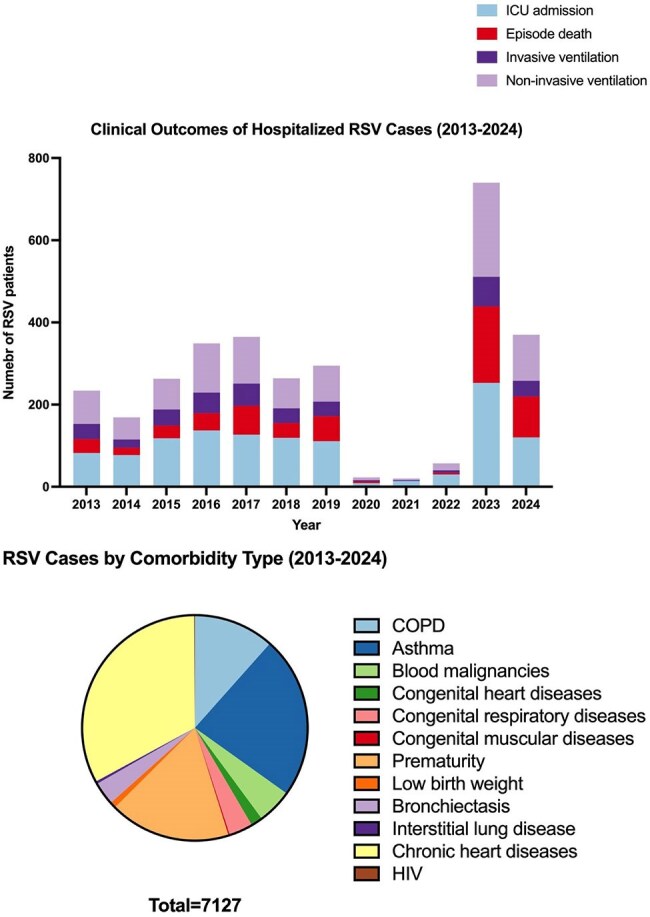 Figure 1
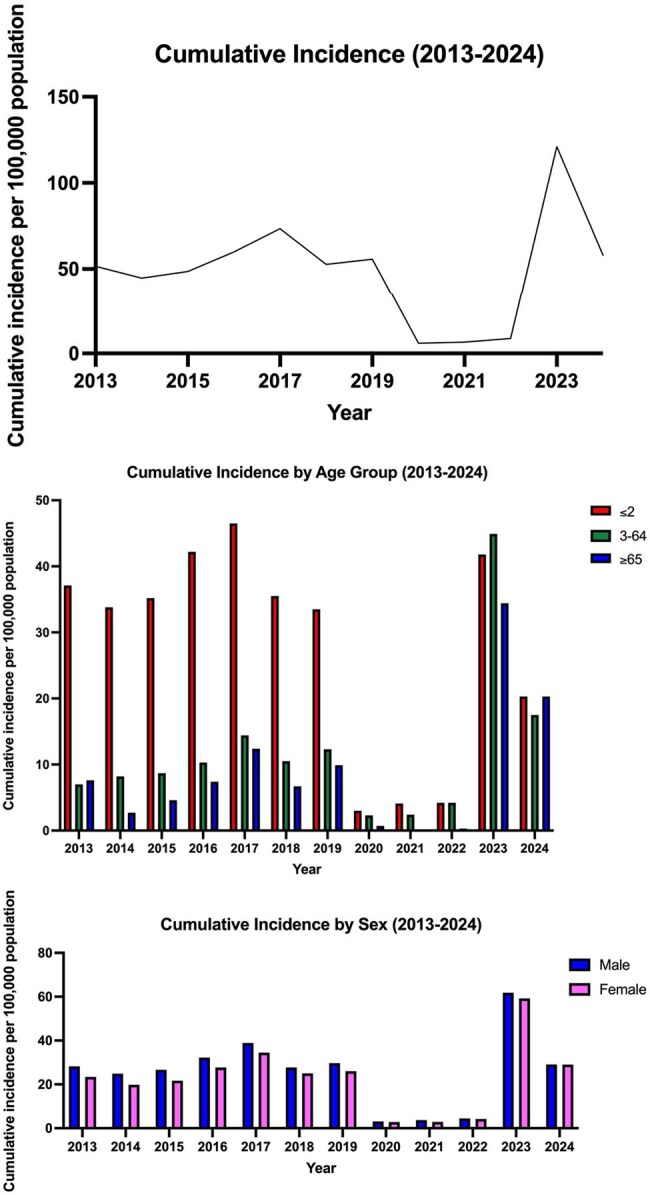 Figure 2
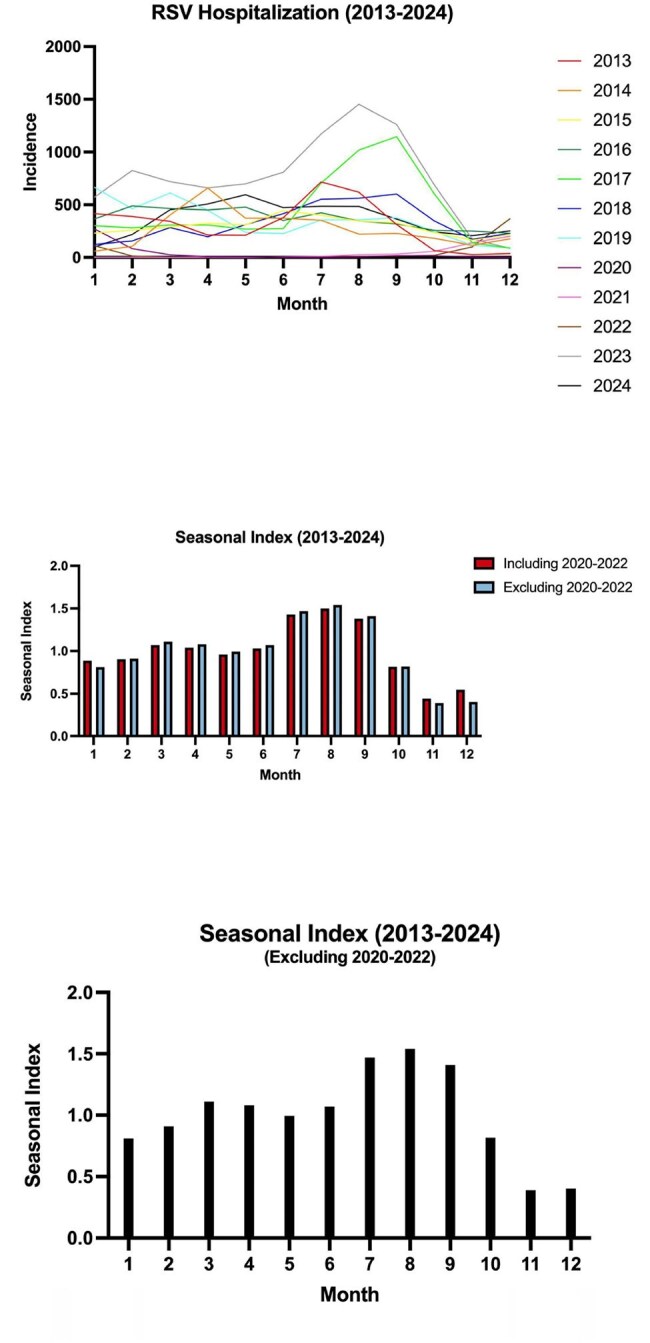 Figure 3
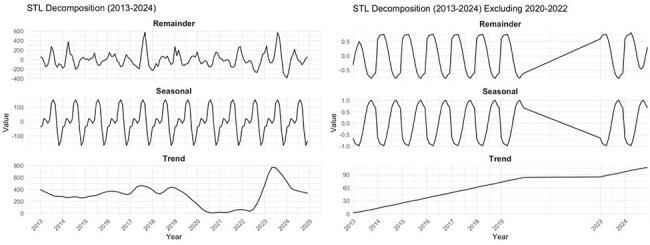 Figure 4
Peer Reviews
No public reviews on file for this paper yet. If you reviewed it on a platform where reviews are public (OpenReview, ICLR, NeurIPS, ICML), you can paste yours below so the community can read it here.
Videos
No videos yet. Explain this paper in a talk, walkthrough, or lecture? Add one.
Taxonomy
TopicsRespiratory viral infections research · Immune responses and vaccinations · Viral Infections and Outbreaks Research