P-320. Beyond race: Predicting HIV acquisition through sociostructural and healthcare utilization factors in Atlanta
Meredith H Lora, Megan Schwinne, Chad Robichaux, Andres Camacho-Gonzalez, Reza Sameni, Amelia Muniz Hernandez, Rishika Iytha, Siri Chirumamilla, Emma J Hollenberg, Sarah Gruber, Valeria D D Cantos

TL;DR
This study shows that sociostructural and healthcare factors can predict HIV risk as effectively as models that include race, potentially reducing stigma in Black communities.
Contribution
The first race-agnostic HIV prediction model using sociostructural and healthcare utilization features in a predominantly Black population.
Findings
A race-agnostic model achieved comparable accuracy (AUROC 0.87, AUPRC 0.19) to a race-inclusive model in predicting HIV.
Sociostructural factors like residency in high HIV incidence areas and healthcare utilization patterns were more predictive than behavioral or STI factors.
The model highlights the role of structural and healthcare access disparities in HIV risk rather than race as a biological factor.
Abstract
HIV disproportionately affects Black individuals, yet HIV pre-exposure prophylaxis (PrEP) is underutilized in this group. Racial disparities stem from sociostructural factors and low healthcare access rather than behavioral risk. Machine learning models identifying persons at risk for HIV may increase PrEP uptake. Previous HIV prediction models have included race as a significant predictor, which may perpetuate stigma towards the Black population. We developed an electronic health record (EHR)-based machine learning model to predict HIV diagnosis among adult patients seen at the Grady Health System in Atlanta from 2012 to 2022. We developed over 160 potential predictors, including 16 novel sociostructural and healthcare utilization features. We used an XGBoost classifier to train the model (80-20 train-test split) and quantified feature importance using Shapley Additive Explanations…
Genes, proteins, chemicals, diseases, species, mutations and cell lines named across the full text — each resolved to its canonical identifier and authoritative record.
Click any figure to enlarge with its caption.
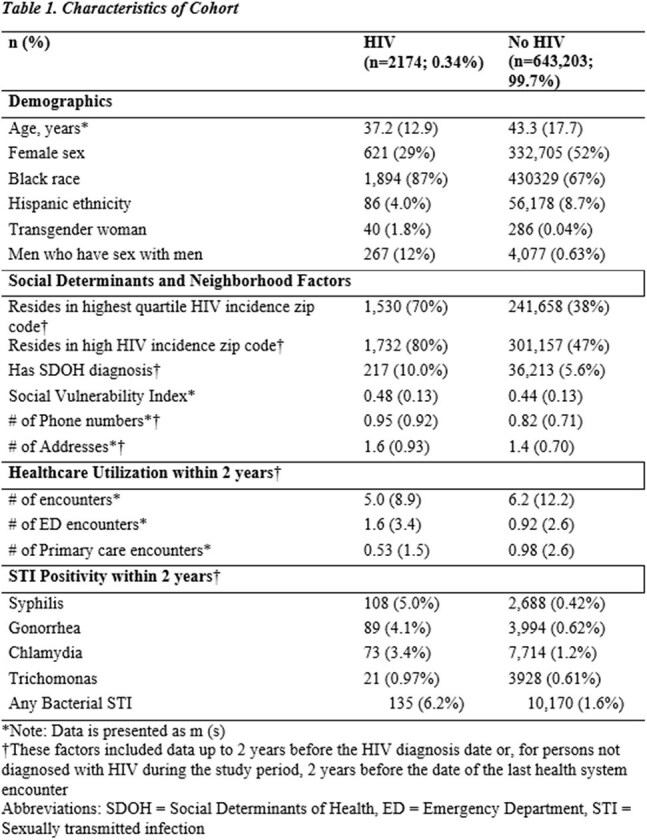 Figure 1
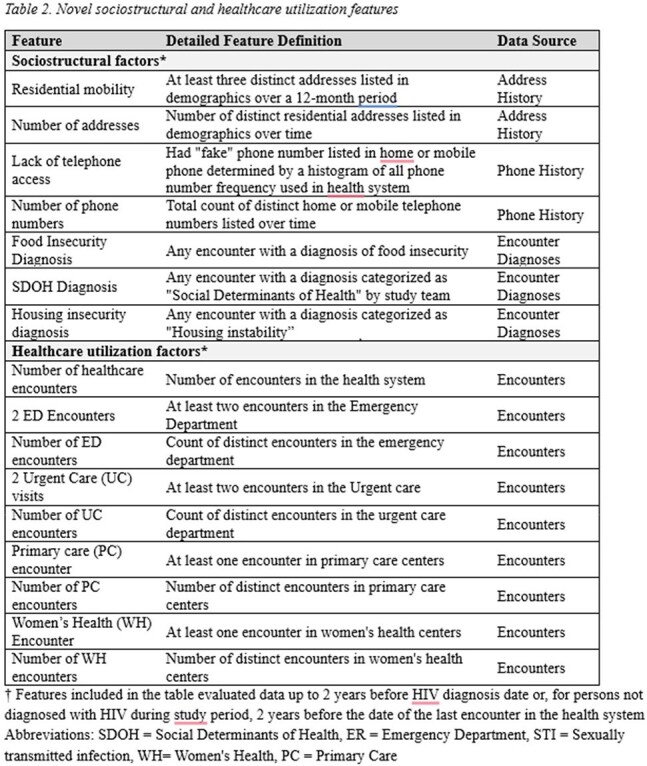 Figure 2
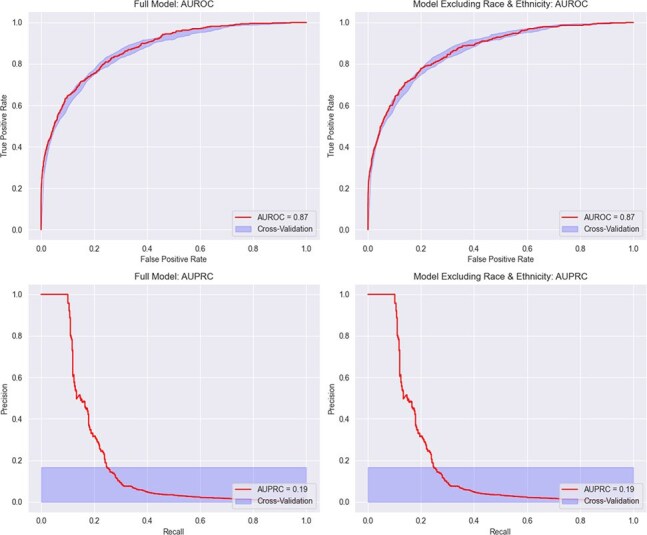 Figure 3
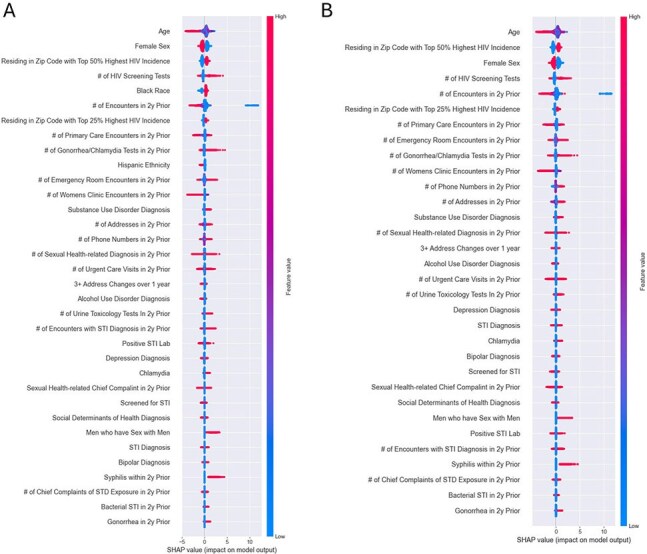 Figure 4
Peer Reviews
No public reviews on file for this paper yet. If you reviewed it on a platform where reviews are public (OpenReview, ICLR, NeurIPS, ICML), you can paste yours below so the community can read it here.
Videos
No videos yet. Explain this paper in a talk, walkthrough, or lecture? Add one.
Taxonomy
TopicsHIV/AIDS Research and Interventions · Machine Learning in Healthcare · Data-Driven Disease Surveillance