P-257. Performance of Serum Cryptococcal Antigen for Early Detection of Cryptococcal Meningitis in People Living with HIV
Victor D Acuña-Rocha, Gabriel G Ibarra-Nuñez, Adrian Camacho-Ortiz, Paola Bocanegra-Ibarias, Samantha Flores-Treviño, Daniel Salas-Treviño, Eduardo Pérez-Alba, Laura Nuzzolo-Shihadeh

TL;DR
This study evaluates serum cryptococcal antigen screening for early detection of cryptococcal meningitis in HIV patients and finds it increases diagnosis rates but does not reduce hospital mortality.
Contribution
The study demonstrates the effectiveness of serum cryptococcal antigen screening in identifying cryptococcal meningitis in hospitalized HIV patients.
Findings
Serum cryptococcal antigen screening increased lumbar puncture rates and meningitis diagnoses in HIV patients.
Cryptococcal meningitis was diagnosed in 15.5% of patients, more frequently in those with positive serum antigen results.
Despite early treatment, hospital mortality rates remained unchanged between groups.
Abstract
The development of cryptococcal antigen (CrAg) detection methods, such as latex agglutination, ELISA, and lateral flow assays has significantly improved early diagnosis, achieving sensitivities and specificities between 99.1% and 100% (1-4). This study aimed to assess the utility of serum CrAg (SCrAg) screening and subsequent early treatment in reducing in-hospital mortality among people living with HIV (PLHIV) in a teaching hospital. We conducted a descriptive, retrospective, cross-sectional, and analytical study of adults (≥18 years) living with HIV who were hospitalized in clinical stage C for any reason between December 2021 and June 2023 at the University Hospital “Dr. José Eleuterio González.” Clinical and laboratory data were collected from hospital records. Qualitative serum and CSF cryptococcal antigen (CrAg) were detected using the Cryptococcal Antigen Latex Agglutination…
Genes, proteins, chemicals, diseases, species, mutations and cell lines named across the full text — each resolved to its canonical identifier and authoritative record.
Click any figure to enlarge with its caption.
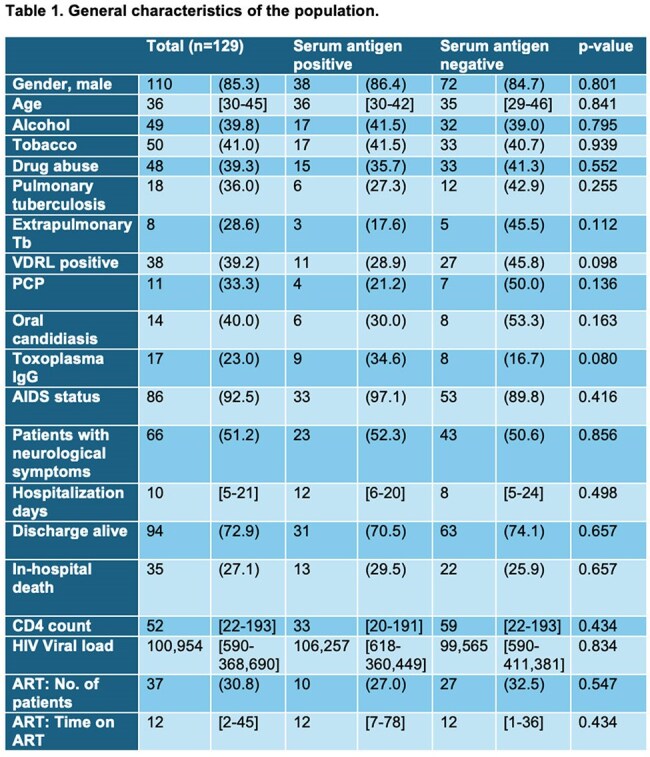 Figure 1
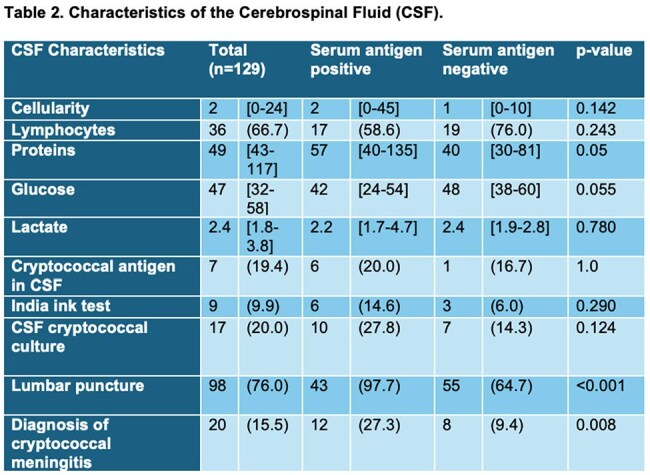 Figure 2
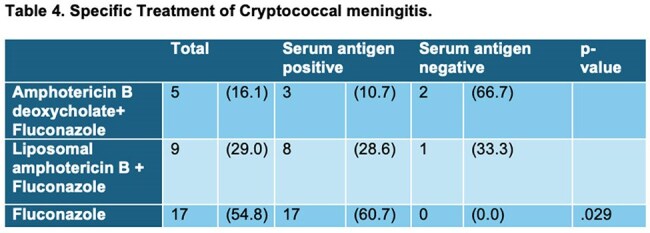 Figure 3
Peer Reviews
No public reviews on file for this paper yet. If you reviewed it on a platform where reviews are public (OpenReview, ICLR, NeurIPS, ICML), you can paste yours below so the community can read it here.
Videos
No videos yet. Explain this paper in a talk, walkthrough, or lecture? Add one.
Taxonomy
TopicsFungal Infections and Studies · Nail Diseases and Treatments · Orthopedic Infections and Treatments