P-1257. Development and Evaluation of a Vancomycin Pharmacokinetic Model Selection Algorithm: Further Refinement of Individualized Dosing in a Bayesian Software
Maria-Stephanie Hughes, Jon Faldasz, Ron J Keizer, Jasmine Hughes

TL;DR
This study develops an algorithm to improve vancomycin dosing by selecting the best pharmacokinetic model based on patient characteristics like age, BMI, sex, and serum creatinine.
Contribution
The novel contribution is a first-of-its-kind model selection algorithm that outperforms existing methods by tailoring model choice to over 100 patient subpopulations.
Findings
The algorithm outperformed 2- and 3-model selection methods in all a posteriori predictive metrics and nearly all a priori metrics.
Seven of ten tested pharmacokinetic models were incorporated into the algorithm, each performing best in specific subpopulations.
The model selection algorithm uses a transparent, decision-tree-like approach to improve dosing accuracy in Bayesian software.
Abstract
Bayesian software programs have improved vancomycin target attainment by optimizing pharmacokinetic (PK) model selection. Here, we investigate how subgrouping patients by age, body mass index (BMI), sex and serum creatinine (sCr) can individualize model selection, and develop an algorithm for use at the bedside.Table 1:Summary of Models Considered for Implementation in the Model Selection AlgorithmAll models considered for the algorithm are summarized within the table. The bolded models are those that were included in the algorithm. The models by Adane and Buelga et al. were not included as they were 1 compartment models. The model by Carreno et al. was not considered due to practical experience showing instability in maximum a posteriori (MAP) Bayesian estimates, where small changes in covariates or sample timing led to large shifts in pharmacokinetic parameters.Table 2:Patient…
Genes, proteins, chemicals, diseases, species, mutations and cell lines named across the full text — each resolved to its canonical identifier and authoritative record.
Click any figure to enlarge with its caption.
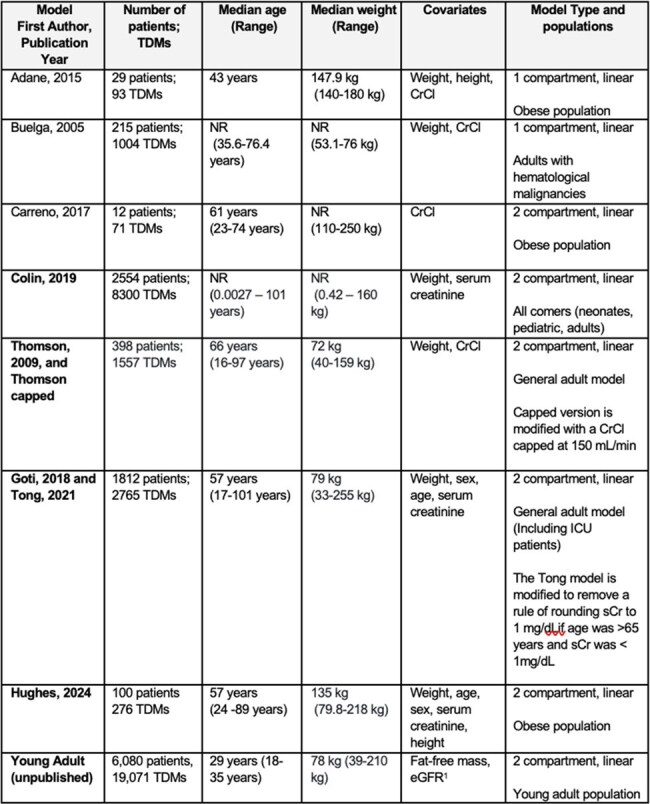 Figure 1
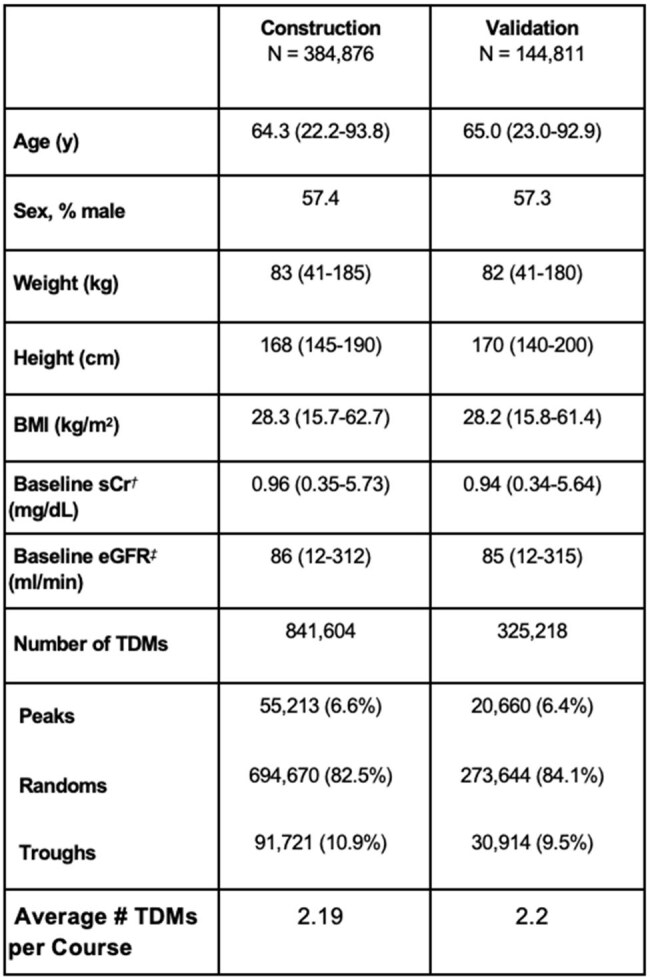 Figure 2
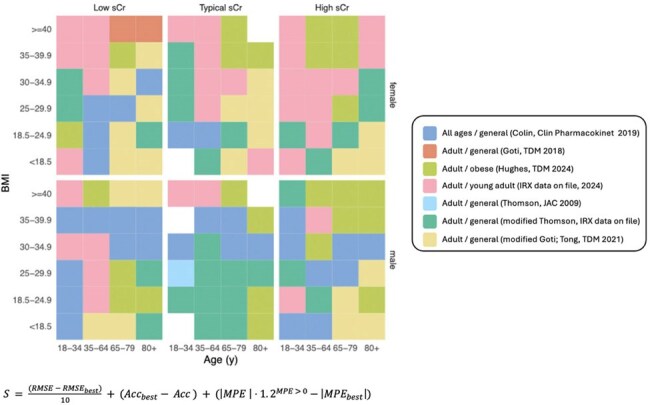 Figure 3
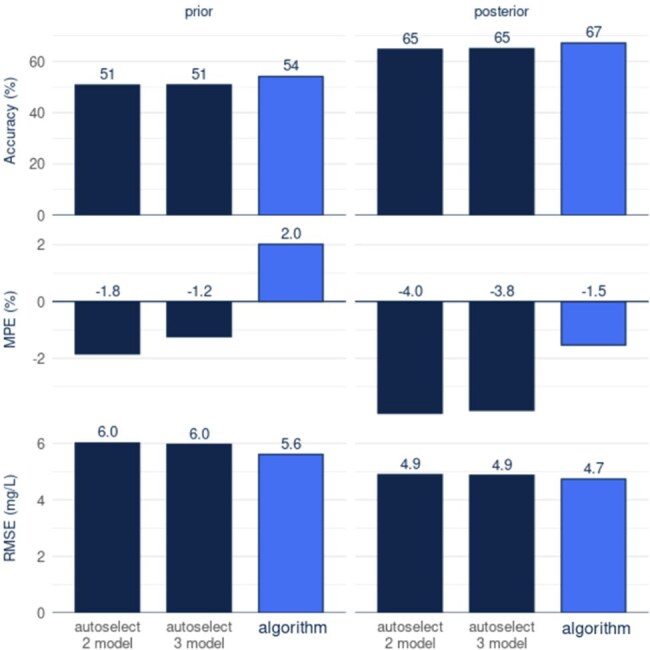 Figure 4
Peer Reviews
No public reviews on file for this paper yet. If you reviewed it on a platform where reviews are public (OpenReview, ICLR, NeurIPS, ICML), you can paste yours below so the community can read it here.
Videos
No videos yet. Explain this paper in a talk, walkthrough, or lecture? Add one.
Taxonomy
TopicsAntimicrobial Resistance in Staphylococcus · Antibiotics Pharmacokinetics and Efficacy · Pharmacovigilance and Adverse Drug Reactions