P-1468. Respiratory Syncytial Virus (RSV) prevention product effectiveness against RSV-associated medically attended illness among American Indian and Alaska Native (AI/AN) children in Alaska and the Southwest United States (US), November 2023 – February 2025
Laura Hammitt, Joel Espinoza, James Keck, Rachel Hartman, Angela P Campbell, James Chappell, Fatimah S Dawood, Christine Desnoyers, Jennifer Dobson, Natasha B Halasa, Meredith L McMorrow, Maureen Nez, Linda Oxley, Dennie Parker Riley, Mila M Prill, Marqia Sandoval

TL;DR
This study shows that nirsevimab is effective in preventing RSV-related hospitalizations and outpatient visits in American Indian and Alaska Native children.
Contribution
The study provides real-world evidence of nirsevimab's effectiveness in high-risk AI/AN children across two RSV seasons.
Findings
Nirsevimab was 82.7% effective against RSV-associated medically attended illness in the first RSV season.
It was 93.7% effective in the second RSV season.
Nirsevimab prevented RSV-related hospitalizations in both first and second RSV seasons.
Abstract
In 2023, nirsevimab, a long-acting monoclonal antibody, was recommended to prevent severe RSV illness in the US for all infants aged < 8 months and children aged 8-19 months at increased risk of severe RSV disease, including AI/AN children. We assessed nirsevimab effectiveness against RSV-associated medically attended acute respiratory infection (MA-ARI) among AI/AN children. AI/AN children with MA-ARI were enrolled in the Southwest US and Alaska during Nov 6, 2023-May 31, 2024 and Oct 1, 2024-Feb 28, 2025. Mid-turbinate nasal swabs were tested by polymerase chain reaction for RSV. Exposure to RSV prevention products was confirmed by medical record review. Children exposed to nirsevimab within 7 days of MA-ARI or maternal RSV vaccine were excluded. Nirsevimab effectiveness against hospitalization and outpatient visits was assessed separately for children in their 1st (aged < 8 months…
Click any figure to enlarge with its caption.
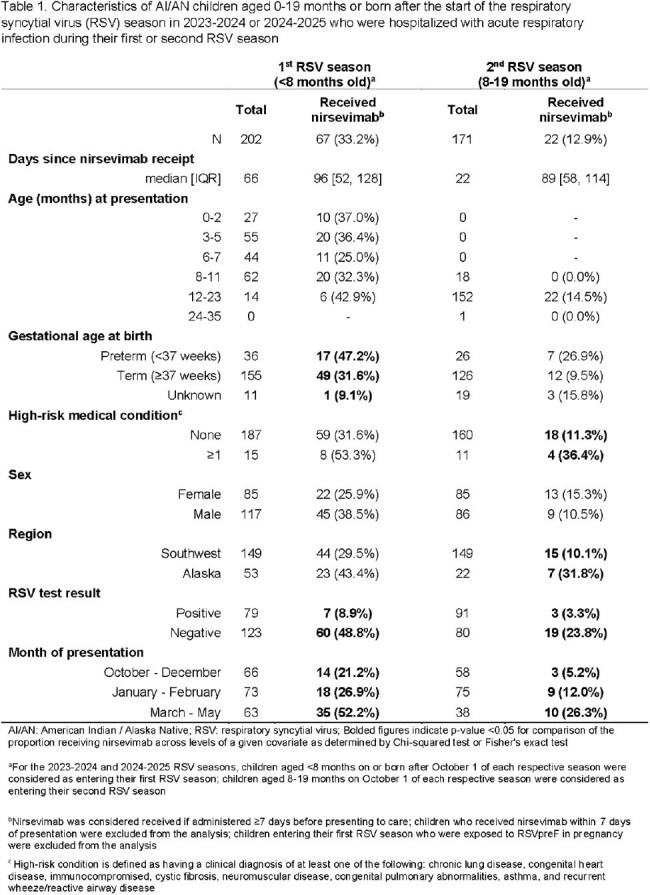 Figure 1
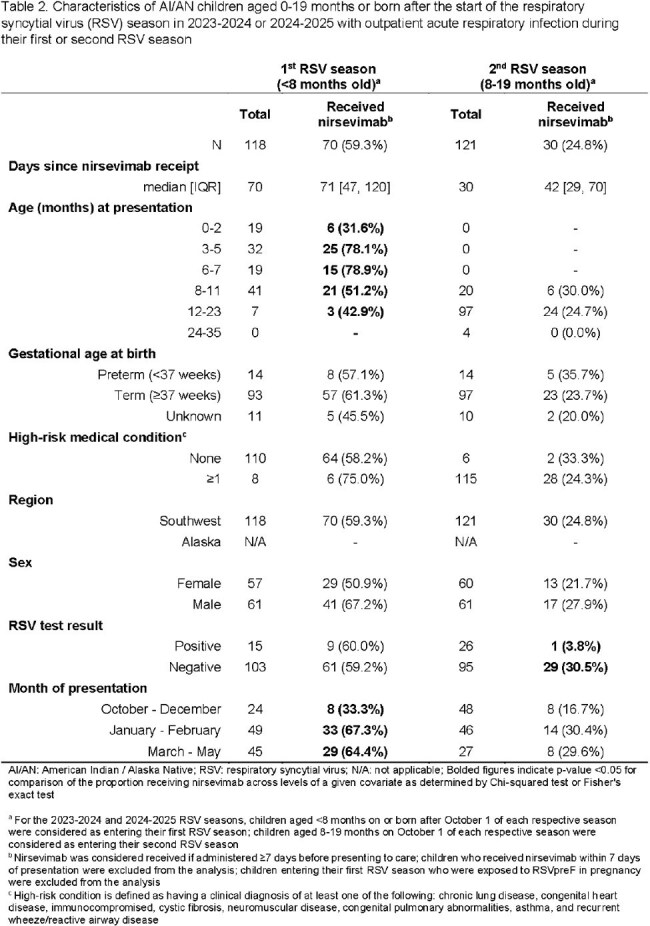 Figure 2
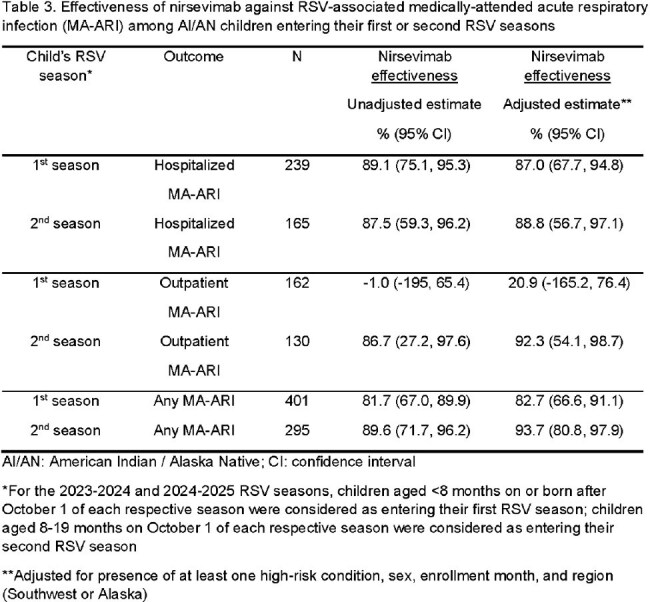 Figure 3
Peer Reviews
No public reviews on file for this paper yet. If you reviewed it on a platform where reviews are public (OpenReview, ICLR, NeurIPS, ICML), you can paste yours below so the community can read it here.
Videos
No videos yet. Explain this paper in a talk, walkthrough, or lecture? Add one.
Taxonomy
TopicsRespiratory viral infections research · Pneumonia and Respiratory Infections · Influenza Virus Research Studies