462. Red Cell Exchange Transfusion for Treatment of Babesiosis
David E Leaf, Audrey E Monson, Julie-Alexia Dias, Peter J Krause

TL;DR
Red cell exchange transfusion reduces the risk of death or readmission in severe babesiosis cases, according to a large study.
Contribution
The study provides the first strong evidence supporting the clinical benefit of red cell exchange transfusion in severe babesiosis.
Findings
ET-treated patients had a 5-fold lower risk of in-hospital death or 30-day readmission.
Results were consistent across multiple sensitivity and secondary analyses.
ET was used in 7.9% of hospitalized babesiosis patients, mostly within the first 7 days.
Abstract
Red cell exchange transfusion (ET) has been used as an adjunctive treatment for severe illness from babesiosis, particularly in patients with high parasitemia, acute organ injury, or severe hemolysis. However, data supporting the efficacy of ET on improving clinical outcomes are lacking. We performed a multicenter cohort study of 3,233 consecutive adults hospitalized with babesiosis at 84 hospitals across the northeastern US from 2010 to 2024. Data on demographics, comorbidities, vital signs, physiologic parameters, labs, treatments, and outcomes were collected by detailed chart review. Patients were eligible for this analysis if they had >10% parasitemia or 5-10% parasitemia with either acute organ injury or severe hemolytic anemia. To minimize the potential for indication- and immortal-time biases, we used a sequential target trial emulation (TTE) framework. To do so, we categorized…
Genes, proteins, chemicals, diseases, species, mutations and cell lines named across the full text — each resolved to its canonical identifier and authoritative record.
Click any figure to enlarge with its caption.
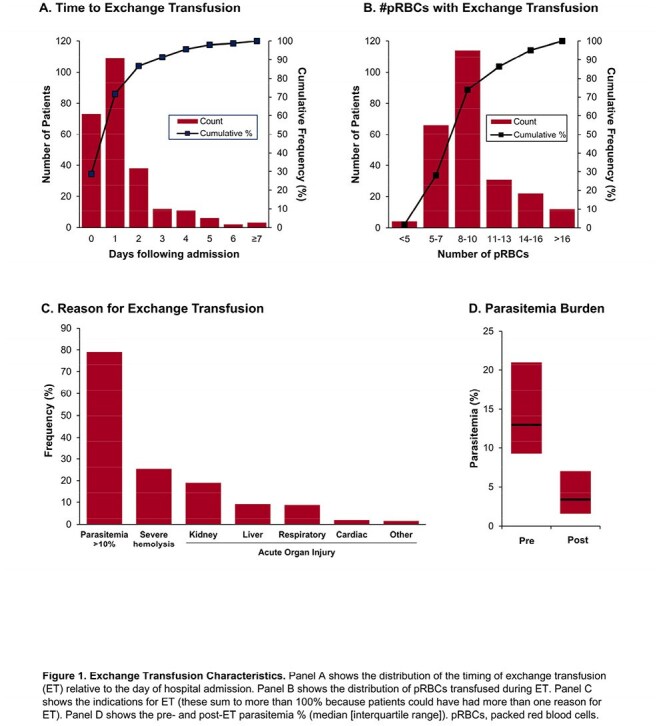 Figure 1
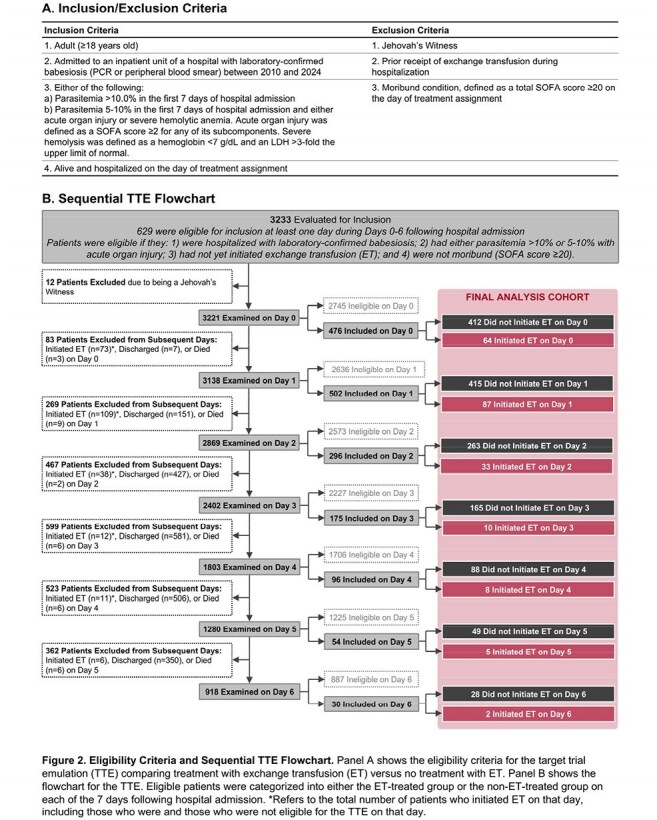 Figure 2
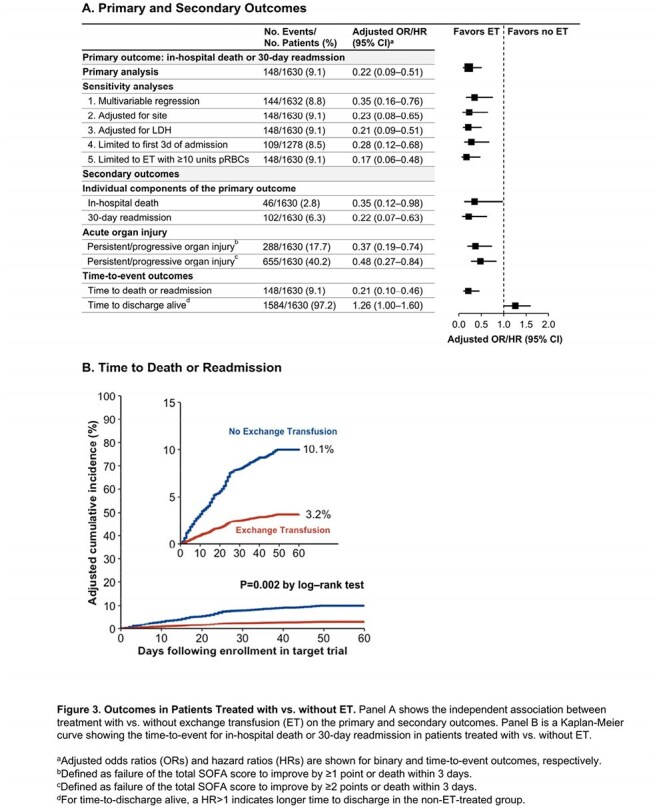 Figure 3
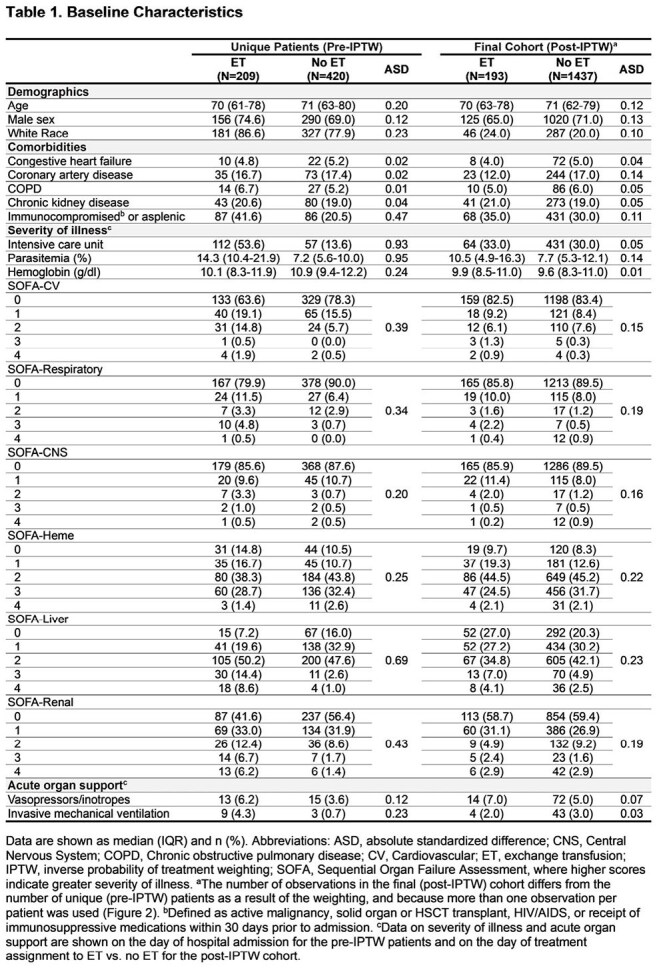 Figure 4
Peer Reviews
No public reviews on file for this paper yet. If you reviewed it on a platform where reviews are public (OpenReview, ICLR, NeurIPS, ICML), you can paste yours below so the community can read it here.
Videos
No videos yet. Explain this paper in a talk, walkthrough, or lecture? Add one.
Taxonomy
TopicsVector-borne infectious diseases · Mosquito-borne diseases and control · Parasites and Host Interactions