P-711. Testing for SARS-CoV-2, Respiratory Syncytial Virus and Human Metapneumovirus among patients hospitalized with acute respiratory tract infection — United States, 2022–2025
Ian D Plumb, Pauline Terebuh, Quangqiu Wang, Regina Simeone, Jefferson M Jones, Rebecca J Free, Amanda B Payne, Yasir Tarabichi, Fiona P Havers, David C Kaelber

TL;DR
This study analyzed testing trends for three viruses in hospitalized patients in the U.S. from 2022 to 2025, finding changes in testing rates and how they relate to disease positivity.
Contribution
The study provides new insights into how testing for SARS-CoV-2, RSV, and hMPV varied over time and by region, age, and other factors.
Findings
Testing for SARS-CoV-2 decreased from 79% to 67% between 2022 and 2025, while RSV and hMPV testing increased.
Testing for RSV and hMPV was higher among children than adults.
Testing varied across U.S. regions, with differences up to 24% for hMPV.
Abstract
Understanding clinical testing for SARS-CoV-2, respiratory syncytial virus (RSV) and human metapneumovirus (hMPV) can guide use of healthcare data for public health surveillance. We described testing patterns of these viruses over time by U.S. region among patients hospitalized with acute respiratory tract infection (ARI). We performed descriptive analyses of data from Cosmos, a de-identified electronic health records platform representing >298 million patients in the United States. We described virologic testing for SARS-CoV-2, RSV and hMPV (using LOINC codes) from 10 days before to 3 days after hospitalization with ARI (identified using ICD-10 codes) during April 3, 2022–March 29, 2025. For each epidemiologic week, we reported percentages of hospitalizations tested and test positivity if tested. We reported overall testing during the analysis period by age group, sex, race and…
Genes, proteins, chemicals, diseases, species, mutations and cell lines named across the full text — each resolved to its canonical identifier and authoritative record.
Click any figure to enlarge with its caption.
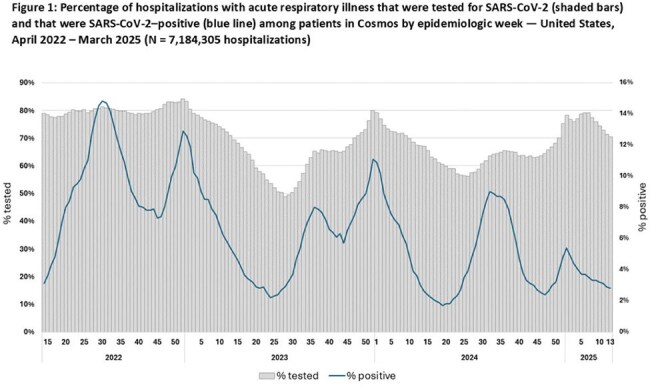 Figure 1
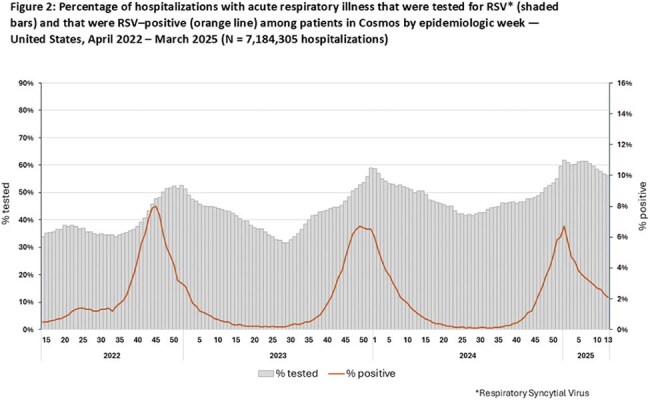 Figure 2
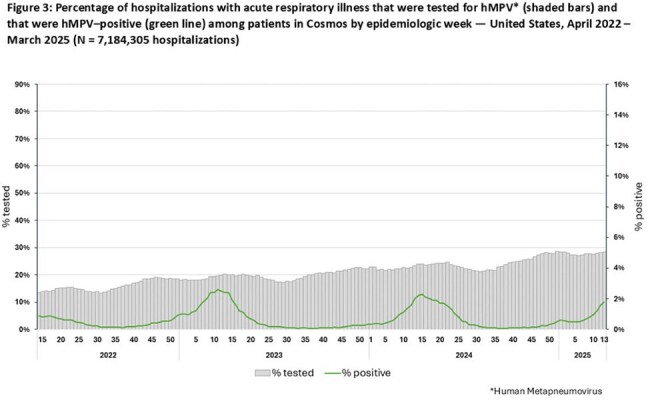 Figure 3
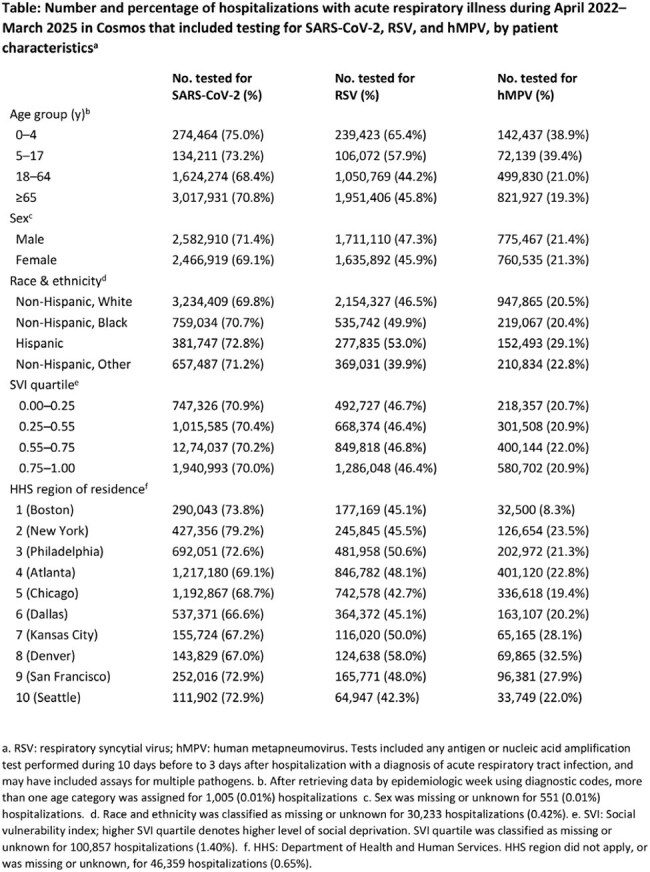 Figure 4
Peer Reviews
No public reviews on file for this paper yet. If you reviewed it on a platform where reviews are public (OpenReview, ICLR, NeurIPS, ICML), you can paste yours below so the community can read it here.
Videos
No videos yet. Explain this paper in a talk, walkthrough, or lecture? Add one.
Taxonomy
TopicsRespiratory viral infections research · SARS-CoV-2 detection and testing · Data-Driven Disease Surveillance