P-658. Emergence and Clade Expansion of Human Adenovirus B3 in Pediatric SARI: A Comparative Multicenter Study Between Brazil and Colombia, 2022–2023
Sonia Mara Raboni, Maria Angelica Maya Restrepo, Heloisa Giamberardino, Jaime Usuga, Meri Nogueira, Ana Luisa Giamberardino, Luciane Pereira, Laura Ferreira, Vivian Torrecilha, Francisco Averhoff, Paulina Rebolledo, Gavin Cloherty, Michael G Berg, J O R G E OSORIO

TL;DR
This study compares the emergence and spread of a specific human adenovirus in Brazil and Colombia, showing how it caused respiratory infections in children.
Contribution
The study identifies the emergence of HAdV-B3 and its clade expansion in two South American regions during 2022–2023.
Findings
HAdV-B3 became the dominant genotype during outbreaks in both Curitiba and Antioquia in late 2022 and early 2023.
Phylogenetic analysis revealed two distinct HAdV-B3 clades, B3-COL and B3-BZ, differing by three nucleotides.
The outbreak started earlier in Curitiba than in Antioquia, with no significant clinical differences observed between regions.
Abstract
Between 2022–2023, surveillance networks in Curitiba (Brazil) and Antioquia (Colombia) reported increased incidence and altered seasonality of respiratory tract infections. This study compared clinical and epidemiologic features, outcomes, and genotypes of patients with HAdV-associated SARI before and during outbreaks in both regions.Figure 1.Distribution of HAdV-positive patients by epidemiological week according to consultation day in Curitiba (Brazil) and Antioquia (Colombia).Curitiba (green bars) and Antioquia (red bars).Figure 2.Distribution of HAdV Genotypes in Antioquia (Colombia) and Cutitiba (Brazil), 2022 - 2023A. Distribution of various HAdV genotypes in Antioquia from February 2022 to March 2023, B. Distribution of various HAdV genotypes in Curitiba (Brazil) from May 2022 to January 2023. Areas represent the percentage prevalence of strains obtained in each period: HAdV-C89…
Genes, proteins, chemicals, diseases, species, mutations and cell lines named across the full text — each resolved to its canonical identifier and authoritative record.
Click any figure to enlarge with its caption.
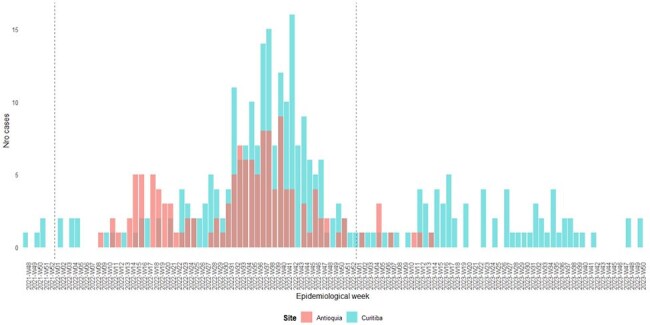 Figure 1
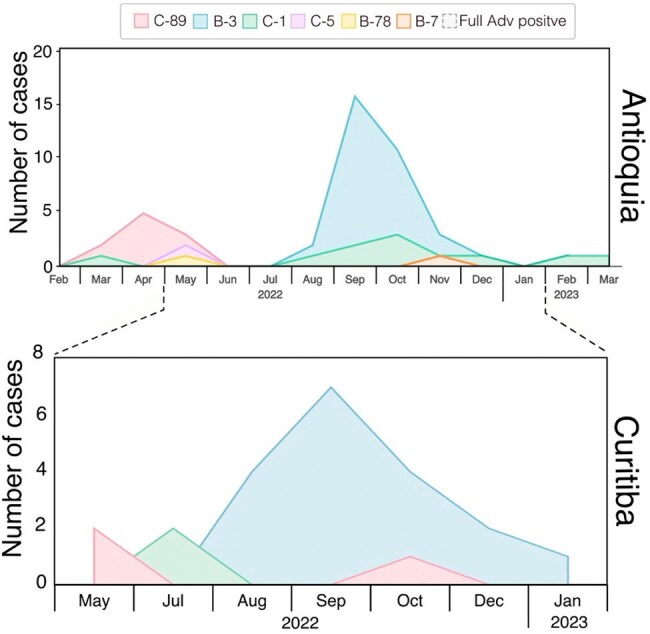 Figure 2
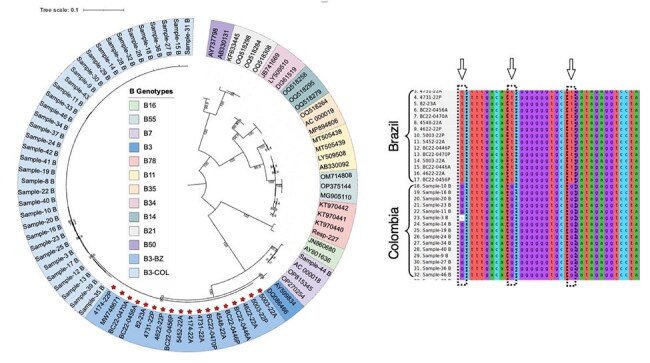 Figure 3
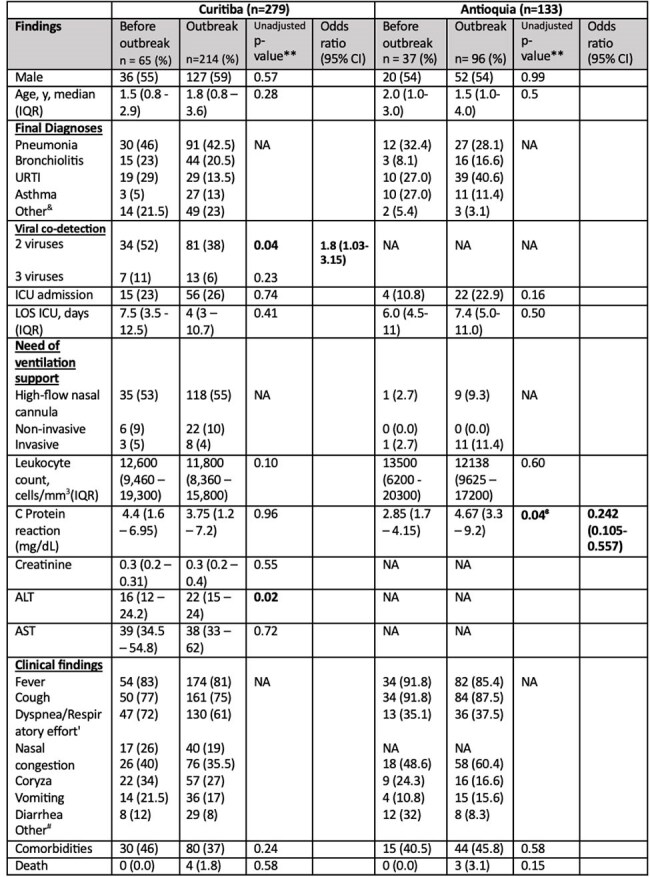 Figure 4
Peer Reviews
No public reviews on file for this paper yet. If you reviewed it on a platform where reviews are public (OpenReview, ICLR, NeurIPS, ICML), you can paste yours below so the community can read it here.
Videos
No videos yet. Explain this paper in a talk, walkthrough, or lecture? Add one.
Taxonomy
TopicsRespiratory viral infections research · Cytomegalovirus and herpesvirus research · Virus-based gene therapy research