325. Comparison of nasopharyngeal and oropharyngeal specimens for detecting Streptococcus pneumoniae colonization in children using molecular methods
Liset Olarte, Naisha R Mekala, Lauren M Sommer, Linda Lamberth, David Hulten, Denver Niles, Sheldon L Kaplan, Kristina G Hulten

TL;DR
This study compares nasopharyngeal and oropharyngeal samples in children to detect Streptococcus pneumoniae using molecular methods, finding that oropharyngeal samples can detect more colonization and serotypes but with some limitations.
Contribution
The study provides new data on the reliability of oropharyngeal samples for detecting pneumococcal colonization in children using molecular methods.
Findings
Oropharyngeal samples detected 17.1% more SPN colonization compared to nasopharyngeal samples.
Fifteen different serotypes were identified, with some serotypes found only in oropharyngeal samples.
Positive concordance between nasopharyngeal and oropharyngeal samples was observed in only 20% of children.
Abstract
Nasopharyngeal (NP) samples are considered the gold standard for detecting Streptococcus pneumoniae (SPN) colonization in children, while oropharyngeal (OP) sampling is more common in adults. The 2013 WHO guidelines suggest that in children OP cultures provide minimal additional yield to NP cultures. However, NP samples alone may underestimate colonization and serotype prevalence. While molecular methods are increasingly used, data on their reliability for OP samples in children is limited. We characterized the NP and OP pneumococcal colonization rate and serotype distribution in children. This retrospective study used residual paired NP/OP samples, obtained as part of clinical care, from children < 18 years at Texas Children’s Hospital in December 2024. Pneumococcal colonization was assessed using a multiplex qPCR assay targeting lytA, piaB, and SP2020 genes. Samples were run in…
Genes, proteins, chemicals, diseases, species, mutations and cell lines named across the full text — each resolved to its canonical identifier and authoritative record.
Click any figure to enlarge with its caption.
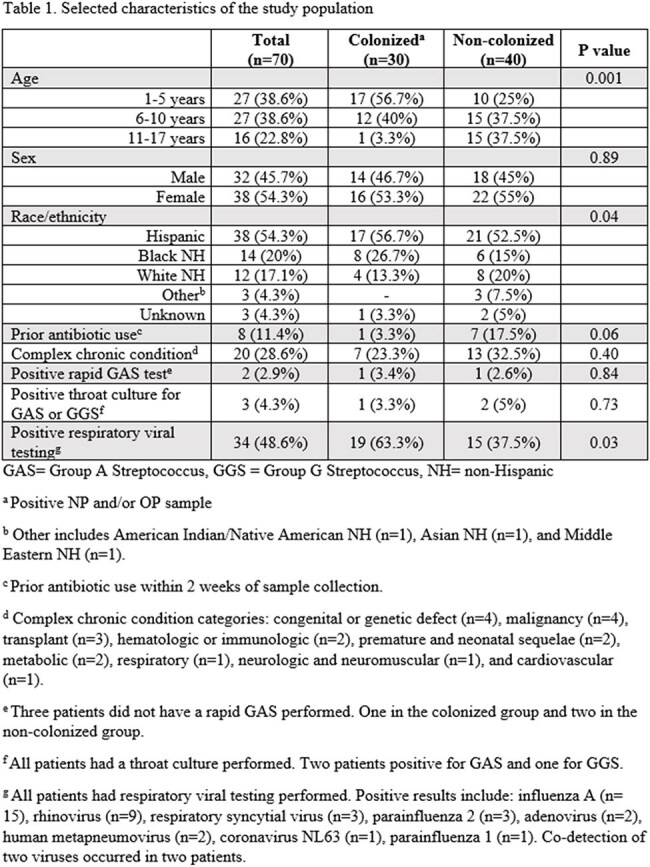 Figure 1
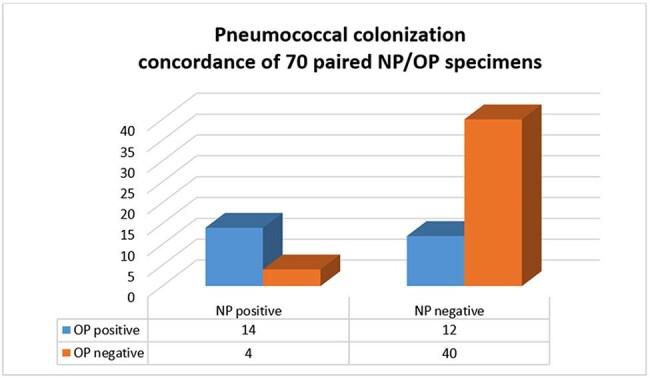 Figure 2
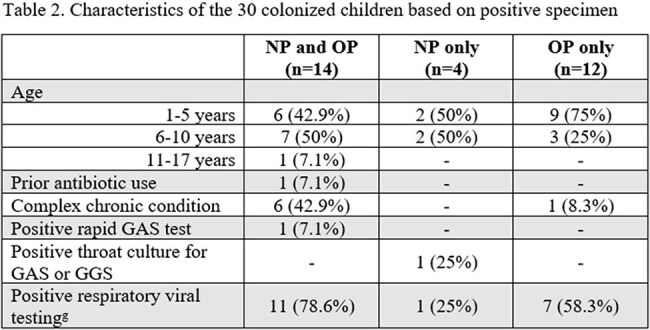 Figure 3
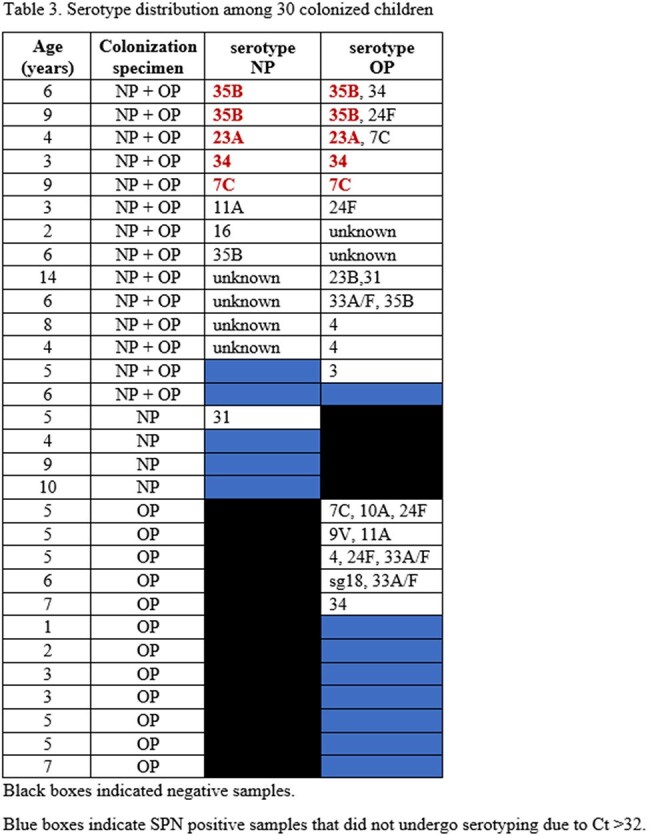 Figure 4
Peer Reviews
No public reviews on file for this paper yet. If you reviewed it on a platform where reviews are public (OpenReview, ICLR, NeurIPS, ICML), you can paste yours below so the community can read it here.
Videos
No videos yet. Explain this paper in a talk, walkthrough, or lecture? Add one.
Taxonomy
TopicsPneumonia and Respiratory Infections · Respiratory viral infections research · Nosocomial Infections in ICU