P-268. Missed Opportunities and Factors Associated with Late Diagnosis of HIV Infection in the Era of Rapid Testing
Federico Daniel Cardozo, Sofia Frankel, Guillermo Alberto Viloria, Isabel Pastor, Marina Alonso Serena, Belen Zorz, Jimena Lopez Pineiro, Iael Altclas, Javier Toibaro, Lucas Saucedo, Elena Beatriz Aldea Cieza, Angel Parlante, Mariana Angelica Kundro, Marcelo H Losso

TL;DR
This study finds that over half of HIV patients in Argentina are diagnosed late, despite having visited healthcare providers before, suggesting missed opportunities for earlier testing.
Contribution
The study identifies factors like older age and exclusive heterosexual relations as associated with late HIV diagnosis and highlights missed testing opportunities and patient-perceived barriers.
Findings
Over half (59.8%) of patients had late HIV diagnosis despite prior healthcare interactions.
Older age and exclusively heterosexual relations were significantly associated with late diagnosis.
Many patients reported feeling excluded by the healthcare system and missed testing opportunities during consultations.
Abstract
Late diagnosis (LD) of HIV infection (CD4+ < 350 cel/μl or AIDS defining condition) remains a challenge in our setting despite efforts to increase HIV testing strategies and widespread availability of rapid testing. Our aims were to assess the factors associated with LD in a cohort of patients with a new HIV diagnosis and to evaluate missed opportunities and barriers perceived by patients to timely HIV testing.Table 1.Clinical and Demographic Characteristics of the Cohort by HIV Diagnosis Timing: Overall, Early and Late HIV Diagnosis.Figure 1.Word Cloud: Late Diagnosis Participants Key Terms Clinical and Demographic Characteristics of the Cohort by HIV Diagnosis Timing: Overall, Early and Late HIV Diagnosis. Word Cloud: Late Diagnosis Participants Key Terms Prospective, observational and analytical cohort study that included a qualitative analysis of patients with LD through in-depth…
Genes, proteins, chemicals, diseases, species, mutations and cell lines named across the full text — each resolved to its canonical identifier and authoritative record.
Click any figure to enlarge with its caption.
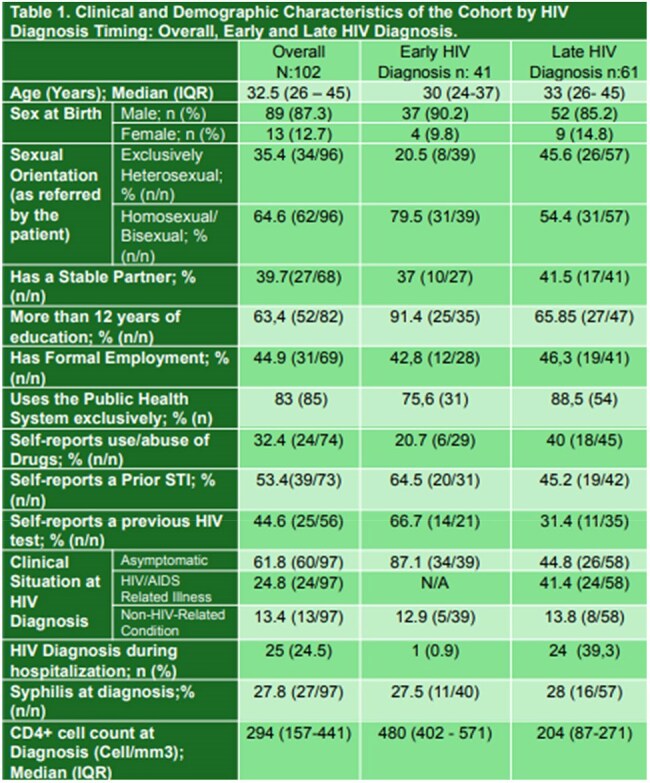 Figure 1
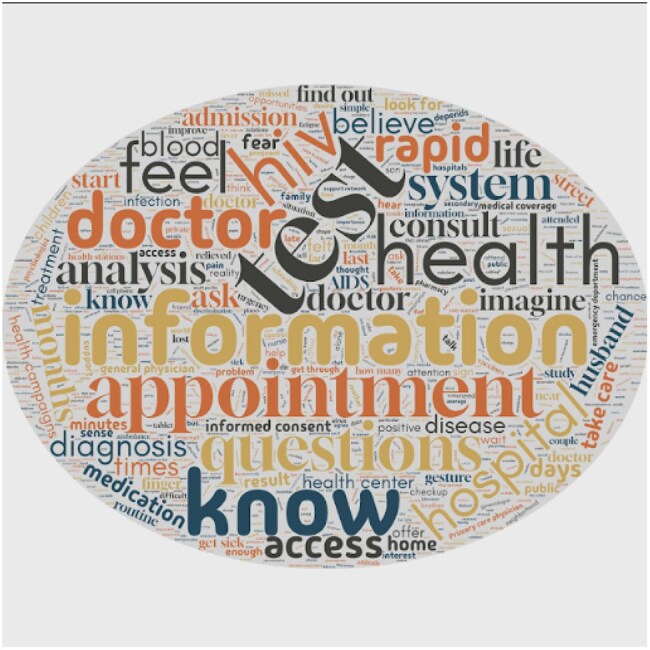 Figure 2
Peer Reviews
No public reviews on file for this paper yet. If you reviewed it on a platform where reviews are public (OpenReview, ICLR, NeurIPS, ICML), you can paste yours below so the community can read it here.
Videos
No videos yet. Explain this paper in a talk, walkthrough, or lecture? Add one.
Taxonomy
TopicsHIV/AIDS Research and Interventions · HIV Research and Treatment · Pneumocystis jirovecii pneumonia detection and treatment