P-1285. Investigating Carbapenemase Genes Among Clinical Isolates of Gram-negative Organisms from the Philippines Using Whole Genome Sequencing
Twisha S Patel, Ze Qin Lim, Natascha May Thevasagayam, Song Qi Dennis Loy, Ma Tarcela S Gler, Gina De Guzman Betito, Jay Christian D Muere, Charlene R Siza, Olivia L McGovern, Fernanda C Lessa, Kalisvar Marimuthu, Oon Tek Ng

TL;DR
This study used whole genome sequencing to investigate carbapenem resistance in Gram-negative bacteria from the Philippines, finding high prevalence of specific carbapenemase genes.
Contribution
The study provides new insights into the genetic basis of carbapenem resistance in clinical isolates from the Philippines, identifying specific carbapenemase genes and transmission patterns.
Findings
blaNDM-7 and blaNDM-1 were the most common carbapenemase genes detected in Enterobacterales isolates.
Both clonal and plasmid-mediated transmission of resistance were observed, but most cases were not linked to either.
Pseudomonas aeruginosa isolates did not carry any carbapenemase genes.
Abstract
Multidrug resistance among Gram-negative bacteria (GNB) is a serious global health threat, particularly in the Asia-Pacific region. A national surveillance program reported increasing rates of carbapenem resistance among GNB in the Philippines, ranging from 8%-18.9% in 2023, with metallo-β-lactamases being the most common mechanism of resistance. We used whole genome sequencing (WGS) to screen for carbapenemase genes and identify genetic lineages of carbapenem-non-susceptible (NS) clinical isolates collected from a private teaching hospital in Manila, Philippines.Figure 1.Distribution of ST by Organism SpeciesFigure 2.Distribution of Carbapenemase Genes Amongst Carbapenem-NS GNB Distribution of ST by Organism Species Distribution of Carbapenemase Genes Amongst Carbapenem-NS GNB All clinical isolates of carbapenem-NS GNB from hospitalized adults ( >18 years of age) in acute care wards…
Genes, proteins, chemicals, diseases, species, mutations and cell lines named across the full text — each resolved to its canonical identifier and authoritative record.
Click any figure to enlarge with its caption.
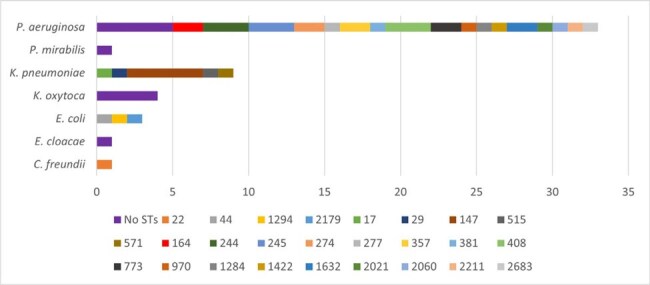 Figure 1
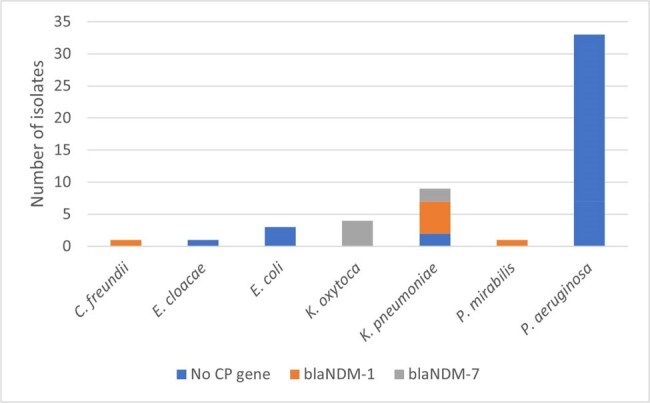 Figure 2
Peer Reviews
No public reviews on file for this paper yet. If you reviewed it on a platform where reviews are public (OpenReview, ICLR, NeurIPS, ICML), you can paste yours below so the community can read it here.
Videos
No videos yet. Explain this paper in a talk, walkthrough, or lecture? Add one.
Taxonomy
TopicsAntibiotic Resistance in Bacteria · Bacterial Identification and Susceptibility Testing · Antibiotic Use and Resistance