616. Patient Demographics and Isolate Characteristics for Candida auris Cases — New York City, 2016–2024
Michelle E Chang, Thomas Portier, Katelynn Devinney, Molly M Kratz, Addie Crawley, Nicole Burton, William Greendyke, Tristan D McPherson

TL;DR
This study tracks Candida auris cases in New York City from 2016 to 2024, showing rising cases and drug resistance, especially in skilled nursing facilities.
Contribution
The study provides the first detailed epidemiological analysis of Candida auris cases in NYC, highlighting trends in patient demographics and antifungal resistance.
Findings
Candida auris cases in NYC increased over time, with most clinical cases occurring in patients aged 68 years on average.
Resistance to fluconazole was detected in nearly all isolates, while amphotericin B resistance increased over time.
Only 24% of isolates had antifungal susceptibility testing results, indicating a need for improved surveillance and reporting.
Abstract
Candida auris is a drug-resistant fungal pathogen that can colonize skin and cause invasive infections, typically among patients in healthcare settings. Since C. auris was first reported in the United States in 2016, more cases have been reported in New York than any other state. Laboratory-confirmed C. auris must be reported to the New York City (NYC) Health Department. We characterized the epidemiology of C. auris cases in NYC to guide strategies to prevent transmission. We examined clinical and public health laboratory-reported C. auris specimens to enumerate screening and clinical cases among NYC residents during 2016–2024 using the Council of State and Territorial Epidemiologists’ 2023 case definition. A person colonized or infected with C. auris is considered colonized indefinitely and counted as a single case; screening cases can later be categorized as clinical cases. We…
Genes, proteins, chemicals, diseases, species, mutations and cell lines named across the full text — each resolved to its canonical identifier and authoritative record.
Click any figure to enlarge with its caption.
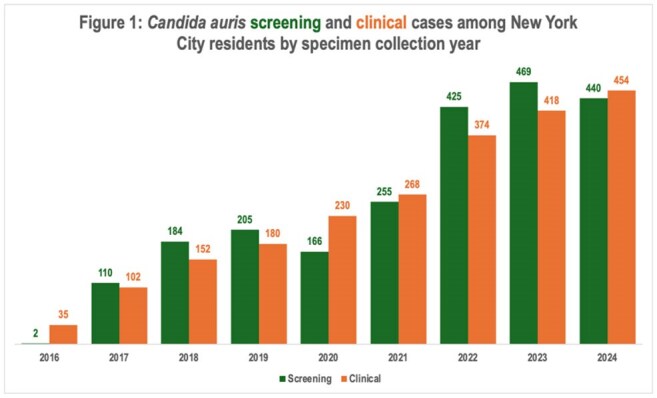 Figure 1
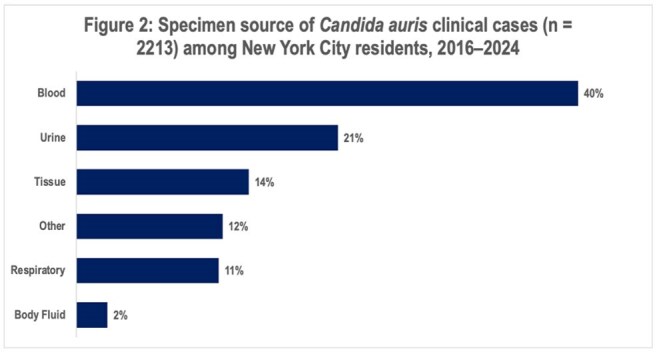 Figure 2
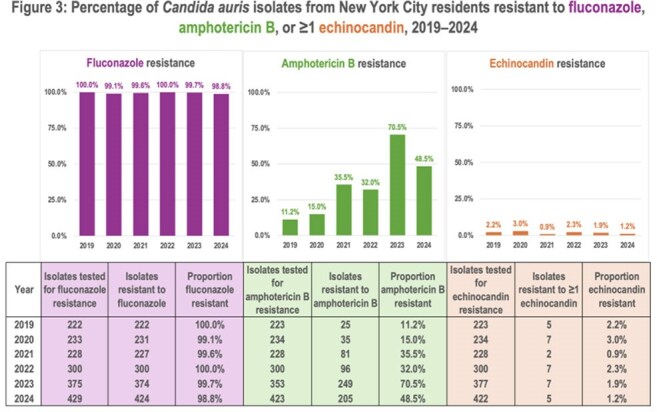 Figure 3
Peer Reviews
No public reviews on file for this paper yet. If you reviewed it on a platform where reviews are public (OpenReview, ICLR, NeurIPS, ICML), you can paste yours below so the community can read it here.
Videos
No videos yet. Explain this paper in a talk, walkthrough, or lecture? Add one.
Taxonomy
TopicsAntifungal resistance and susceptibility · Nail Diseases and Treatments · Fungal Infections and Studies