P-450. Neonatal macrophages have an altered immunometabolic response to Mycobacterium tuberculosis which is modified by IFN-γ, IL-4 or lactate
Cilian O Maoldomhnaigh, Donal Cox, Joseph Keane, Sharee Basdeo

TL;DR
Newborn macrophages respond differently to tuberculosis bacteria compared to adult macrophages, but this can be modified by immune signals or lactate.
Contribution
The study reveals distinct immunometabolic responses in neonatal macrophages to Mtb and how they can be modulated by IFN-γ, IL-4, or lactate.
Findings
Neonatal macrophages fail to reduce oxidative phosphorylation and produce less TNF after Mtb infection compared to adult macrophages.
IFN-γ increases TNF production in neonatal macrophages to adult levels despite not altering their metabolism.
Exogenous lactate reduces glycolysis and increases oxidative phosphorylation in both adult and neonatal macrophages.
Abstract
Tuberculosis (TB) is the biggest infectious killer in the world and the most vulnerable time to infection is the newborn period. Mycobacterium tuberculosis (Mtb), the bacteria that causes TB, is phagocytosed by macrophages and subsequent metabolic responses are required in order to mount an appropriate immune response. This increase in glycolysis and decrease in oxidative phosphorylation (OXPHOS) is called the Warburg effect and we have previously shown that adult monocyte derived macrophages (MDM) undergo Warburg but that umbilical cord MDM (UCMDM) have an altered immunometabolic response, failing to reduce OXPHOS and producing less TNF following Mtb infection (Figure 1). We examined the effects of IFN-γ, IL-4 or lactate on MDM and UCMDM immunometabolic phenotype and function. MDM were derived from healthy adult buffy coats or from umbilical cord blood prior to analysis in the XFe…
Genes, proteins, chemicals, diseases, species, mutations and cell lines named across the full text — each resolved to its canonical identifier and authoritative record.
Click any figure to enlarge with its caption.
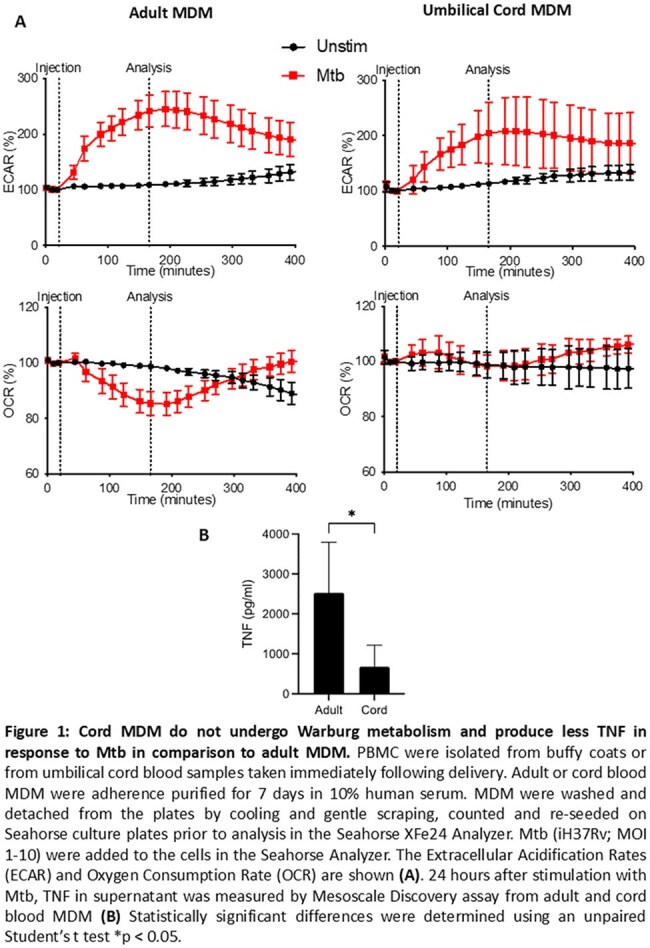 Figure 1
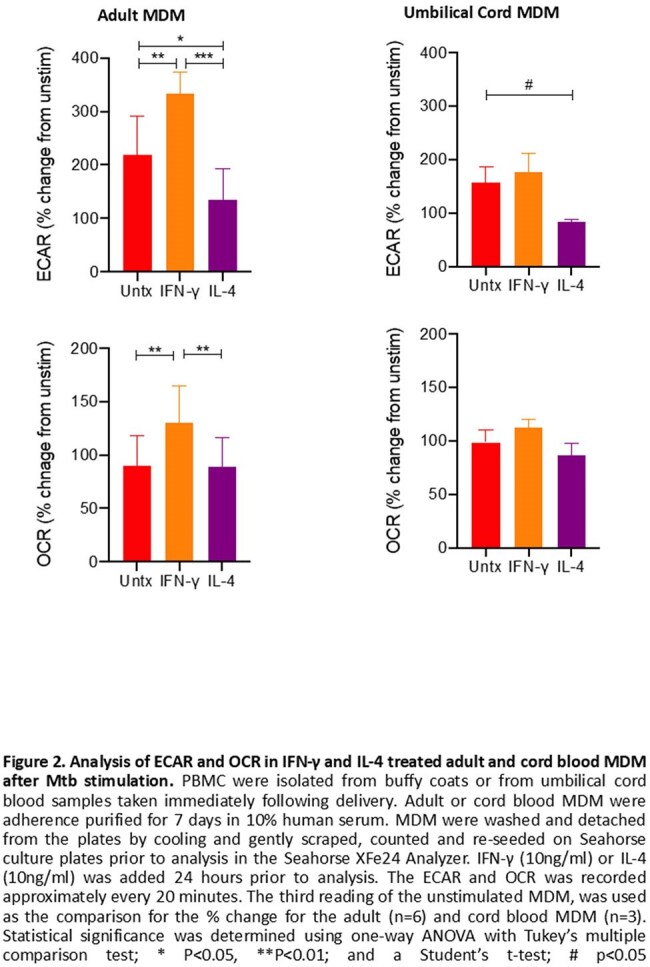 Figure 2
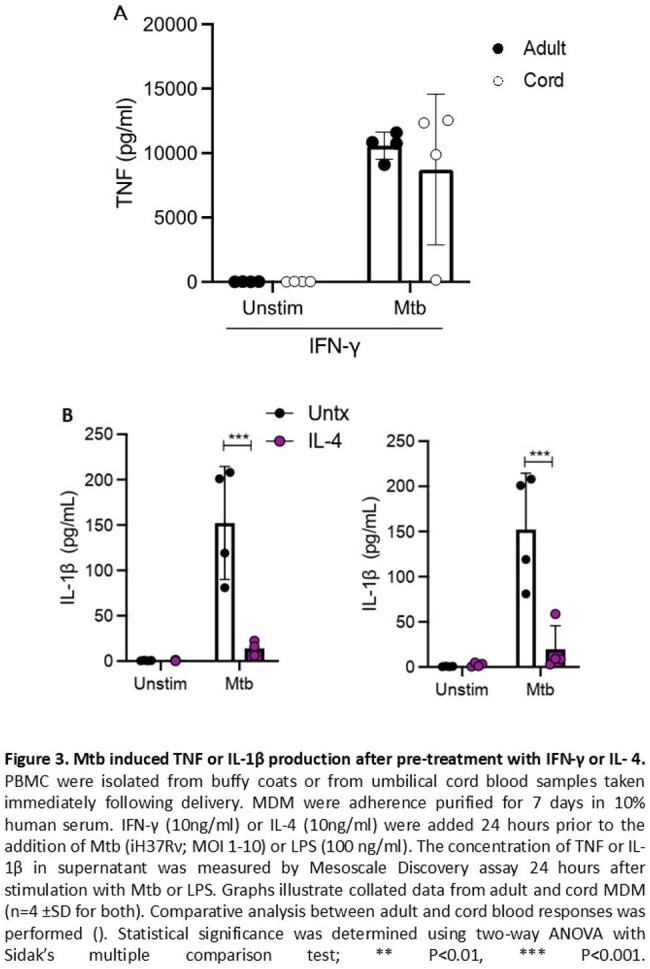 Figure 3
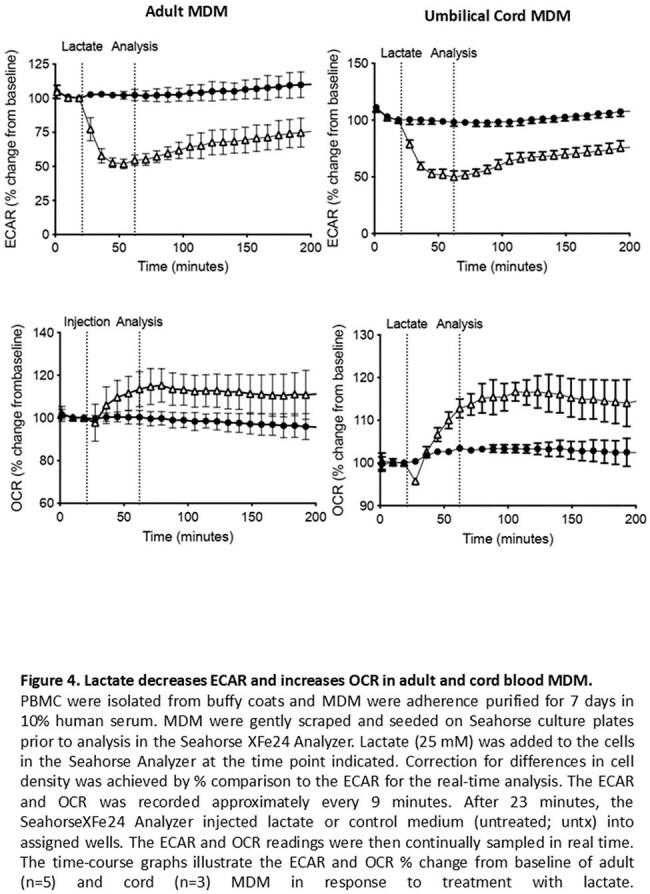 Figure 4
Peer Reviews
No public reviews on file for this paper yet. If you reviewed it on a platform where reviews are public (OpenReview, ICLR, NeurIPS, ICML), you can paste yours below so the community can read it here.
Videos
No videos yet. Explain this paper in a talk, walkthrough, or lecture? Add one.
Taxonomy
TopicsTuberculosis Research and Epidemiology · Immune cells in cancer · Diagnosis and treatment of tuberculosis