P-657. Clinical Characteristics and Microbiology of Patients with Pneumonia after Battlefield Trauma
Luke Jackson, Laveta Stewart, M Leigh Carson, Erica Sercy, Wesley Campbell, Andrew Wyatt, Katrin Mende, David R Tribble, John Kiley

TL;DR
This study examines how common pneumonia is among injured military personnel and finds that those with pneumonia had more severe injuries and higher mortality.
Contribution
The study provides insights into the clinical and microbiological characteristics of pneumonia in battlefield trauma patients.
Findings
Pneumonia occurred in 12% of 2,687 wounded military personnel, with higher injury severity and torso injuries in affected patients.
Pneumonia patients with multidrug-resistant bacteria had greater injury severity and longer hospital stays compared to those with non-resistant bacteria.
Pseudomonas aeruginosa and Acinetobacter baumannii were the most frequently isolated bacteria, with high MDR rates in the latter.
Abstract
Lower respiratory infections are a major contributor to morbidity after battlefield trauma. Between 2009-10, 8.5% of 423 US military casualties developed pneumonia (PNA) with a higher proportion (18.5%) in patients admitted to ICUs. Using a larger population, we examined characteristics associated with PNA after battlefield trauma.Characteristics of Wounded Military Personnel Who Did and Did Not Develop PneumoniaICU – intensive care unit IED – improvised explosive device; IQR – interquartile range1 Patients frequently sustained polytrauma, so the numbers will sum to more than the total number of patientsCharacteristics of Patients with Pneumonia Stratified by Isolation of Multidrug-Resistant (MDR) BacteriaICU – intensive care unit IED – improvised explosive device; IQR – interquartile range1 Patients frequently sustained polytrauma, so the numbers will sum to more than the total number…
Genes, proteins, chemicals, diseases, species, mutations and cell lines named across the full text — each resolved to its canonical identifier and authoritative record.
Click any figure to enlarge with its caption.
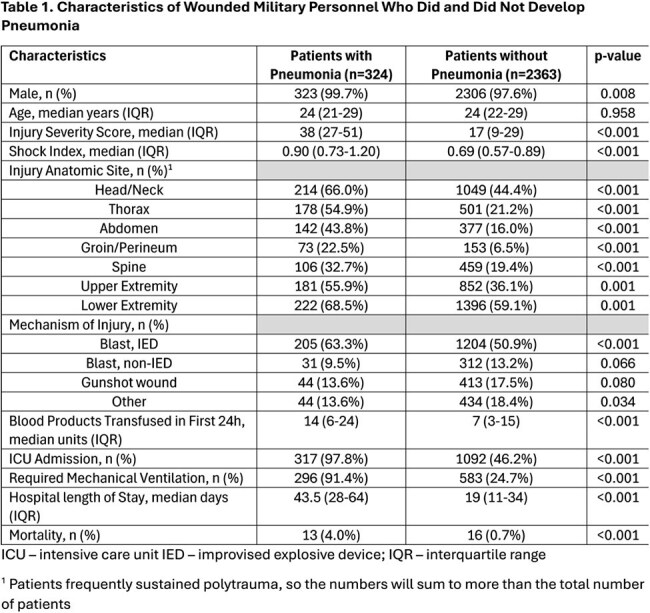 Figure 1
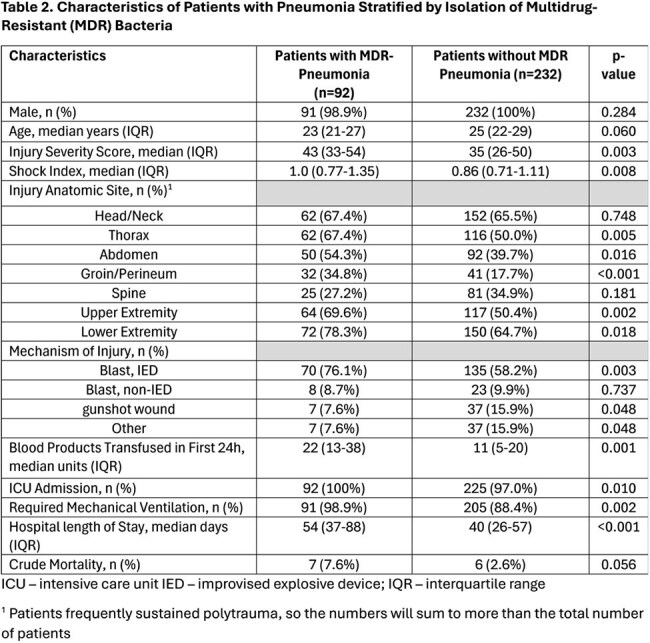 Figure 2
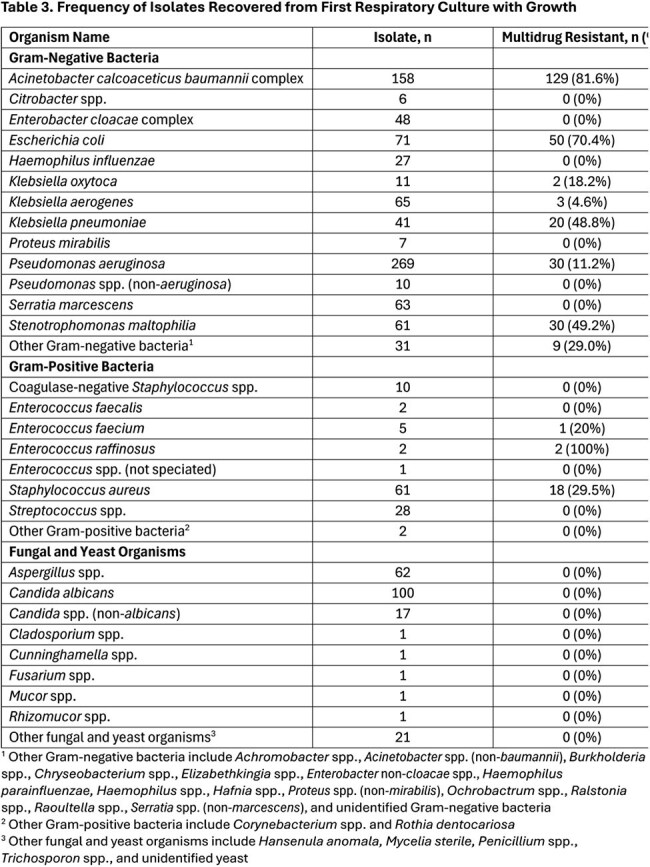 Figure 3
Peer Reviews
No public reviews on file for this paper yet. If you reviewed it on a platform where reviews are public (OpenReview, ICLR, NeurIPS, ICML), you can paste yours below so the community can read it here.
Videos
No videos yet. Explain this paper in a talk, walkthrough, or lecture? Add one.
Taxonomy
TopicsInfections and bacterial resistance · Nosocomial Infections in ICU · Enterobacteriaceae and Cronobacter Research