P-195. Clinical characteristics, epidemiology and outcomes of imported malaria at a tertiary level hospital in Mexico
Maximiliano Trevilla Viveros, Luis Gabriel Seriña Negrete, Maria Luisa Hernández Medel, Tiburcio Margarito Santos González, Joaquin Moreno Moreno, Jose Ivan Reyes Inclan, Silvia Paola Barragán Hernández, Sergio Bernardo Garcia Arce, Uzziel Aguilera Ontiveros

TL;DR
This study examines imported malaria cases in Mexico, showing most come from the Darién Gap, with P. falciparum and P. vivax being the main species and treatment challenges due to drug shortages.
Contribution
The study provides updated clinical and epidemiological data on imported malaria in Mexico linked to migration patterns and drug availability.
Findings
Most imported malaria cases in Mexico were linked to the Darién Gap, with Venezuela as the main country of origin.
P. falciparum was found in African-imported cases, while P. vivax was more common in Central and South American cases.
Treatment shortages led to inadequate therapy and recurrence in some patients, highlighting the need for improved antimalarial availability.
Abstract
Mexico is a low malaria transmission setting, however, there has been an increase in the total number of imported cases, associated with greater migratory movement from Central and South America en route to the United States, most of which are linked to passage through the Darién Gap, a high-transmission area in the jungle region between Colombia and Panama.Migration Routes of Imported Malaria Cases, 2024 Migration Routes of Imported Malaria Cases, 2024 Retrospective study of all imported malaria cases diagnosed from January 2024 to December 2024 in a tertiary-level hospital in Mexico City. All epidemiological, clinical and laboratory data were obtained from patients’ electronic medical records. All malaria cases were confirmed by thick blood smear examination in accordance with national guidelines. Severe malaria was defined according to the World Health Organization criteria. A…
Genes, proteins, chemicals, diseases, species, mutations and cell lines named across the full text — each resolved to its canonical identifier and authoritative record.
Click any figure to enlarge with its caption.
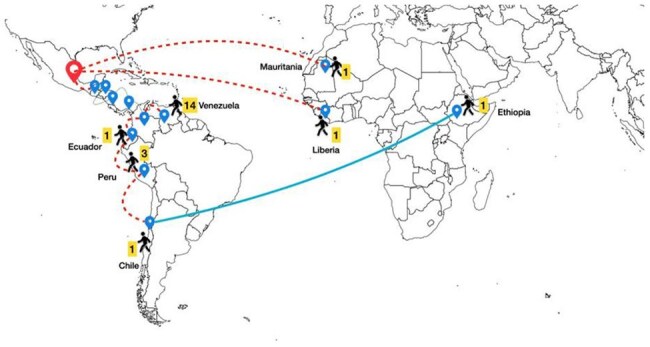 Figure 1
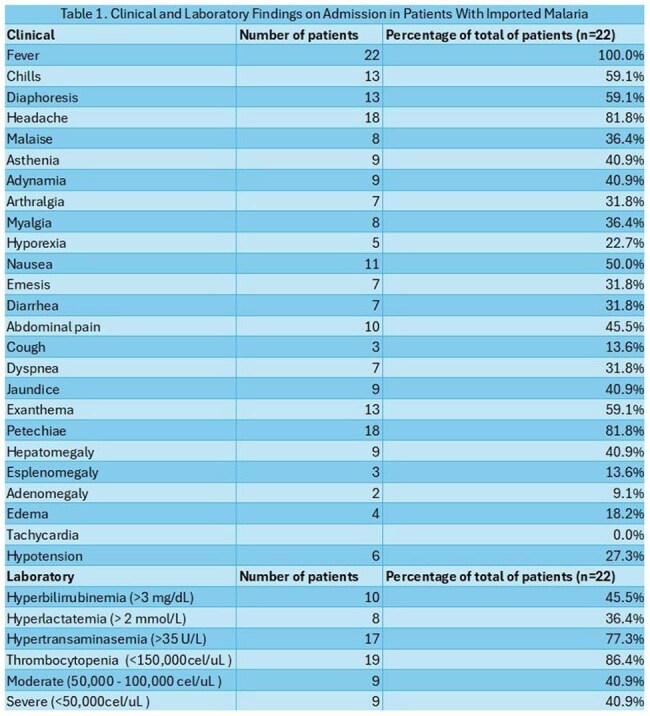 Figure 2
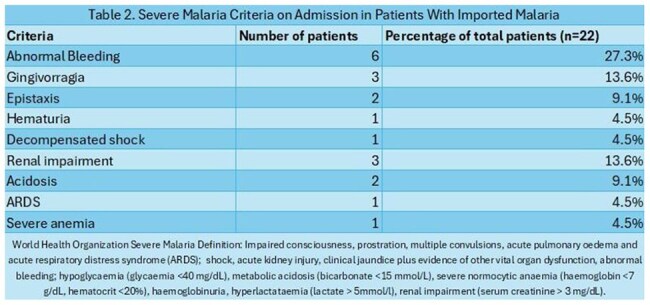 Figure 3
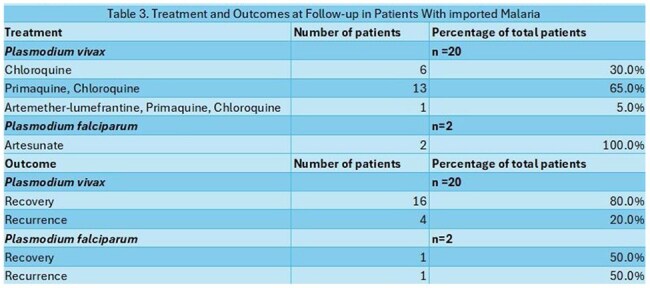 Figure 4
Peer Reviews
No public reviews on file for this paper yet. If you reviewed it on a platform where reviews are public (OpenReview, ICLR, NeurIPS, ICML), you can paste yours below so the community can read it here.
Videos
No videos yet. Explain this paper in a talk, walkthrough, or lecture? Add one.
Taxonomy
TopicsMalaria Research and Control · Mosquito-borne diseases and control · Parasitic Diseases Research and Treatment