P-1761. The Host Transcriptional Response to Cryptococcal Infection Reflects Dysregulated Innate and Adaptive Immune System Functions that Increases Vulnerability to Infection
Julie M Steinbrink, Beatrice Sim, Cameron Miller, Deng B Madut, John A Crump, Venance Maro, Matthew Rubach, Micah T McClain

TL;DR
This study identifies unique immune response patterns in blood from patients with cryptococcal infection, revealing dysregulated immune pathways and a potential 28-gene diagnostic classifier.
Contribution
The study identifies a gene expression signature that distinguishes cryptococcal infections from bacterial/viral infections using whole-blood transcriptomics.
Findings
3,853 genes were upregulated in cryptococcosis, reflecting innate and adaptive immune activation.
A 28-gene classifier distinguished cryptococcal from bacterial/viral infections with an AUC of 0.877.
Elevated type I interferon signaling suggests a permissive state for infection in human disease.
Abstract
Cryptococcus species are opportunistic fungal pathogens that cause life-threatening infections; however, clinical presentation often overlaps with other febrile syndromes, complicating diagnosis. We leveraged whole-blood transcriptomic analysis to define unique, conserved elements of the immune response to real-world Cryptococcus infection to clarify elements of increased susceptibility as well as improve diagnosis. Whole blood was collected by PAXgene for RNA sequencing from adult febrile inpatients at a Tanzanian medical center to compare gene expression between patients with cryptococcosis (defined as positive blood cultures or cryptococcal antigen >1:4), combined bacterial/viral pathogens, and healthy controls. Differential expression and gene set enrichment analyses were used to characterize expression differences between pathogen-class groups. Penalized logistic regression was…
Genes, proteins, chemicals, diseases, species, mutations and cell lines named across the full text — each resolved to its canonical identifier and authoritative record.
Click any figure to enlarge with its caption.
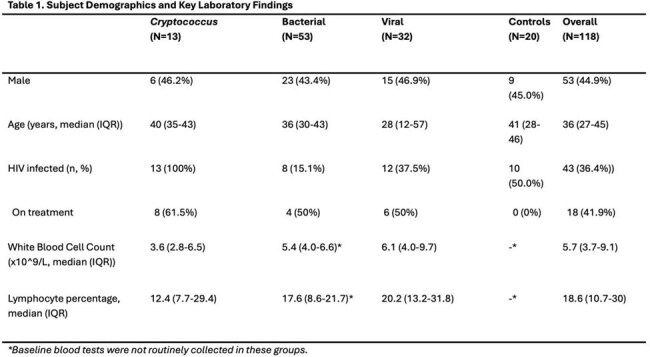 Figure 1
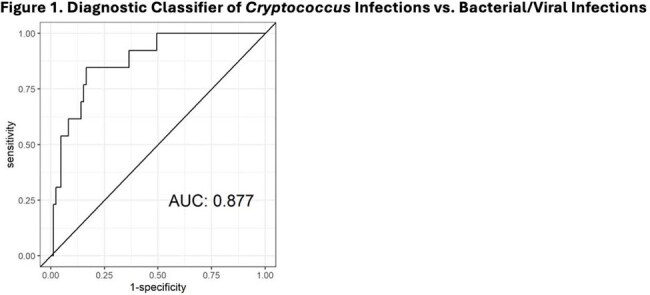 Figure 2
Peer Reviews
No public reviews on file for this paper yet. If you reviewed it on a platform where reviews are public (OpenReview, ICLR, NeurIPS, ICML), you can paste yours below so the community can read it here.
Videos
No videos yet. Explain this paper in a talk, walkthrough, or lecture? Add one.
Taxonomy
TopicsFungal Infections and Studies · Hidradenitis Suppurativa and Treatments · Nail Diseases and Treatments