P-1233. Less is More? A Retrospective Comparison of Twice and Thrice Daily Dosing of Metronidazole in Confirmed Anaerobic Infections
Hayley W Hamilton, Randi Silcox, Sasha Ward, Laura Comalander, Emily A Plauche

TL;DR
This study compares twice-daily and three-times-daily metronidazole dosing for anaerobic infections and finds no significant difference in effectiveness.
Contribution
The study provides new clinical evidence supporting the switch to twice-daily metronidazole dosing in confirmed anaerobic infections.
Findings
Clinical cure rates were 58% for thrice-daily and 71% for twice-daily dosing, with no significant difference.
Secondary outcomes like mortality, length of stay, and readmission showed no significant differences between dosing regimens.
Abstract
Metronidazole is commonly used for anaerobic infections due to its affordability, effectiveness, and tolerability. Its half-life is 6 to 10 hours with studies showing therapeutic serum levels at 12 hours. Studies comparing BID to TID dosing in presumed and confirmed anaerobic infections have shown similar clinical outcomes. Based on emerging evidence and its pharmacokinetics, our hospital system updated the standard dosing of metronidazole from 500mg TID to 500mg BID for most indications. The purpose of this study was to evaluate the effectiveness of this dosing in confirmed anaerobic infections. This was an IRB exempt, retrospective, quasi-experimental study at two sites in a community teaching hospital system. In June 2023, the standard dosing of metronidazole was changed to BID. Pre-intervention data included patients who received TID dosing from January 2022 to April 2023.…
Genes, proteins, chemicals, diseases, species, mutations and cell lines named across the full text — each resolved to its canonical identifier and authoritative record.
Click any figure to enlarge with its caption.
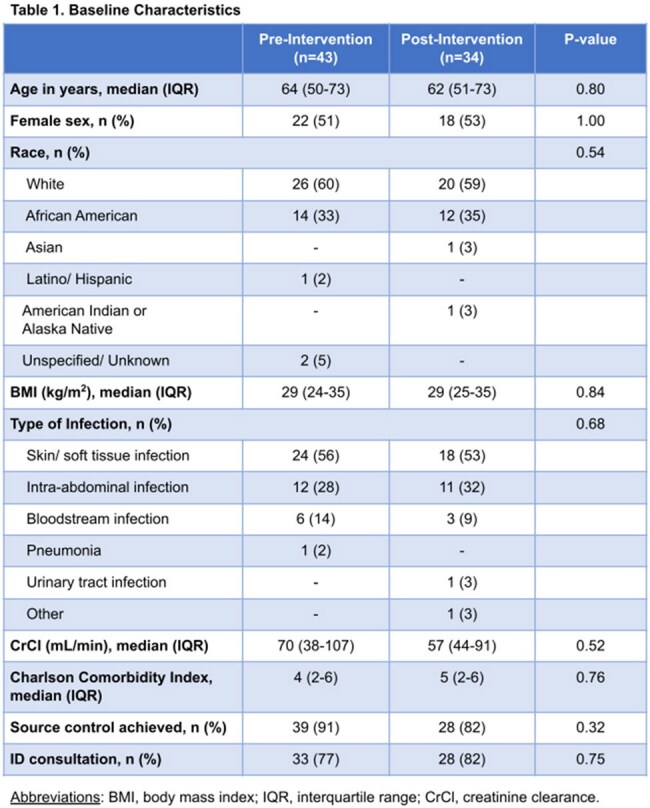 Figure 1
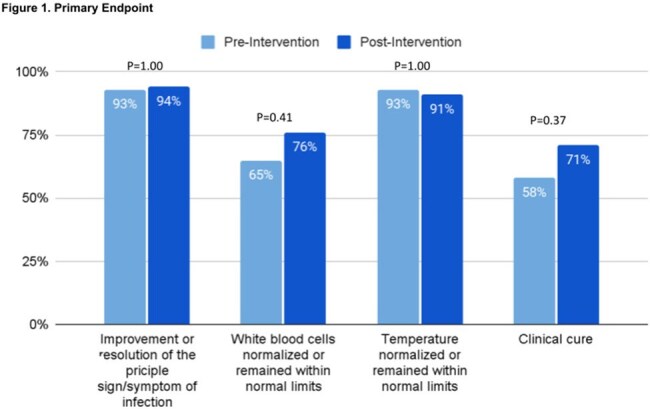 Figure 2
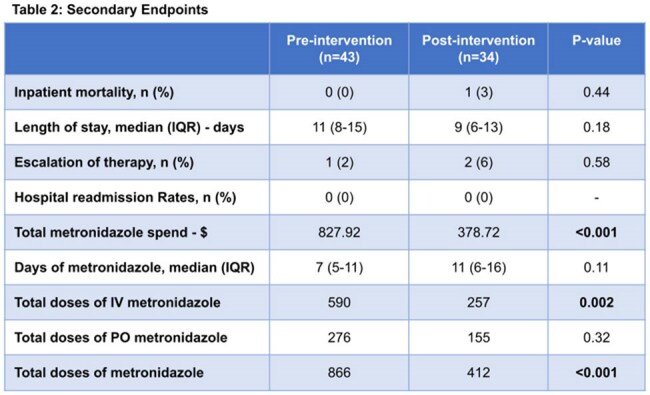 Figure 3
Peer Reviews
No public reviews on file for this paper yet. If you reviewed it on a platform where reviews are public (OpenReview, ICLR, NeurIPS, ICML), you can paste yours below so the community can read it here.
Videos
No videos yet. Explain this paper in a talk, walkthrough, or lecture? Add one.
Taxonomy
TopicsBacterial Identification and Susceptibility Testing · Antibiotic Use and Resistance · Clostridium difficile and Clostridium perfringens research