P-732. Clinical Utility of the Multiplex, Point-of-Care Cobas Liat CT/NG/MG Nucleic Acid Test Compared with Standard Practice
Gregory Hirsch, Stephanie E Cohen, Jason Ramm, Zune Huynh, Susie Chang, Christopher Dodoo, Rodney Arcenas, Alison Cohee, Elizabeth Talmont, Louis Kuritzky

TL;DR
A new point-of-care test for sexually transmitted infections shows promise in reducing inappropriate antibiotic use compared to standard practices.
Contribution
Demonstrates the clinical utility of a multiplex point-of-care test in reducing antimicrobial misuse.
Findings
The POC test reduced inappropriate treatment rates compared to standard care for composite and Mycoplasma genitalium endpoints.
Consultation times were similar between the POC and standard care groups.
Interim results suggest potential for improved patient outcomes and antimicrobial stewardship.
Abstract
Fast, accurate, point-of-care (POC) diagnosis can inform appropriate and timely treatment and patient management, optimizing antimicrobial stewardship and treatment outcomes compared with current standard of care (SOC) practices, including presumptive treatment. We present interim study results comparing the clinical utility of the Cobas® Liat CT/NG/MG test–a molecular POC multiplex test for detection and differentiation of Chlamydia trachomatis (CT), Neisseria gonorrhoeae (NG), and Mycoplasma genitalium (MG)–with current SOC. This ongoing, multicenter, prospective trial is enrolling adults with exposure to or suspected sexually transmitted infection who are randomized 1:1 to SOC diagnostic testing at discretion of treating provider vs. POC test. Patients in both arms provide urogenital samples (urine or vaginal swab) for external laboratory (FDA-approved) and clinician-ordered…
Click any figure to enlarge with its caption.
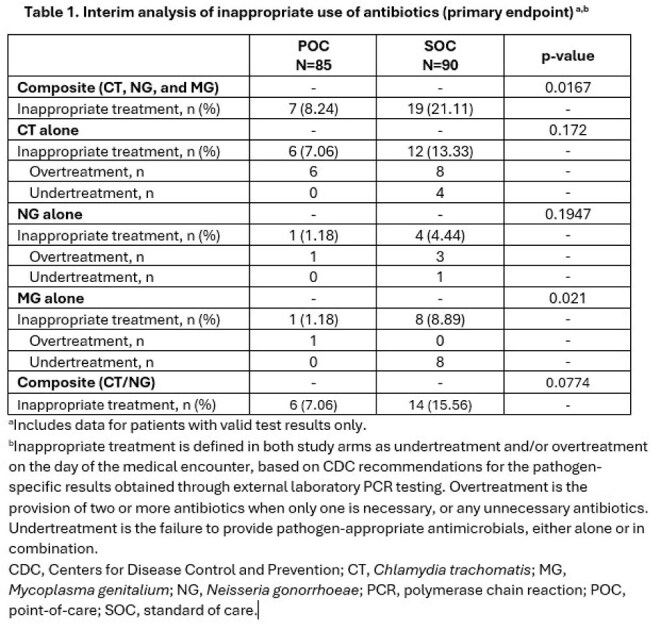 Figure 1
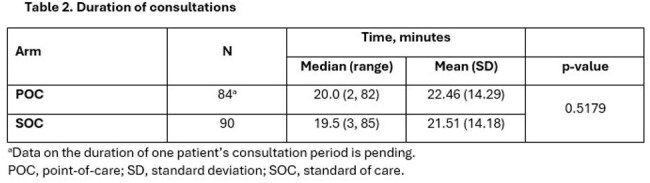 Figure 2
Peer Reviews
No public reviews on file for this paper yet. If you reviewed it on a platform where reviews are public (OpenReview, ICLR, NeurIPS, ICML), you can paste yours below so the community can read it here.
Videos
No videos yet. Explain this paper in a talk, walkthrough, or lecture? Add one.
Taxonomy
TopicsReproductive tract infections research · Bacterial Identification and Susceptibility Testing · Cervical Cancer and HPV Research