P-1657. Difference in reactogenicity events between mRNA and Protein-subunit Vaccines: Results from the Booster Epidemiological Evaluation of Health, Illness, and Vaccine Efficacy (BEEHIVE) Study, a U.S. randomized trial of 2023-2024 COVID-19 vaccines (XBB.1.5)
Sarang K Yoon, Matthew S Thiese, Andrew Phillips, German L Ellsworth, Sarah W Ball, Elizabeth Rowley, Steph Battan-Wraith, Rebecca Fink, Adam Yates, Seth Toback, Lisa M Dunkle, Matthew D Rousculp, Hongwei Zhao

TL;DR
This study compares the side effects of two 2023-2024 COVID-19 vaccines, finding that the protein-based Novavax vaccine causes fewer and less severe reactions than the mRNA Pfizer vaccine.
Contribution
The study provides new empirical evidence on reactogenicity differences between mRNA and protein-subunit vaccines in a recent U.S. population.
Findings
Novavax recipients reported fewer systemic and local reactogenicity events than Pfizer recipients within the first two days post-vaccination.
Only 15.7% of Novavax recipients experienced Grade 2 or higher symptoms, compared to 33.6% of Pfizer recipients.
Reactogenicity events were transient and showed no difference at six days post-vaccination.
Abstract
Vaccine reactogenicity, defined as local and systemic reactions, is a leading factor for COVID-19 vaccine hesitancy in adults1-4. As the perceived risk of COVID-19 decreases, individuals may become less permissive towards vaccine-associated adverse reactions.Figure 1.Study DesignFigure 2.Local and systemic reactogenicity events after Novavax or Pfizer vaccines within 1, 2, and 6 days Study Design Local and systemic reactogenicity events after Novavax or Pfizer vaccines within 1, 2, and 6 days This double-blinded RCT compared two 2023-2024 (XBB.1.5) vaccines Novavax (NVX), a protein-based vaccine, and Pfizer-BioNTech (mRNA) over a 24-week period between Nov 2023 and Aug 2024 (Fig 1). Solicited reactogenicity symptoms (systemic and local), were evaluated using a post-vaccination questionnaire at 3-time intervals (1-, 2-, and 6-days post-vaccination). Reactogenicity was assessed for…
Genes, proteins, chemicals, diseases, species, mutations and cell lines named across the full text — each resolved to its canonical identifier and authoritative record.
Click any figure to enlarge with its caption.
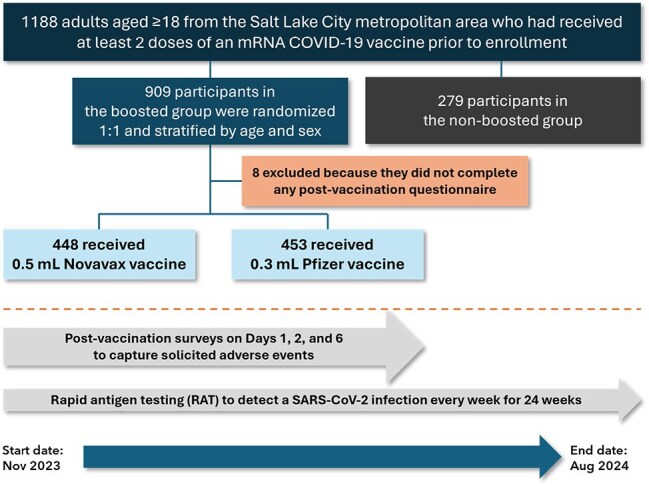 Figure 1
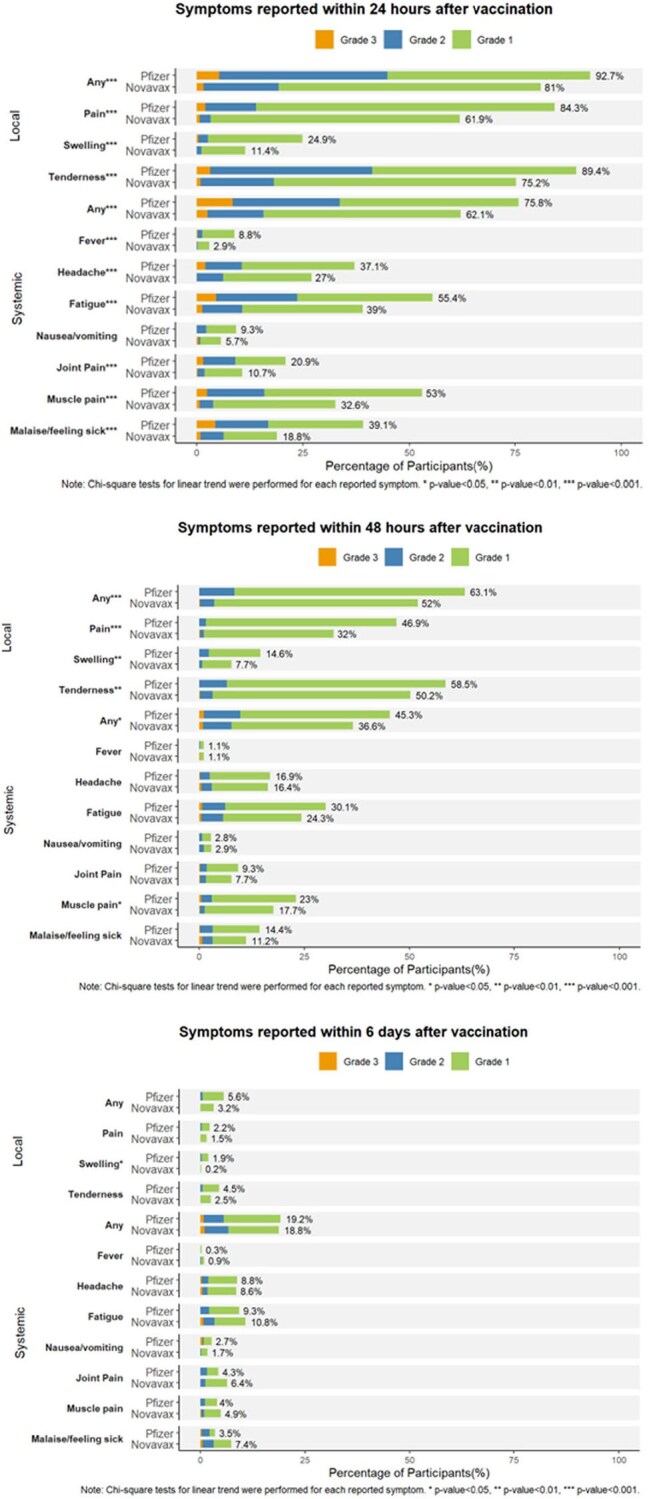 Figure 2
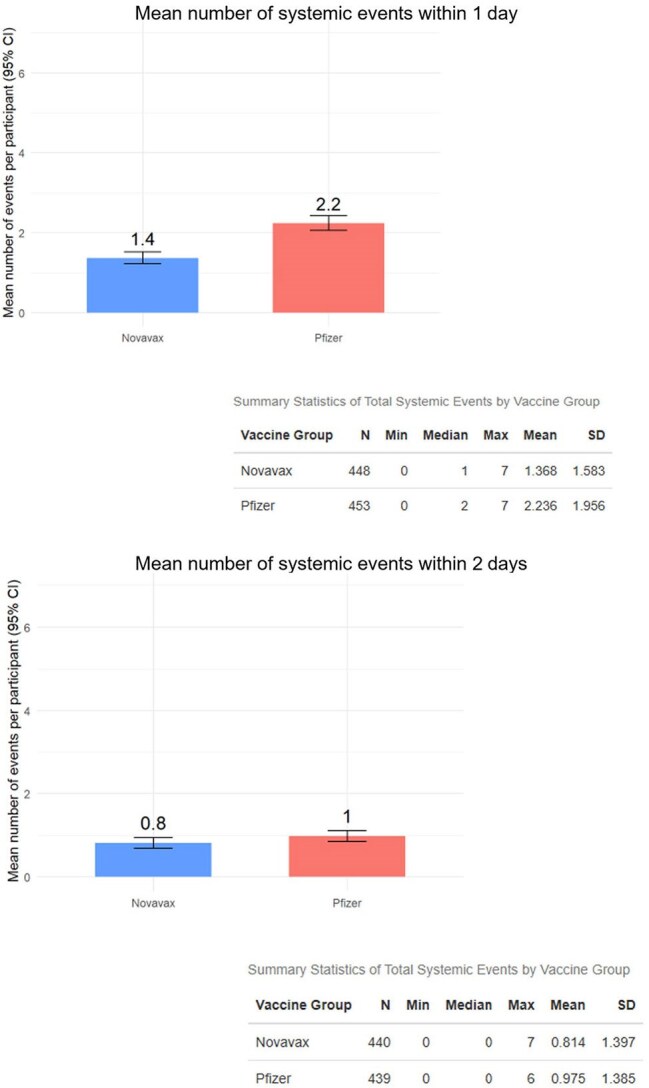 Figure 3
Peer Reviews
No public reviews on file for this paper yet. If you reviewed it on a platform where reviews are public (OpenReview, ICLR, NeurIPS, ICML), you can paste yours below so the community can read it here.
Videos
No videos yet. Explain this paper in a talk, walkthrough, or lecture? Add one.
Taxonomy
TopicsSARS-CoV-2 and COVID-19 Research · Vaccine Coverage and Hesitancy · vaccines and immunoinformatics approaches