646. Subgroup Analyses of Microbiological Cure Rates by Baseline Zoliflodacin MIC and Susceptibility to Ciprofloxacin in Participants from the Global Zoliflodacin Phase 3 Randomized Controlled Trial
Sarah McLeod, Esther Bettiol, Varalakshmi Elango, Khurram Rana, Drew Lewis, Alison Luckey

TL;DR
A new antibiotic, zoliflodacin, shows high cure rates for gonorrhea, even against drug-resistant strains, in a global clinical trial.
Contribution
Subgroup analyses show high microbiological cure rates of zoliflodacin against Neisseria gonorrhoeae with low MIC and CIP-resistant isolates.
Findings
Zoliflodacin achieved high cure rates (96.6-97.4%) for CIP-resistant and susceptible gonorrhea isolates at urogenital sites.
High cure rates were maintained for rectal and pharyngeal infections regardless of geographical location and sex at birth.
Cure rates were high for isolates with ZFD MICs ≤ 0.25 µg/mL but insufficient data for MICs of 0.5 µg/mL.
Abstract
Zoliflodacin (ZFD) is a first-in-class spiropyrimidinetrione gyrase inhibitor with a novel mode of action and in vitro activity against multidrug-resistant Neisseria gonorrhoeae. In a global randomized controlled Phase 3 trial, a single oral dose of ZFD demonstrated noninferiority compared to dual therapy of ceftriaxone and azithromycin for treatment of uncomplicated urogenital gonorrhea in the primary (micro-ITT) analysis set. Cure rates for extragenital infections were comparable between treatment arms. Here, subgroup analyses of microbiological cure rates by baseline ZFD MIC and susceptibility to ciprofloxacin (CIP) are presented. Microbiological cure was determined by culture from urogenital, rectal and pharyngeal sites at Test of Cure (TOC; Day 6±2) in the Evaluable population (patients with a positive baseline N. gonorrhoeae culture and a culture result at TOC). Susceptibility of…
Genes, proteins, chemicals, diseases, species, mutations and cell lines named across the full text — each resolved to its canonical identifier and authoritative record.
Click any figure to enlarge with its caption.
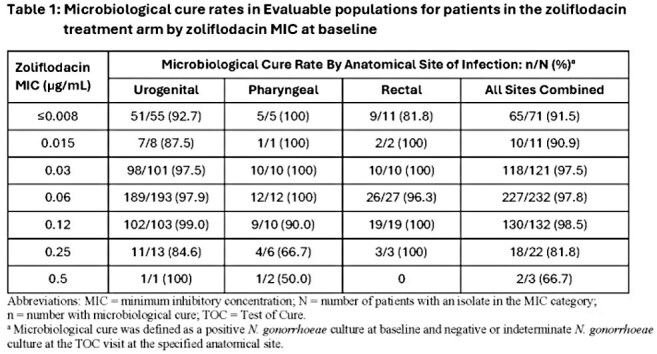 Figure 1
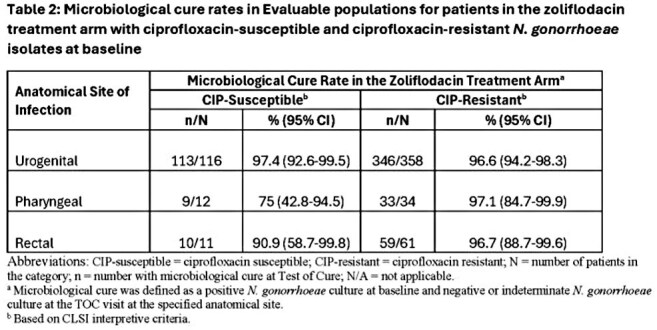 Figure 2
Peer Reviews
No public reviews on file for this paper yet. If you reviewed it on a platform where reviews are public (OpenReview, ICLR, NeurIPS, ICML), you can paste yours below so the community can read it here.
Videos
No videos yet. Explain this paper in a talk, walkthrough, or lecture? Add one.
Taxonomy
TopicsReproductive tract infections research · Antibiotics Pharmacokinetics and Efficacy · Bacterial Infections and Vaccines