P-212. The Effects of Magnesium Sulfate on Mortality and Morbidity of Adult Patients with Tetanus in San Lazaro Hospital, Manila, Philippines from January 2012 to December 2021: A Retrospective Cohort Study
Greco Mark B Malijan, Ana Ria L Sayo

TL;DR
This study examines how magnesium sulfate affects outcomes in tetanus patients in the Philippines, finding it linked to higher mortality and more respiratory interventions.
Contribution
The study provides real-world evidence on magnesium sulfate's impact on tetanus treatment outcomes in a Philippine hospital setting.
Findings
Magnesium sulfate was associated with higher mortality rates among tetanus patients.
Patients receiving magnesium sulfate required more respiratory interventions like tracheostomy and ICU admission.
Autonomic dysfunction was the leading cause of death, more common in magnesium recipients though not statistically significant.
Abstract
Tetanus causes significant morbidity and mortality worldwide, despite effective vaccines. It results from tetanus toxin (TeNT), leading to muscle rigidity, spasms, and autonomic instability. Endemic in the Philippines, it remains a major health challenge. This study assesses the impact of magnesium sulfate on mortality, ventilator use, and hospital stay in tetanus patients. Retrospective cohort study which focused on hospitalized adult tetanus patients (2012-2021) in an Infectious Diseases referral hospital in Manila, the Philippines. It involved review of patients chart examining clinical features, and the effects of magnesium sulfate on treatment outcomes. A total of 946 patients, mostly middle-aged males and laborers from urban and nearby regions, were included. Most presented with moderate disease severity. Patients receiving magnesium sulfate had higher rates of severe and very…
Genes, proteins, chemicals, diseases, species, mutations and cell lines named across the full text — each resolved to its canonical identifier and authoritative record.
Click any figure to enlarge with its caption.
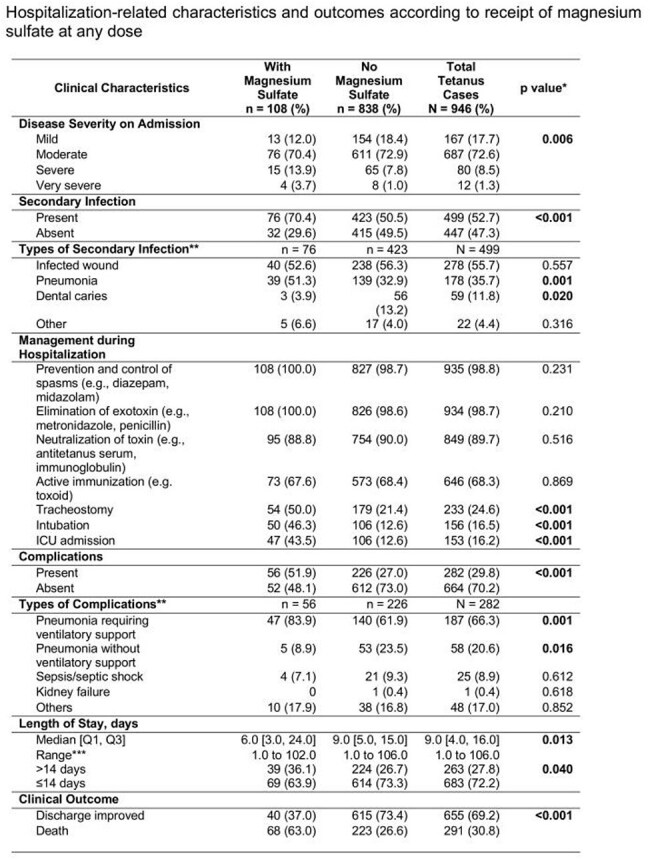 Figure 1
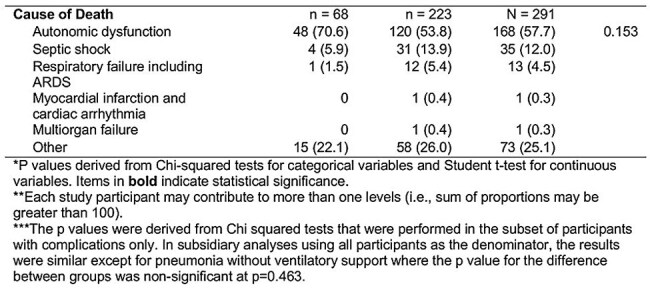 Figure 2
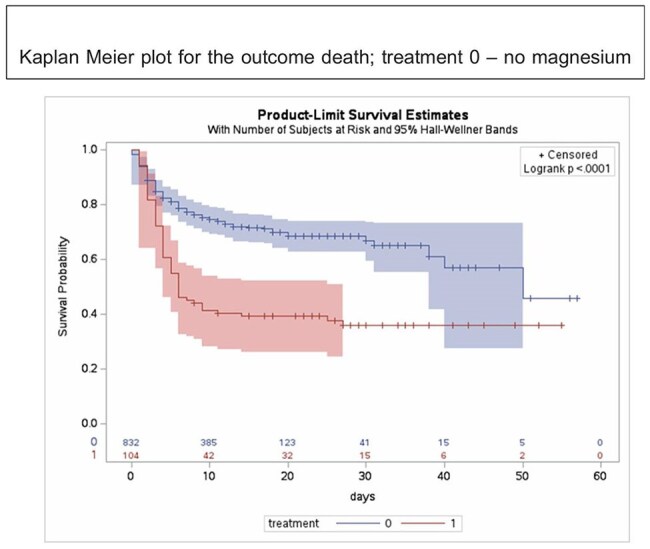 Figure 3
Peer Reviews
No public reviews on file for this paper yet. If you reviewed it on a platform where reviews are public (OpenReview, ICLR, NeurIPS, ICML), you can paste yours below so the community can read it here.
Videos
No videos yet. Explain this paper in a talk, walkthrough, or lecture? Add one.
Taxonomy
TopicsDiphtheria, Corynebacterium, and Tetanus · Botulinum Toxin and Related Neurological Disorders · Enterobacteriaceae and Cronobacter Research