P-455. Title: Septic Arthritis in Children: Clinical Features, Microbiologic Diagnosis, and Outcomes in a Tertiary Center Cohort in Costa Rica
Monica Mendez-Mendez, Cristian Perez-Corrales, Kattia Camacho-Badilla, Maria l Avila-Aguero, Alejandra Soriano-Fallas, Mariana Vilchez-Leon, Gabriela Naranjo-Zuniga, Max Mendez-Salazar, Helena Brenes-Chacon

TL;DR
This study examines the clinical features and outcomes of children with septic arthritis in Costa Rica, comparing molecular diagnostics to conventional methods.
Contribution
The study evaluates the impact of molecular diagnostics on pathogen detection and treatment outcomes in pediatric septic arthritis.
Findings
Molecular diagnostics provided faster results than conventional cultures (2 hours vs. 48-72 hours).
Staphylococcus aureus was the most commonly identified organism using both diagnostic methods.
Despite timely treatment, 24% of patients experienced complications.
Abstract
Early identification of the causative pathogen causing septic arthritis (SA) in children is crucial for guiding appropriate therapy; however, conventional culture methods may have low detection rates and delayed results. Molecular diagnostics have enhanced pathogen identification, potentially improving outcomes. This study aims to describe the clinical characteristics of children with SA following the implementation of the joint infection molecular panel in Costa RicaTable 1.Clinical characteristics of patients admitted for septic arthritisAbbreviations: LOS, length of hospitalization; MSSA, Meticilin-sensible Staphylococcus aureus; MRSA, Meticilin-sensible Staphylococcus aureus. Data expressed as median [25-75% IQR] for continuous variables and as numbers (%) for categorical data Clinical characteristics of patients admitted for septic arthritis Abbreviations: LOS, length of…
Genes, proteins, chemicals, diseases, species, mutations and cell lines named across the full text — each resolved to its canonical identifier and authoritative record.
Click any figure to enlarge with its caption.
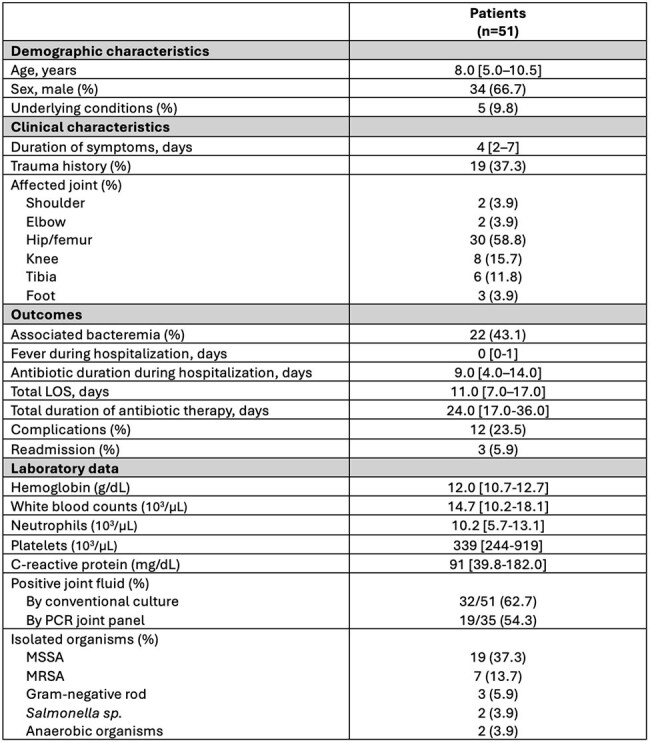 Figure 1
Peer Reviews
No public reviews on file for this paper yet. If you reviewed it on a platform where reviews are public (OpenReview, ICLR, NeurIPS, ICML), you can paste yours below so the community can read it here.
Videos
No videos yet. Explain this paper in a talk, walkthrough, or lecture? Add one.
Taxonomy
TopicsOrthopedic Infections and Treatments · Bacterial Identification and Susceptibility Testing · Bone fractures and treatments