P-500. Impact of Antenatal Biologic Therapy on Infant Infection Risk and Vaccination Adherence: A National Cohort Study
Yoav Kalron, Guy Hazan, David Greenberg, Ilan Youngster, Dana Danino

TL;DR
This study found that infants exposed to biologic therapies during pregnancy had no higher infection risk but lower rotavirus vaccine adherence.
Contribution
The study provides new evidence on the safety of antenatal biologic therapy and its impact on infant vaccination behavior.
Findings
Infant infection rates were not significantly higher with antenatal biologic exposure.
Biologic-exposed infants had lower adherence to the live-attenuated rotavirus vaccine.
Antibiotic use and hospitalization rates were similar between exposed and unexposed infants.
Abstract
The use of biologic therapies among women of reproductive age has significantly increased, with accumulating evidence supporting their safety during pregnancy. Nevertheless, the long-term implications for the infant's developing immune system remain inadequately understood. This study investigated the association between antenatal exposure to biologic agents and the risk of infections in infants during their first year of life. This nationwide cohort study included all women insured by Clalit HMO who delivered between January 2012 and October 2023. Infants exposed to biologic agents during the second or third trimester were compared to those with no exposure. Propensity score analysis adjusted for maternal chronic medical conditions, pregnancy and delivery characteristics, vaccination status, and timing of birth. Cox regression modeling evaluated the dynamic effects of biologic…
Click any figure to enlarge with its caption.
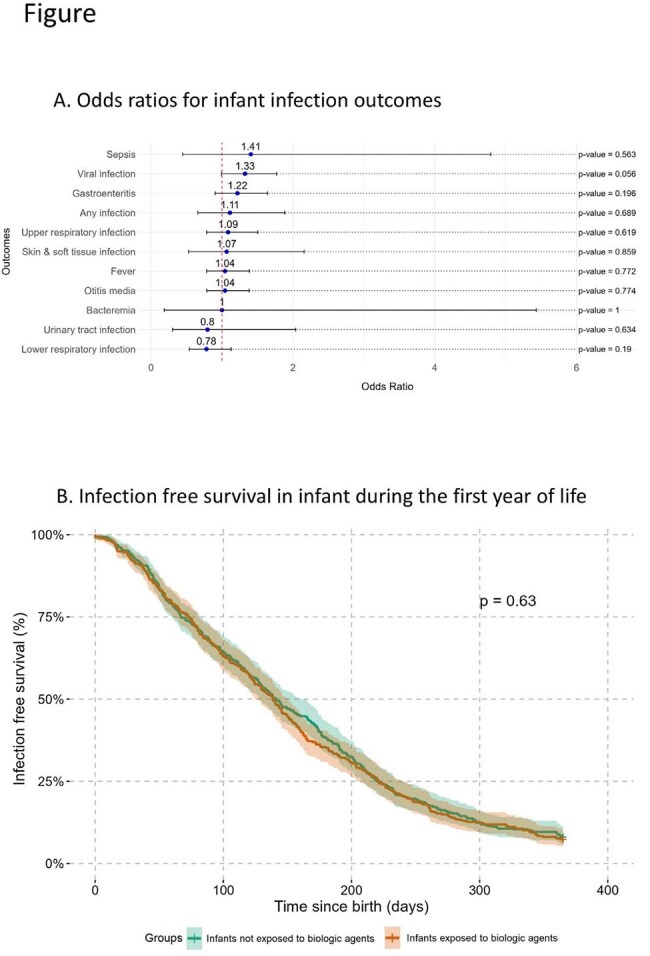 Figure 1
Peer Reviews
No public reviews on file for this paper yet. If you reviewed it on a platform where reviews are public (OpenReview, ICLR, NeurIPS, ICML), you can paste yours below so the community can read it here.
Videos
No videos yet. Explain this paper in a talk, walkthrough, or lecture? Add one.
Taxonomy
TopicsPregnancy and Medication Impact · COVID-19 Impact on Reproduction · Immune responses and vaccinations