P-785. Pooled Antibiotic Susceptibility Testing (P-AST) Reveals High Prevalence of Multidrug- Resistance in Pediatric UTI Which Was Underreported by Standard Isolate Susceptibility Testing
Sejal M Bhavsar, Nisha Polavarapu, Emery D Haley, Natalie Luke, Mohit Mathur, Xiaofei Chen, Jim Havrilla, David A Baunoch, Kenneth V Lieberman

TL;DR
A new method called P-AST detects more antibiotic resistance in pediatric UTIs than standard testing, revealing higher rates of multidrug resistance.
Contribution
P-AST outperforms standard isolate testing in identifying multidrug resistance in pediatric UTIs, revealing underreported resistance.
Findings
P-AST detected resistance in 72% of cases, compared to standard testing.
P-AST identified resistance to antibiotics reported as susceptible by standard testing in 68% of cases.
Resistance gene detection did not reliably predict phenotypic antibiotic susceptibility.
Abstract
Pediatric urinary tract infections (UTIs) can result in both acute complications, such as pyelonephritis or urosepsis, and chronic health complications, including recurrent UTI and renal damage. Therefore, rapid diagnosis and appropriate treatment of pediatric UTIs are essential.Figure 1.Frequency of Resistance Genes DetectedTable 1.Side-by-Side Comparison of Antibiotic Susceptibility Results Between Standard Isolate Susceptibility Testing and P-AST MethodsSUC = Standard Urine Culture; AST = Antibiotic Susceptibility Testing; M-PCR = Multiplex-Polymerase Chain Reaction; P-AST = Pooled Antibiotic Susceptibility Testing. Available SUC/Isolate AST results only included a list of antibiotics with “susceptible” results; P-AST reports included both lists of antibiotics with “susceptible” results and “resistant” results. Antibiotics listed in red were reported as susceptible by SUC/Isolate AST…
Genes, proteins, chemicals, diseases, species, mutations and cell lines named across the full text — each resolved to its canonical identifier and authoritative record.
Click any figure to enlarge with its caption.
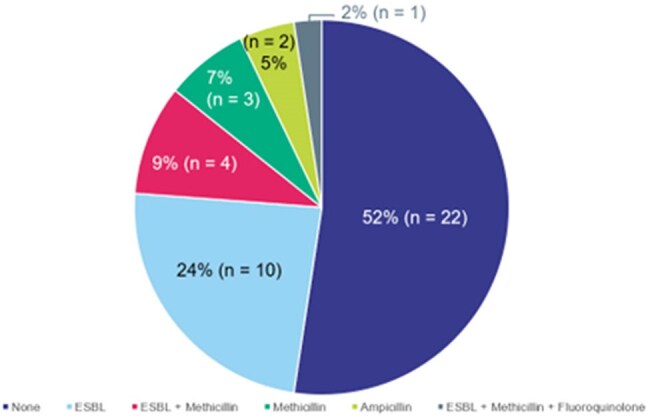 Figure 1
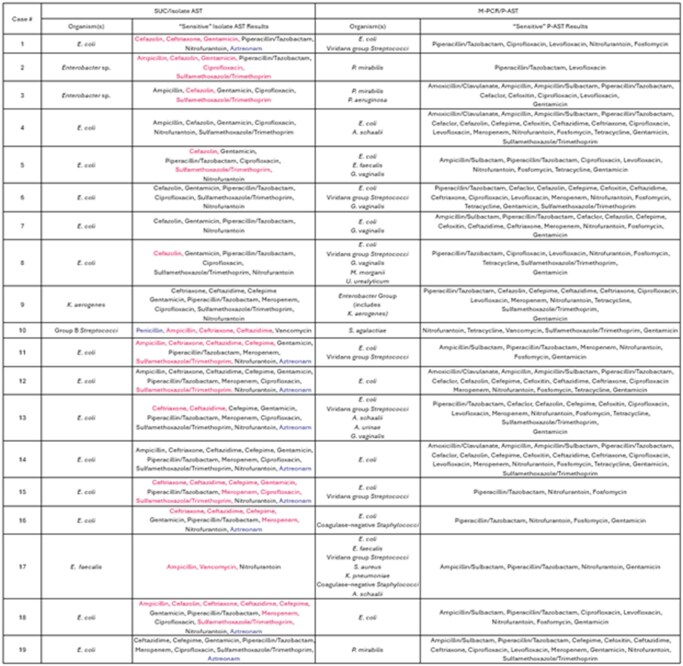 Figure 2
Peer Reviews
No public reviews on file for this paper yet. If you reviewed it on a platform where reviews are public (OpenReview, ICLR, NeurIPS, ICML), you can paste yours below so the community can read it here.
Videos
No videos yet. Explain this paper in a talk, walkthrough, or lecture? Add one.
Taxonomy
TopicsUrinary Tract Infections Management · Pediatric Urology and Nephrology Studies · Bacterial Identification and Susceptibility Testing