P-416. From Broad to Best: A Structured, Automated, and Scalable EHR Approach to Evaluate Empiric Antibiotic Appropriateness
Wenyuan Chen, Nicholas P Marshall, Fatemeh Amrollahi, Fateme Nateghi Haredasht, Manoj Maddali, Stephen Ma, Amy Chang, Stan Deresinski, Mary Kane Goldstein, Steven Asch, Niaz Banaei, Hayden T Schwenk, Jonathan H Chen

TL;DR
This paper introduces a scalable, automated method using EHR data and SQL to evaluate if empiric antibiotics prescribed for UTIs are clinically appropriate based on patient-specific susceptibility data.
Contribution
The novel contribution is an automated, SQL-based implementation of the DOOR MAT framework to assess antibiotic appropriateness using real-world EHR data.
Findings
An SQL-based system was developed to classify empiric antibiotics into spectrum tiers for appropriateness evaluation.
The method was applied to real-world datasets across multiple care settings to assess antibiotic use for UTIs.
The approach enables spectrum-based ranking of antibiotics, identifying over-treatment, under-treatment, and optimal prescriptions.
Abstract
Current antimicrobial stewardship metrics emphasize reducing overall antibiotic use but rarely assess patient-level appropriateness. Tools like the SAAR and EHR alerts benchmark use or trigger rules but do not evaluate whether an agent was clinically appropriate. We developed an automated, scalable metric using SQL, widely adopted and optimized for querying data, to implement the DOOR MAT (Desirability of Outcome Ranking for the Management of Antimicrobial Therapy) framework, which ranks empiric antibiotics by spectrum, favoring narrower agents when susceptible.Figure 1:Cohort Construction Flowchart for Adult Emergency Department (ED) Urinary Tract Infection CasesThis flow diagram illustrates the cohort generation process for adult ED patients with presumed urinary tract infection (UTI), based on urine culture orders and empiric antibiotic prescriptions. Starting from all urine culture…
Genes, proteins, chemicals, diseases, species, mutations and cell lines named across the full text — each resolved to its canonical identifier and authoritative record.
Click any figure to enlarge with its caption.
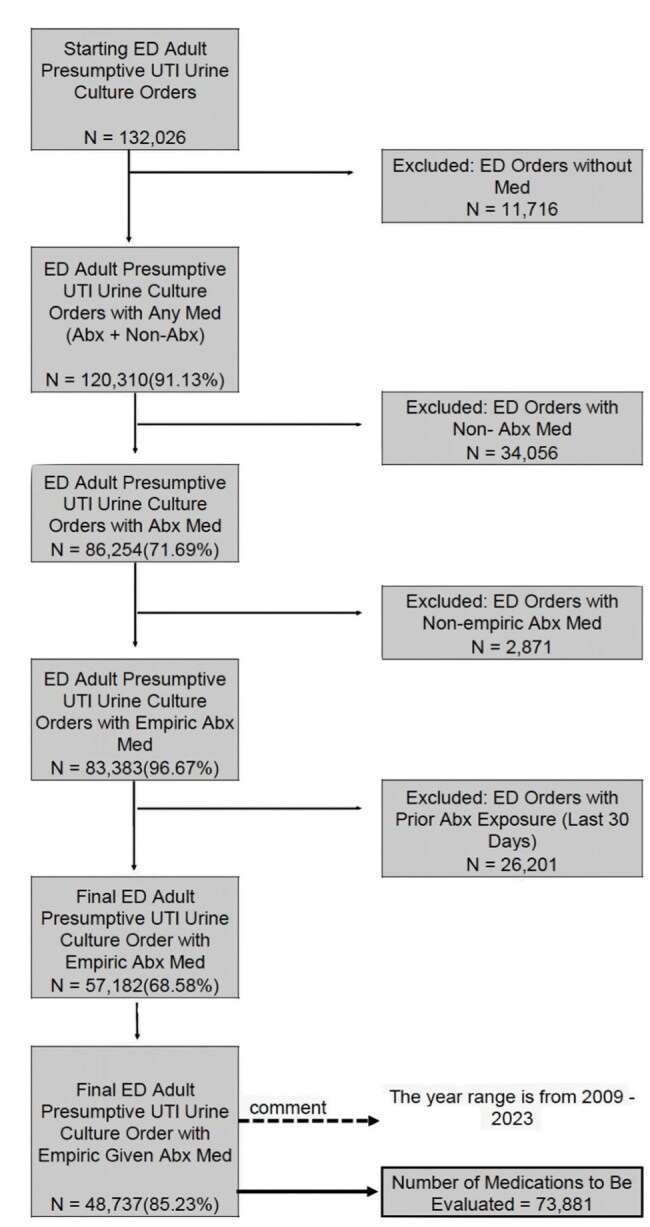 Figure 1
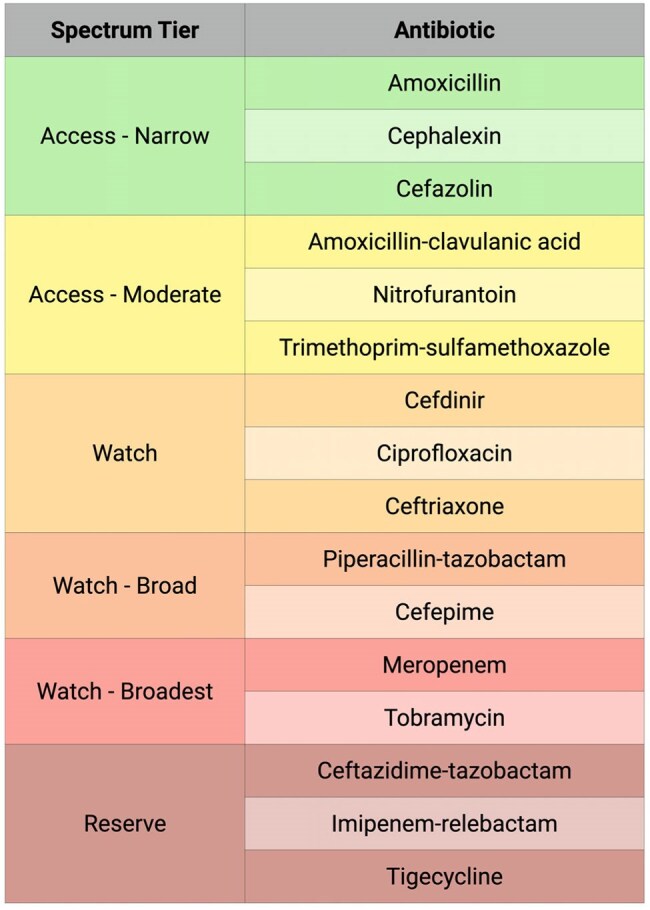 Figure 2
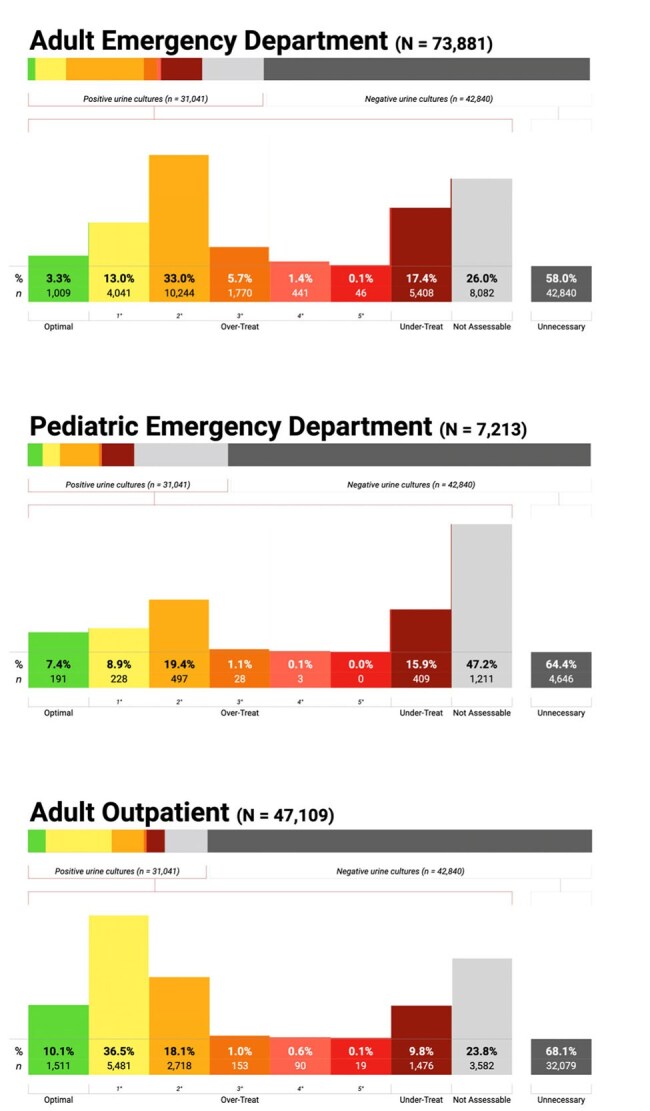 Figure 3
 Figure 4
Peer Reviews
No public reviews on file for this paper yet. If you reviewed it on a platform where reviews are public (OpenReview, ICLR, NeurIPS, ICML), you can paste yours below so the community can read it here.
Videos
No videos yet. Explain this paper in a talk, walkthrough, or lecture? Add one.
Taxonomy
TopicsUrinary Tract Infections Management · Antibiotic Use and Resistance · Pediatric Urology and Nephrology Studies