P-1562. Outcomes of Human Babesiosis and Spleen Abnormalities
Rudline G Zamor, Brigitte Maczaj, Victoria A Bateman, Abdullah Khan Zada, Akif Acay, Luis A Marcos

TL;DR
This study examines how spleen abnormalities affect outcomes in patients infected with Babesia microti, finding that asplenia leads to longer hospital stays and more intensive treatments.
Contribution
The study identifies specific risk factors and outcomes associated with spleen abnormalities in Babesia-infected adults.
Findings
Asplenic patients had longer hospitalization, more ICU admissions, and higher exchange transfusion rates.
Patients with normal spleens had higher mortality compared to those with splenomegaly or infarcted spleens.
Splenic abnormalities were primarily diagnosed via CT scans and were independent of the total number of cases.
Abstract
Babesia microti, a parasitic blood-borne piroplasm, causes the disease Babesiosis in humans. Outcomes of babesiosis and splenic abnormalities are limited. The aim of this study is to assess risk factors associated with splenic abnormalities in adult patients with Babesia infection.Table 1.Descriptive table of patients’ characteristics by spleen presentationTable 2.Treatment and Outcomes of Babesia Patients and Spleen Comparison Descriptive table of patients’ characteristics by spleen presentation Treatment and Outcomes of Babesia Patients and Spleen Comparison Adult patients with peripheral blood smear positive for Babesia spp (confirmed by PCR) diagnosed at Stony Brook University Hospital between 2014 – 2024 were included in this study. Demographics, laboratory values, treatment, imaging and outcomes were collected by detailed chart review. Patients were grouped by status of spleen…
Genes, proteins, chemicals, diseases, species, mutations and cell lines named across the full text — each resolved to its canonical identifier and authoritative record.
Click any figure to enlarge with its caption.
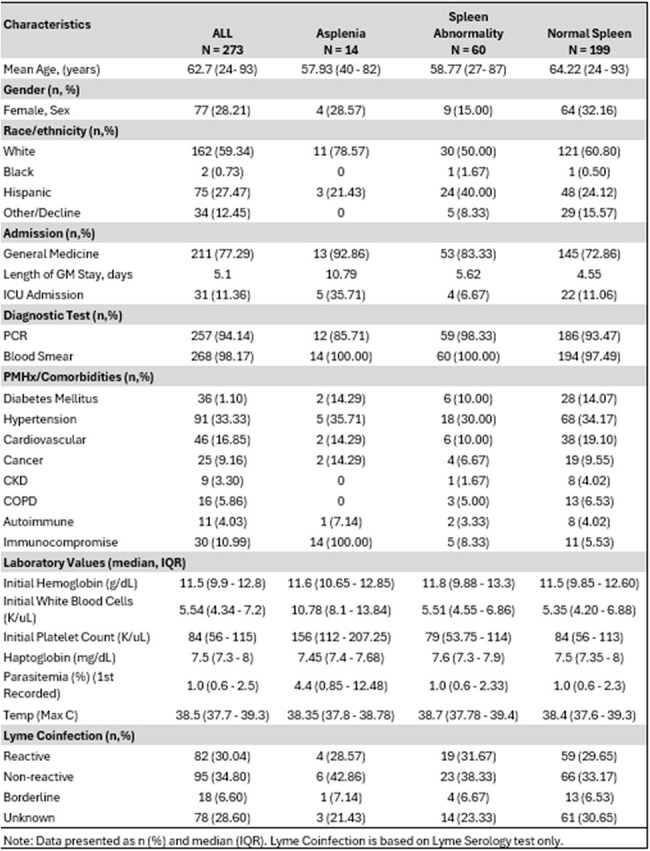 Figure 1
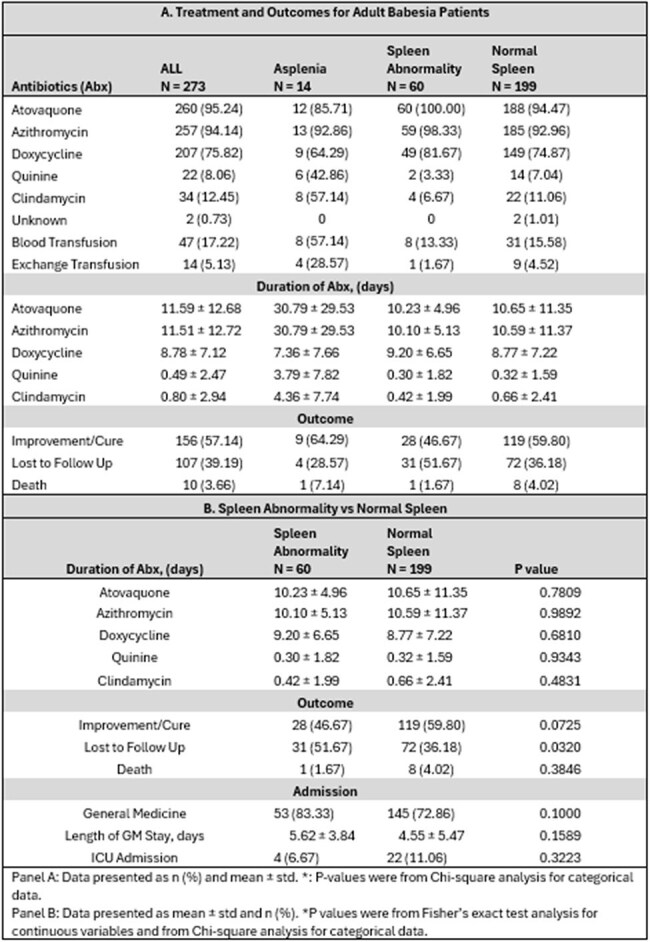 Figure 2
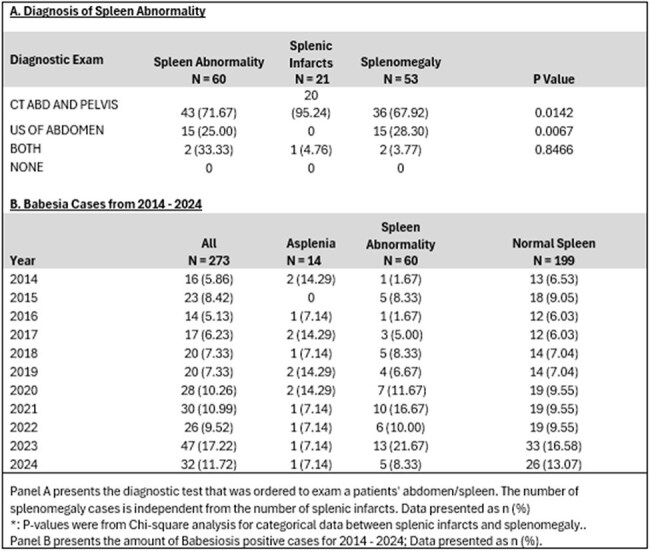 Figure 3
Peer Reviews
No public reviews on file for this paper yet. If you reviewed it on a platform where reviews are public (OpenReview, ICLR, NeurIPS, ICML), you can paste yours below so the community can read it here.
Videos
No videos yet. Explain this paper in a talk, walkthrough, or lecture? Add one.
Taxonomy
TopicsVector-borne infectious diseases · Mosquito-borne diseases and control · Zoonotic diseases and public health