P-1617. Longitudinal SARS-CoV-2 Surveillance in a University Cohort: Antigen Assay Performance, Pooling Efficiency, and Epidemiological Takeaways
Joseph W K Stuart, Gregory L Damhorst, Kaleb McLendon, Aneksi Ellis, Matthew J Denius, Essandoh F Abaidoo, John Roback

TL;DR
Emory University used saliva antigen testing to monitor SARS-CoV-2 in students, finding a method that is highly sensitive and efficient for large-scale screening.
Contribution
A refined saliva antigen screening program with pooling and optimized thresholds for efficient and sensitive SARS-CoV-2 surveillance.
Findings
A 2 pg/mL antigen threshold for pooled samples achieved 99.6% sensitivity and 15.4% specificity.
Three-specimen pooling reduced resource use while maintaining high detection rates.
The program identified 7.4% of individual and 13.47% of pooled specimens as antigen-positive over 2.5 years.
Abstract
Global shortages of RT-PCR reagents during the COVID-19 pandemic necessitated the adoption of alternative diagnostic and screening approaches. We implemented a saliva antigen-based surveillance program at Emory University to manage the spread of infection and gather epidemiological data.Figure 1.Quantifiable Saliva Antigen Measurements During Screening PeriodWeekly saliva samples from undergraduates (Nov 2020–Dec 2022) were assayed for SARS-CoV-2 nucleocapsid antigen (pg/mL, log10 scale). Points are colored by testing phase: individual (blue), pooled (red), and optional (orange). Solid lines trace the median antigen concentration in each phase, with shaded ribbons showing the interquartile range. Gray bands above and below the plot denote periods of mandatory individual screening, pooled screening, and optional surveillance.Figure 2.Sub-Study ROC Curve of Antigen Concentration vs. PCR…
Genes, proteins, chemicals, diseases, species, mutations and cell lines named across the full text — each resolved to its canonical identifier and authoritative record.
Click any figure to enlarge with its caption.
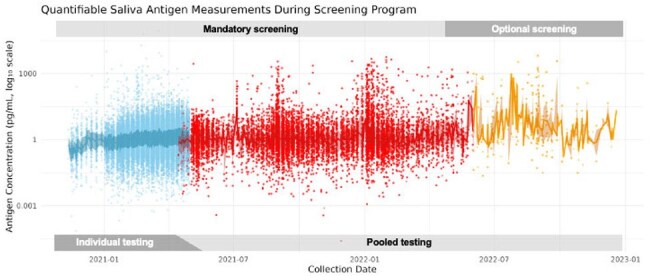 Figure 1
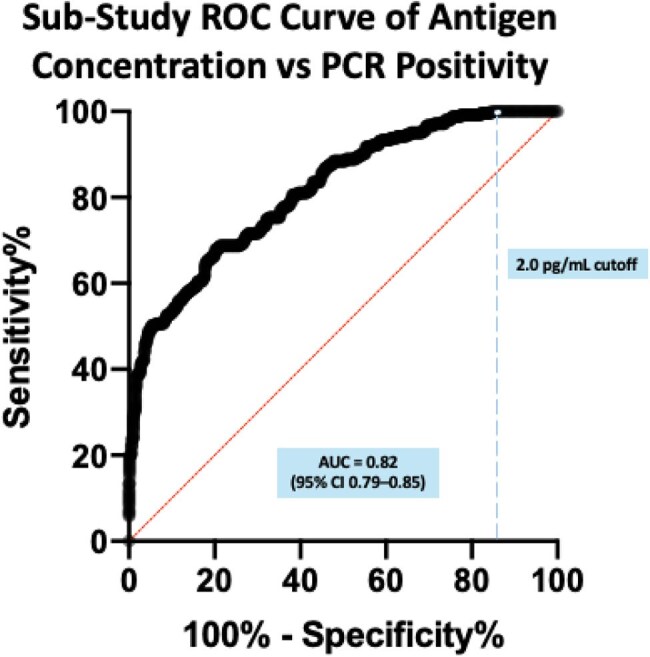 Figure 2
Peer Reviews
No public reviews on file for this paper yet. If you reviewed it on a platform where reviews are public (OpenReview, ICLR, NeurIPS, ICML), you can paste yours below so the community can read it here.
Videos
No videos yet. Explain this paper in a talk, walkthrough, or lecture? Add one.
Taxonomy
TopicsSARS-CoV-2 detection and testing · Biosensors and Analytical Detection · SARS-CoV-2 and COVID-19 Research