P-1708. Identification and Analysis of Asymptomatic Pathogen Carriage in Stool Donors for Manufacturing of the Microbiome Therapeutic, Fecal Microbiota Spores, live-brpk
Sarah Tomkovich, Allison Nelson, Ketankumar Patel, Nicole Delehanty, Trudi Delk, Maximillian von Eynatten, Jason Goldsmith

TL;DR
This study examines the rate of asymptomatic pathogen carriage in healthy stool donors used to manufacture a microbiome therapeutic for preventing recurrent C. difficile infection.
Contribution
The study provides new data on asymptomatic pathogen carriage rates in healthy donors for microbiome therapeutics.
Findings
Asymptomatic carriage rate of GI pathogens in donors was approximately 12%.
Common pathogens included Enteropathogenic E. coli, Norovirus, and Yersinia species.
Only 0.96% of tested samples were positive for COVID-19.
Abstract
Fecal microbiota spores, live-brpk (VOWST®; formerly SER-109, hereafter VOS), is an oral microbiome therapeutic used to prevent recurrent Clostridioides difficile infection (rCDI) in adults post-antibiotic treatment. Derived from donor stool, donor recruitment, screening, and retention are crucial to manufacturing and safety. Multiple donations from a single donor make-up a drug lot, enabling monitoring of asymptomatic pathogen carriage rates in healthy donors.Figure 1.Multistep donor candidate screening for manufacturing of VOS.VOS, fecal microbiota spores, live-brpk (formerly SER-109).Table 1.Gastrointestinal Panel Pathogen Positivity, Sept23-Oct24 Multistep donor candidate screening for manufacturing of VOS. VOS, fecal microbiota spores, live-brpk (formerly SER-109). Gastrointestinal Panel Pathogen Positivity, Sept23-Oct24 Donor candidates are initially screened by phone for the…
Genes, proteins, chemicals, diseases, species, mutations and cell lines named across the full text — each resolved to its canonical identifier and authoritative record.
Click any figure to enlarge with its caption.
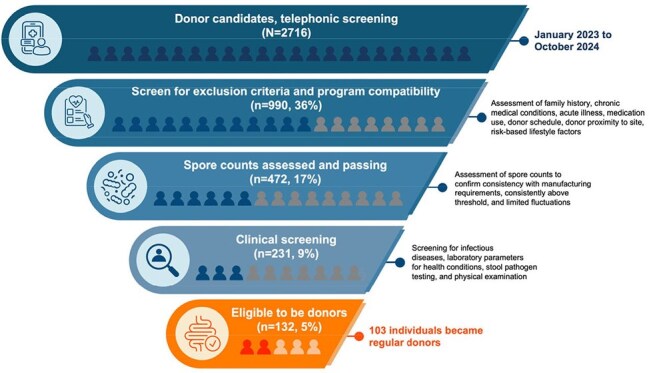 Figure 1
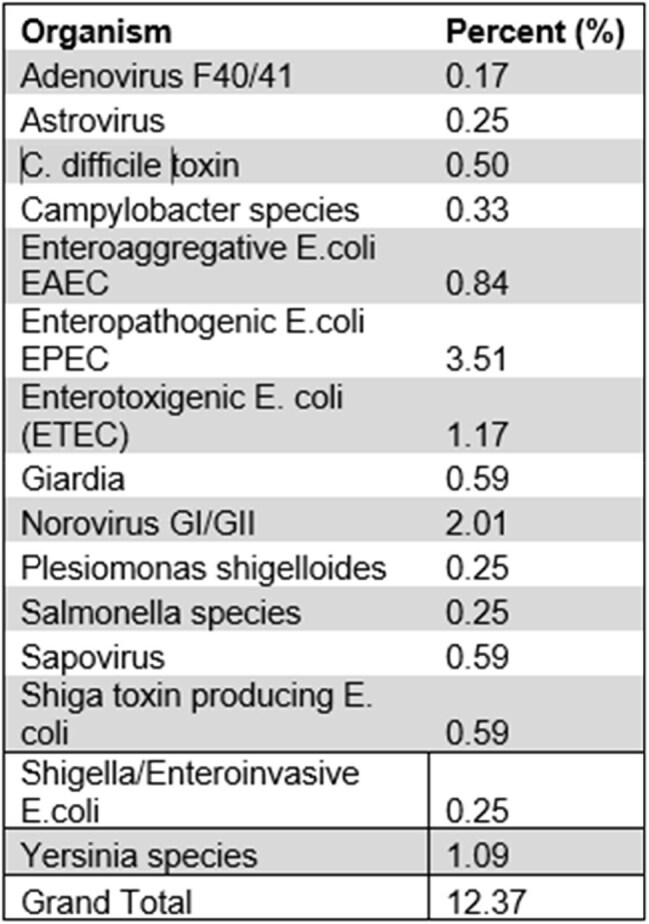 Figure 2
Peer Reviews
No public reviews on file for this paper yet. If you reviewed it on a platform where reviews are public (OpenReview, ICLR, NeurIPS, ICML), you can paste yours below so the community can read it here.
Videos
No videos yet. Explain this paper in a talk, walkthrough, or lecture? Add one.
Taxonomy
TopicsClostridium difficile and Clostridium perfringens research · Antibiotic Use and Resistance · HIV, Drug Use, Sexual Risk