P-577. Clinical Predictors of Mortality in Hospitalized Patients with Rickettsioses in Northern Mexico
Karla Cuellar-Calderon, Paola Bocanegra-Ibarias, Samantha Perez-Cavazos, Perla Gonzalez-Vazquez, Magaly Padilla-Orozco, Adrian Camacho-Ortiz

TL;DR
This study identifies key clinical factors that predict mortality in hospitalized patients with rickettsioses in Northern Mexico.
Contribution
The study provides new insights into mortality predictors for rickettsioses, including thrombocytopenia and elevated lactate levels.
Findings
Thrombocytopenia, elevated lactate, and increased creatinine levels were significant predictors of mortality.
Fever was a common symptom, but rash was observed in fewer than half of the patients.
Most patients received doxycycline, but prior antibiotic use included ceftriaxone and amoxicillin/clavulanic acid.
Abstract
Rickettsioses are life-threatening vector-borne infections1. Clinical manifestations are nonspecific, commonly including fever, malaise, and an exanthematous rash, necessitating a high index of suspicion for timely diagnosis. Without appropriate treatment, mortality can reach 100%2. From October 2022 to April 2025, we conducted a prospective study of patients with qPCR-confirmed rickettsioses at a tertiary teaching hospital in Monterrey, Mexico. Data were analyzed using SPSS v19. We applied Student’s t-test and chi-square test for group comparisons and calculated relative risks (RR). A total of 49 patients were included, with a median age of 15 years (range 9-32 years), and 52% were males. Thirty patients (60%) died during hospitalization. The media time-to-treatment from hospital admission was 5.15 hours. All patients received doxycycline. Some patients received antibiotics prior to…
Genes, proteins, chemicals, diseases, species, mutations and cell lines named across the full text — each resolved to its canonical identifier and authoritative record.
Click any figure to enlarge with its caption.
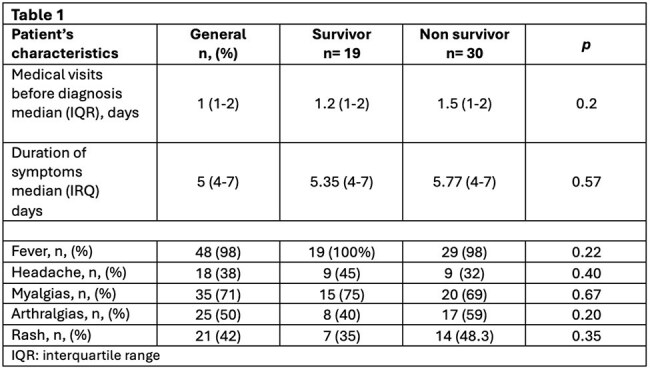 Figure 1
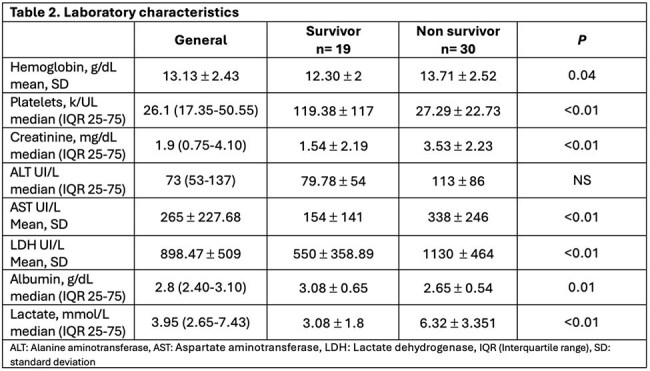 Figure 2
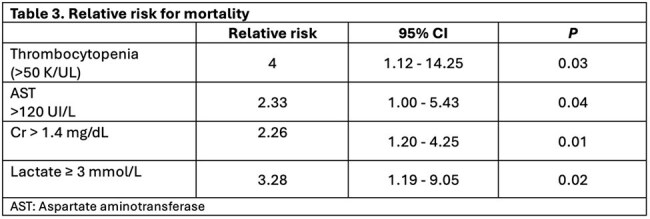 Figure 3
Peer Reviews
No public reviews on file for this paper yet. If you reviewed it on a platform where reviews are public (OpenReview, ICLR, NeurIPS, ICML), you can paste yours below so the community can read it here.
Videos
No videos yet. Explain this paper in a talk, walkthrough, or lecture? Add one.
Taxonomy
TopicsVector-borne infectious diseases · Mosquito-borne diseases and control · Parasites and Host Interactions