P-1337. Trends in the co-carriage of multiple carbapenemases among clinical Enterobacterales isolates and the in vitro activity of aztreonam-avibactam, ATLAS 2019-2023
Mark Estabrook, Julie Dickson, Gregory Stone, Katherine Perez, Daniel F Sahm

TL;DR
This study examines the increasing trend of bacteria carrying multiple antibiotic resistance genes and finds that a drug combination remains effective against them.
Contribution
The study reports a significant rise in co-carriage of multiple carbapenemase genes and confirms aztreonam-avibactam's efficacy against these multidrug-resistant isolates.
Findings
The proportion of isolates carrying two carbapenemase genes increased from 10% in 2019 to 21% in 2023.
Aztreonam-avibactam showed high in vitro activity (97.7-100% susceptibility) against isolates with single or multiple carbapenemase genes.
The most common dual carbapenemase genotype was blaNDM+blaOXA-48-like, accounting for 84% of multiple-carbapenemase isolates.
Abstract
Aztreonam-avibactam (ATM-AVI) is a β-lactam/β-lactamase inhibitor combination to treat infections caused by Gram-negative organisms, particularly those carrying metallo-β-lactamases (MBLs) and other β-lactamases. Aztreonam is stable to hydrolysis by MBLs and avibactam inhibits Class A, C, and some Class D enzymes. We examined ATM-AVI activity against Enterobacterales isolates producing one or more carbapenemase and the frequency of co-production of carbapenemases among isolates collected as a part of the ATLAS global surveillance program (2019-2023). 88,196 isolates from 226 medical centers in 56 countries (excluding mainland China, Canada, and the USA) were collected and tested for susceptibility using the broth microdilution method according to CLSI guidelines. Analysis was performed with CLSI 2024 breakpoints. Isolates testing with meropenem MIC values >1 µg/mL or Escherichia coli,…
Genes, proteins, chemicals, diseases, species, mutations and cell lines named across the full text — each resolved to its canonical identifier and authoritative record.
Click any figure to enlarge with its caption.
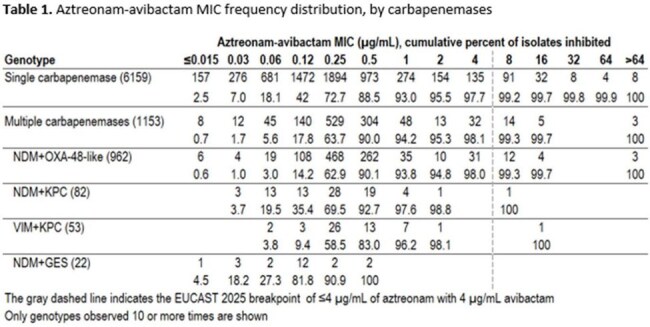 Figure 1
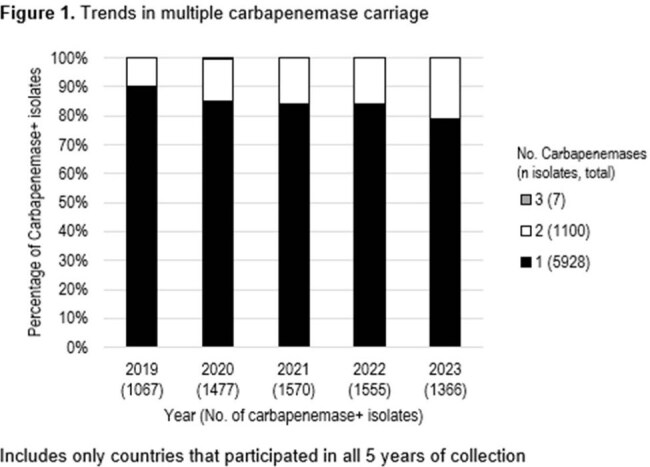 Figure 2
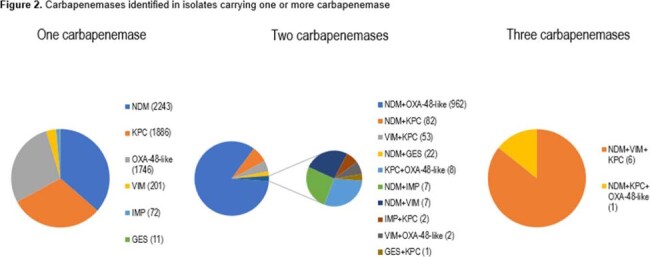 Figure 3
Peer Reviews
No public reviews on file for this paper yet. If you reviewed it on a platform where reviews are public (OpenReview, ICLR, NeurIPS, ICML), you can paste yours below so the community can read it here.
Videos
No videos yet. Explain this paper in a talk, walkthrough, or lecture? Add one.
Taxonomy
TopicsAntibiotic Resistance in Bacteria · Bacterial Identification and Susceptibility Testing · Antibiotics Pharmacokinetics and Efficacy