P-117. Clinical and Epidemiological Characteristics of Balamuthia mandrillaris Infection in Peru: A Retrospective Case Series
Eduardo Gotuzzo, Dalila Martinez, Blas M Cornejo-Esparza, Daniel Guillen, Carlos Seas, Francisco G Bravo

TL;DR
This study examines Balamuthia mandrillaris infections in Peru, highlighting high mortality and the importance of early diagnosis and treatment.
Contribution
The paper provides a detailed retrospective analysis of B. mandrillaris cases in Peru, emphasizing clinical and epidemiological patterns.
Findings
Most patients with B. mandrillaris encephalitis died, with high mortality in those with neurological symptoms.
Confirmed cases were mainly from coastal Peru and occurred during winter or fall.
Early recognition and treatment before neurological symptoms may improve survival.
Abstract
Balamuthia mandrillaris is a neglected free-living ameba causing cutaneous lesions and granulomatous encephalitis with high mortality. Diagnostic testing is limited, and cases may be underdiagnosed and underreported. A low threshold of clinical suspicion should prompt workup and treatment. Miltefosine was introduced in the treatment regimen in 2006. We aim to describe the epidemiological, clinical, and anatomopathological characteristics of B. mandrillaris infection in the Peruvian population.Table 1.Patient CharacteristicsTable 2.Clinical Characteristics Patient Characteristics Clinical Characteristics We performed a retrospective review of medical records of patients with B. mandrillaris infection presenting to Hospital Cayetano Heredia from January 1975 to December 2017. Disease confirmation was defined as positive immunofluorescence testing for B. mandrillaris of brain or skin…
Genes, proteins, chemicals, diseases, species, mutations and cell lines named across the full text — each resolved to its canonical identifier and authoritative record.
Click any figure to enlarge with its caption.
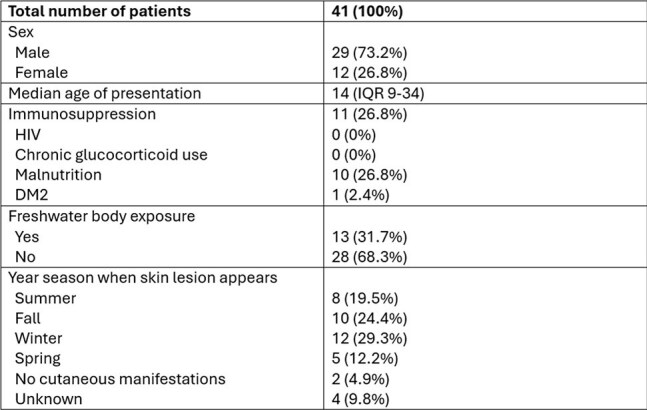 Figure 1
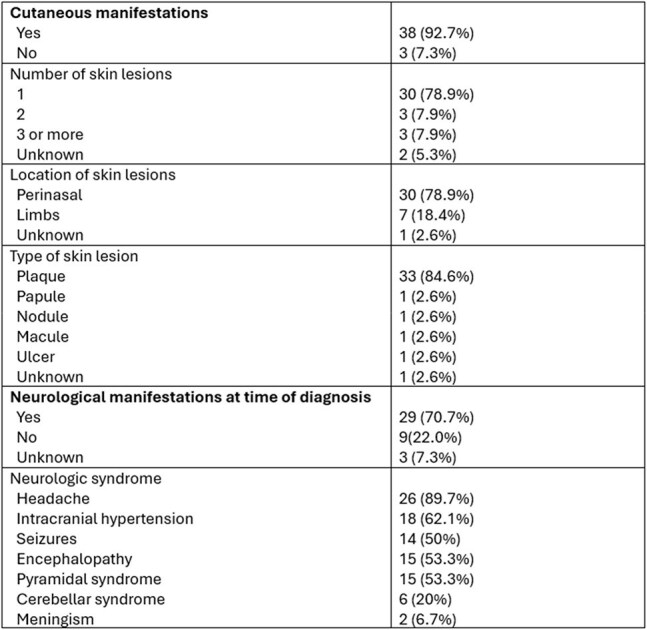 Figure 2
 Figure 3
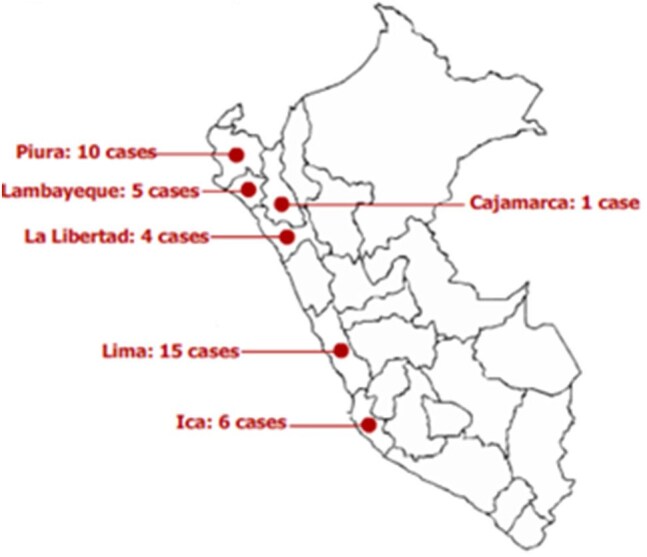 Figure 4
Peer Reviews
No public reviews on file for this paper yet. If you reviewed it on a platform where reviews are public (OpenReview, ICLR, NeurIPS, ICML), you can paste yours below so the community can read it here.
Videos
No videos yet. Explain this paper in a talk, walkthrough, or lecture? Add one.
Taxonomy
TopicsLegionella and Acanthamoeba research · Yersinia bacterium, plague, ectoparasites research · Vibrio bacteria research studies