P-680. Etiologic investigation by targeted next-generation sequencing for community-acquired pneumonia of unknown etiology in children
Ki Wook Yun, Dayun Kang, Seung Ha Song, Ye Kyung Kim

TL;DR
This study uses targeted next-generation sequencing to identify pathogens in children with pneumonia cases where no cause was previously found.
Contribution
The study introduces broad-panel targeted next-generation sequencing to detect previously undetected pathogens in pediatric community-acquired pneumonia of unknown etiology.
Findings
tNGS identified additional pathogens in 70.8% of CAP-UKN cases in children.
Streptococcus pneumoniae and Haemophilus influenzae were frequently detected in pediatric CAP-UKN cases.
Human betaherpesvirus was the most common viral pathogen detected in CAP-UKN cases.
Abstract
Despite advancements in diagnostics, many pediatric community-acquired pneumonia (CAP) cases lack identified pathogens. We aimed to characterize CAP of unknown etiology (CAP-UKN) in children by applying broad-panel targeted next-generation sequencing (tNGS).Fig. 1.Epidemiology of CAP with no pathogens detected in Korean children based on weekly discharge monitoringFig. 2.Age group distribution and CAP pathogen detection in children Epidemiology of CAP with no pathogens detected in Korean children based on weekly discharge monitoring Age group distribution and CAP pathogen detection in children From September 2023 to November 2024, a prospective surveillance study was conducted across 26 hospitals in Korea. CAP-UKN was defined as cases with no detected pathogens or detection of only human rhinovirus (HRV), human bocavirus (HBoV), human coronavirus (HCoV), or common colonizers.…
Genes, proteins, chemicals, diseases, species, mutations and cell lines named across the full text — each resolved to its canonical identifier and authoritative record.
Click any figure to enlarge with its caption.
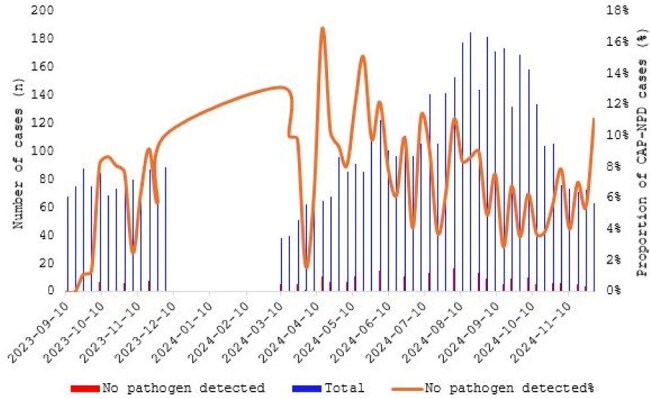 Figure 1
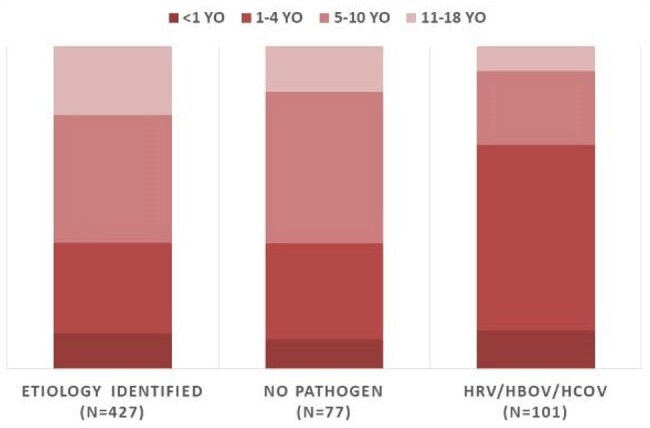 Figure 2
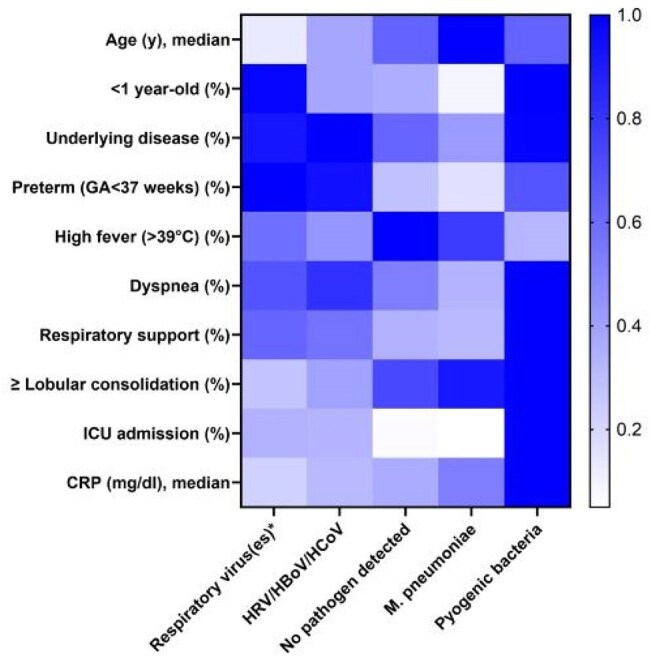 Figure 3
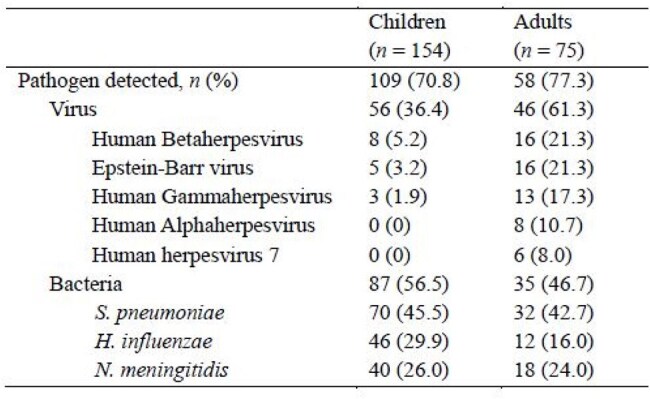 Figure 4
Peer Reviews
No public reviews on file for this paper yet. If you reviewed it on a platform where reviews are public (OpenReview, ICLR, NeurIPS, ICML), you can paste yours below so the community can read it here.
Videos
No videos yet. Explain this paper in a talk, walkthrough, or lecture? Add one.
Taxonomy
TopicsRespiratory viral infections research · Pneumonia and Respiratory Infections · Viral Infections and Immunology Research