333. Comparative Efficacy of Rifamycin-containing Regimens in a Murine Model of Tuberculous Meningitis
Xueyi Chen, Carlos E Ruiz-Gonzalez, Yuderleys Masias-Leon, Medha Singh, Oscar J Nino-Meza, Dmitri Artemov, Charles Peloquin, Sanjay K Jain

TL;DR
This study compares the effectiveness of different rifamycin-based treatments for tuberculous meningitis in mice, focusing on drug penetration into the brain and their ability to reduce bacterial load.
Contribution
The study is the first to evaluate rifapentine and rifabutin in a murine model of TB meningitis, assessing their CNS penetration and bactericidal activity.
Findings
Rifapentine and rifabutin showed better brain penetration compared to rifampin in the mouse model.
HPZMx and HRbZ regimens reduced bacterial burden in both brain and lung tissues more effectively than HRZ.
MRI and cytokine analysis revealed reduced inflammation and tissue damage in treated mice compared to untreated ones.
Abstract
Tuberculous meningitis (TB meningitis), the most severe form of tuberculosis (TB), is associated with high mortality and neurological sequelae. Standard therapy includes rifampin, a key drug for pulmonary TB; however, its efficacy in TB meningitis is hampered by poor blood-brain barrier penetration, often resulting in subtherapeutic concentrations. While alternative rifamycins like rifapentine and rifabutin exhibit distinct pharmacokinetic advantages, including reduced cytochrome P450 induction, and have been evaluated for pulmonary TB, their utility in TB meningitis remains unexplored.Figure 1.Evaluation of rifamycin-containing regimens in the mouse model of TB meningitis.(A) Mice were infected intraventricularly via Burr hole using a syringe and stereotaxic instrument, treatment were initiated two weeks after (designated as day 0) and continued for six weeks. Mice were randomly…
Genes, proteins, chemicals, diseases, species, mutations and cell lines named across the full text — each resolved to its canonical identifier and authoritative record.
Click any figure to enlarge with its caption.
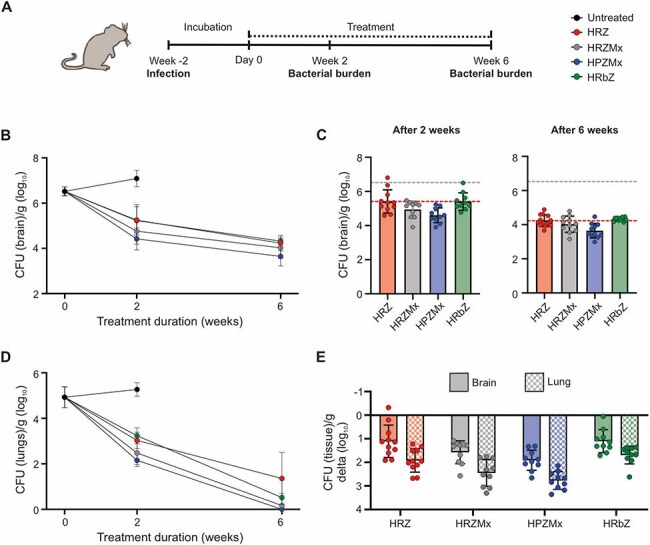 Figure 1
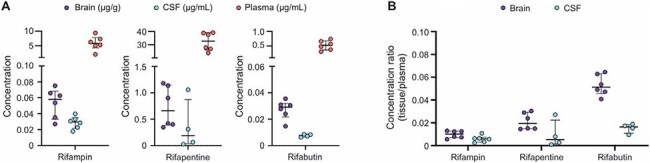 Figure 2
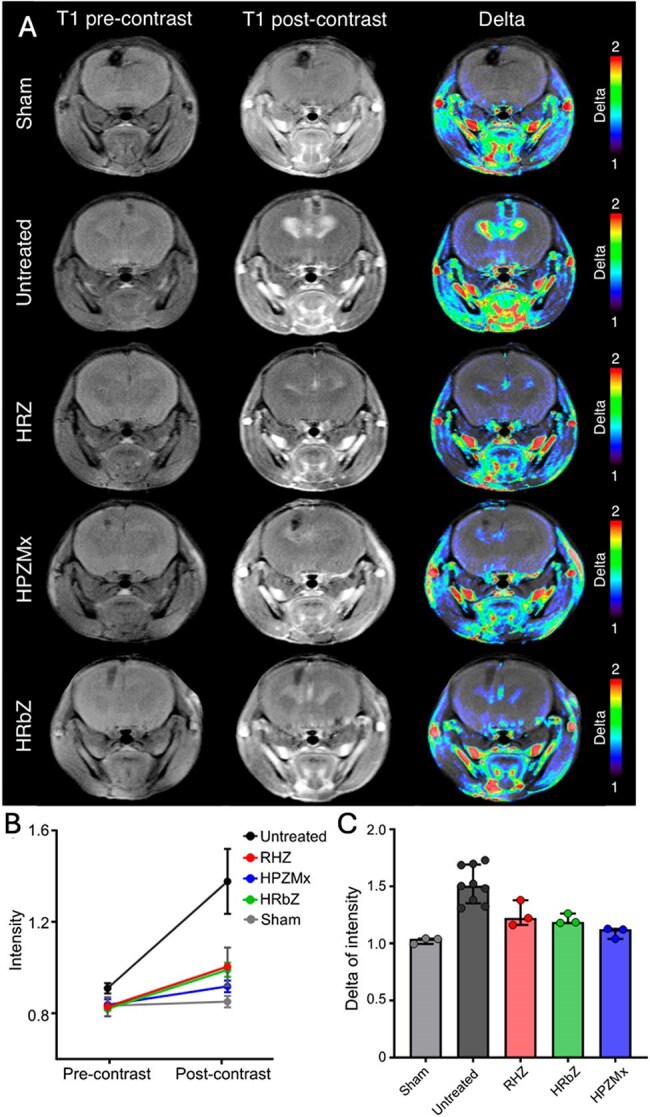 Figure 3
Peer Reviews
No public reviews on file for this paper yet. If you reviewed it on a platform where reviews are public (OpenReview, ICLR, NeurIPS, ICML), you can paste yours below so the community can read it here.
Videos
No videos yet. Explain this paper in a talk, walkthrough, or lecture? Add one.
Taxonomy
TopicsTuberculosis Research and Epidemiology · Infectious Diseases and Tuberculosis · Bacterial Infections and Vaccines