P-619. Relationship between Respiratory Syncytial Virus (RSV) Genetic Lineages and infant clinical phenotypes in Buenos Aires
Dolores Acuna, Mercedes S Nabaes Jodar, Helena Brenes-Chacon, Luciana Montoto, Gretel Wenk, Vivian BOKSER, M Florencia Lucion, Maria del Valle Juarez, Maria Juliana Palau, Analia Vera, Cecilia Marta Vescina, Alejandra Alancay, Guadalupe Fernandez Gago, Natalia Trevino

TL;DR
This study explores how different genetic lineages of RSV affect the clinical symptoms in infants in Buenos Aires, finding that certain lineages are linked to more severe disease.
Contribution
The study identifies specific RSV genetic lineages associated with clinical severity in infants, emphasizing the importance of genomic surveillance.
Findings
RSV lineage B.D.4.1.1 was associated with greater need for intensive care and ventilatory support.
RSV B lineages showed more frequent mutations in antigenic sites compared to RSV A.
Infants infected with A.D.1.5 had lower rates of rhinorrhea and wheezing and higher RSV loads.
Abstract
RSV is the leading cause of lower respiratory tract infections (LRTI) in infants worldwide. Since the RSV Genotyping Consensus Consortium (RGCC) was established in 2023, studies have reported the circulation of different RSV lineages. Nonetheless, the clinical impact of RSV genetic variability on infants’ clinical presentation has not been well studied.Figure 1.RSV Lineages per year.Percentage distribution of RSV lineages between 2018 and 2024 in Buenos Aires Metropolitan Area.Table 1.Amino acid substitutions in antigenic sites for RSV A and B lineages.The number of sequences with each substitution is indicated in parentheses. Reference sequences used: EPI_ISL_412866 (RSV-A) and EPI_ISL_1653999 (RSV-B). RSV Lineages per year. Percentage distribution of RSV lineages between 2018 and 2024 in Buenos Aires Metropolitan Area. Amino acid substitutions in antigenic sites for RSV A and B…
Genes, proteins, chemicals, diseases, species, mutations and cell lines named across the full text — each resolved to its canonical identifier and authoritative record.
Click any figure to enlarge with its caption.
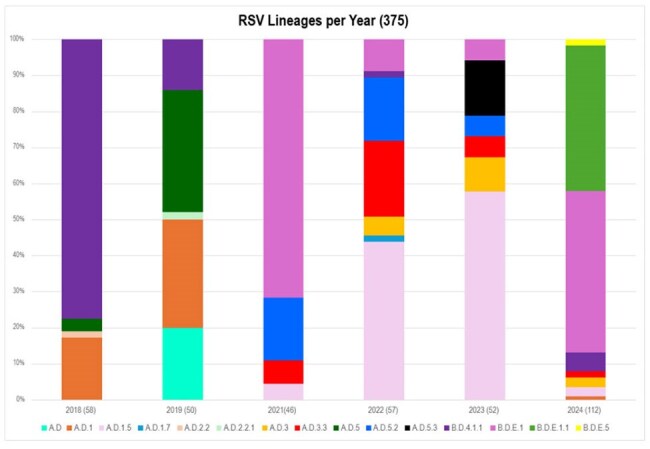 Figure 1
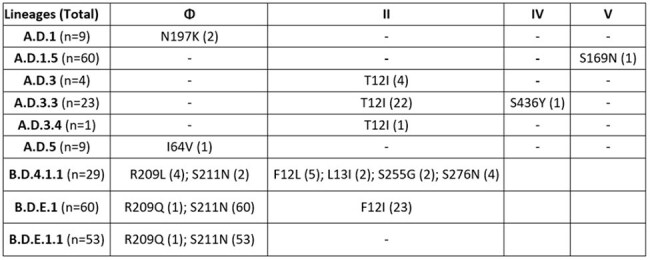 Figure 2
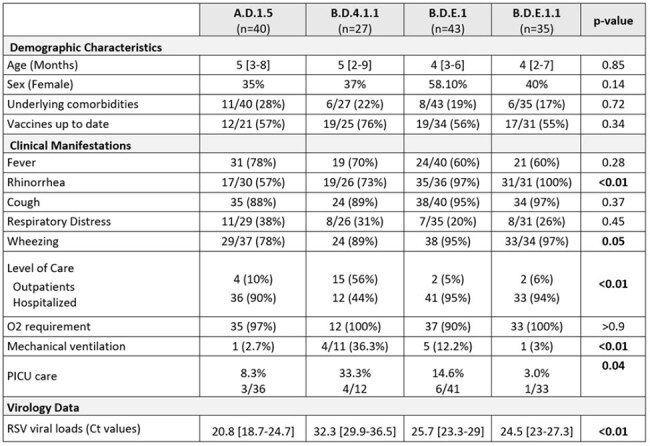 Figure 3
Peer Reviews
No public reviews on file for this paper yet. If you reviewed it on a platform where reviews are public (OpenReview, ICLR, NeurIPS, ICML), you can paste yours below so the community can read it here.
Videos
No videos yet. Explain this paper in a talk, walkthrough, or lecture? Add one.
Taxonomy
TopicsRespiratory viral infections research · Delphi Technique in Research · Pneumonia and Respiratory Infections