P-471. Approaches to Invasive Fungal Diseases in Pediatric Cancer Centers: An Analysis of Current Practices and Challenges in Germany, Austria, and Switzerland
Danila Seidel, Zoi-Dorothea Pana, Daniel Ebrahimi-Fakhari, Sarina K Butzer, Katrin Mehler, Ilana Reinhold, Arne Simon, Christian Dohna-Schwake, Ines Mack, Nicole Bodmer, Tim Niehues, Oliver A Cornely, Andreas H Groll, Thomas Lehrnbecher

TL;DR
This study examines how pediatric cancer centers in Germany, Austria, and Switzerland manage invasive fungal diseases, revealing varied practices and challenges in diagnosis and treatment.
Contribution
The study provides insights into current practices and disparities in managing invasive fungal diseases in pediatric oncology centers across the DACH region.
Findings
There is significant variation in diagnostic tools and treatment protocols for invasive fungal diseases among centers.
Larger centers are more likely to have infectious disease specialists and standardized antifungal protocols.
Prophylaxis strategies and access to therapeutic drug monitoring are inconsistent across centers.
Abstract
Invasive fungal diseases (IFDs) cause high morbidity and mortality in children with cancer and hematopoietic cell transplantation (HCT). While international guidelines exist for prevention, diagnosis, and treatment, pediatric-specific evidence remains limited and practices vary. Geographic distribution of the 62 participating pediatric oncology centers First-line and first-line alternative antifungal treatment for candidemia and invasive pulmonary aspergillosis in 62 pediatric oncology centers In Jun-Sep 2024, we surveyed 72 pediatric oncology centers in Germany, Austria, and Switzerland (German Society for Paediatric Oncology and Haematology) using a questionnaire covering center volume, ID expertise, diagnostic tools, prophylaxis protocols, therapeutic drug monitoring (TDM), and treatment pathways for aspergillosis and candidemia. Data were analyzed descriptively; associations…
Genes, proteins, chemicals, diseases, species, mutations and cell lines named across the full text — each resolved to its canonical identifier and authoritative record.
Click any figure to enlarge with its caption.
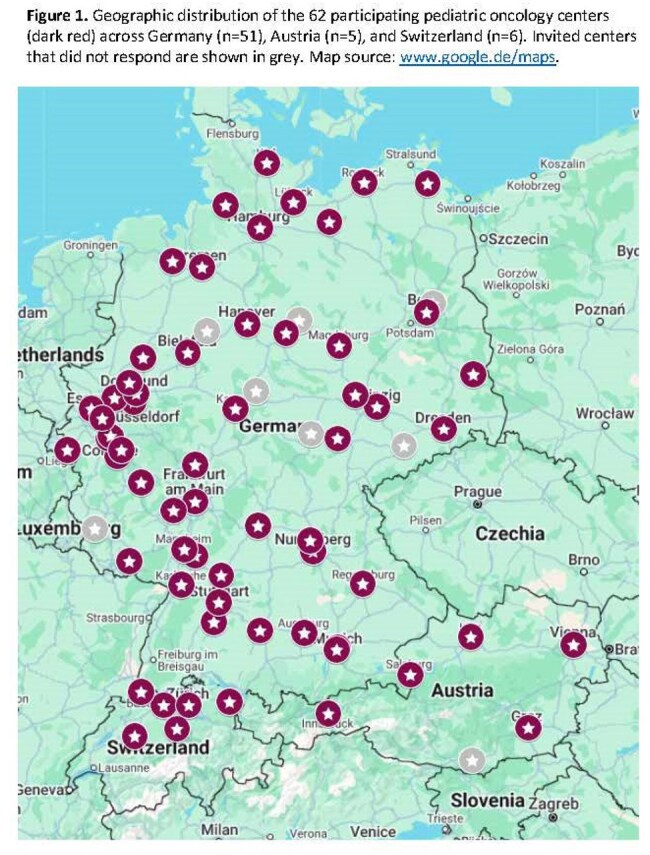 Figure 1
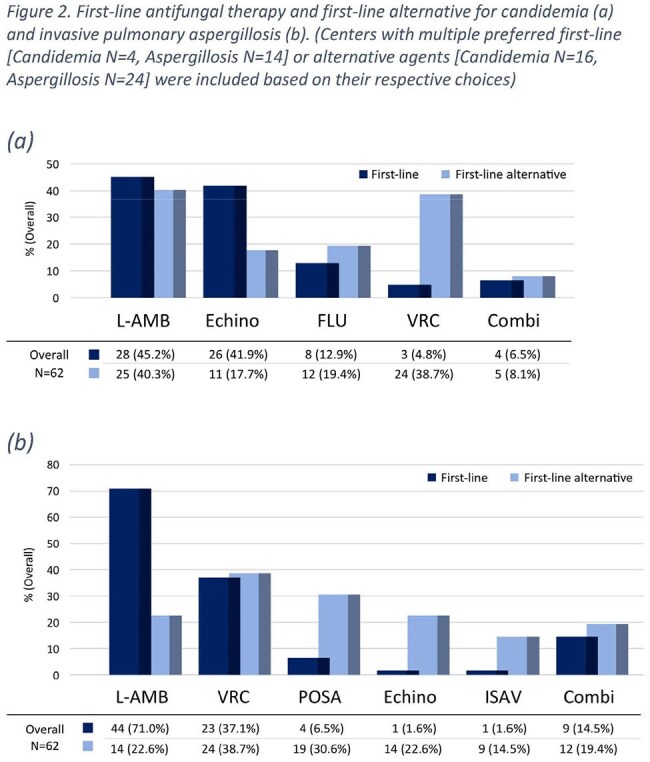 Figure 2
Peer Reviews
No public reviews on file for this paper yet. If you reviewed it on a platform where reviews are public (OpenReview, ICLR, NeurIPS, ICML), you can paste yours below so the community can read it here.
Videos
No videos yet. Explain this paper in a talk, walkthrough, or lecture? Add one.
Taxonomy
TopicsAntifungal resistance and susceptibility · Fungal Infections and Studies · Neutropenia and Cancer Infections