P-1550. Early Infant Gut Dysbiosis Associated with Extended-Spectrum Beta-Lactamase Producing Escherichia coli (ESBL-EC) Colonization in a Low-Resource Setting
Mehreen Arshad, Noelle Samia, Naveed Iqbal, Aneela Pasha, Umar Amjid, Romesa Ibrahim, Waqasuddin Khan, Imran Nisar, Fyezah Jehan

TL;DR
This study finds that infants colonized with antibiotic-resistant Escherichia coli have gut imbalances and are more likely to be underweight in a low-resource setting.
Contribution
The study reveals a link between ESBL-producing E. coli colonization in infants and gut dysbiosis, reduced microbial diversity, and increased risk of underweight status.
Findings
Infants colonized with ESBL-EC had higher E. coli abundance and lower commensal bacteria like Prevotella copri and Bifidobacterium longum.
ESBL-positive infants at 3 months were 3.47 times more likely to be underweight compared to infants of ESBL-negative mothers.
Gut microbial diversity was significantly lower in ESBL-positive maternal and 3-month infant samples compared to non-ESBL samples.
Abstract
In vitro and in vivo studies have shown that Extended-Spectrum Beta-Lactamase-producing Escherichia coli (ESBL-EC) can out-compete non-resistant commensals. The rapidly developing infant gut microbiome is susceptible to colonization with ESBL-EC, which may displace commensals leading to dysbiosis. Gut dysbiosis is linked to growth impairment in infancy, especially in low-resource settings. We aimed to investigate the interplay of ESBL-EC colonization, gut microbiome and infant growth among Pakistani mother-infant dyads.Figure 1:Percentage distribution of samples according to ESBL positivityThe majority of infant samples were positive for ESBL genes (ESBL positive). Whereas most maternal samples either carried non-ESBL beta-lactamases (Non-ESBL positive) or carried no beta-lactamases (BL negative).Figure 2:Shannon Diversity IndexShannon diversity index of microbial communities in…
Genes, proteins, chemicals, diseases, species, mutations and cell lines named across the full text — each resolved to its canonical identifier and authoritative record.
Click any figure to enlarge with its caption.
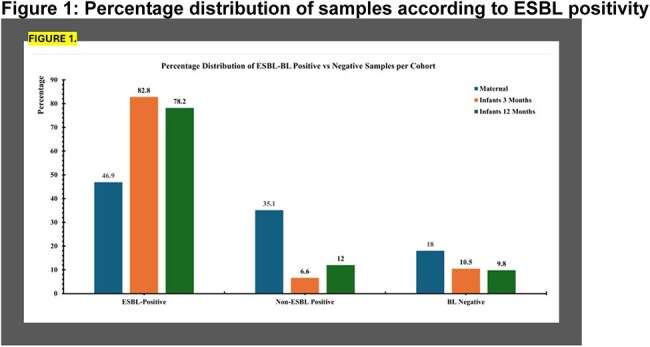 Figure 1
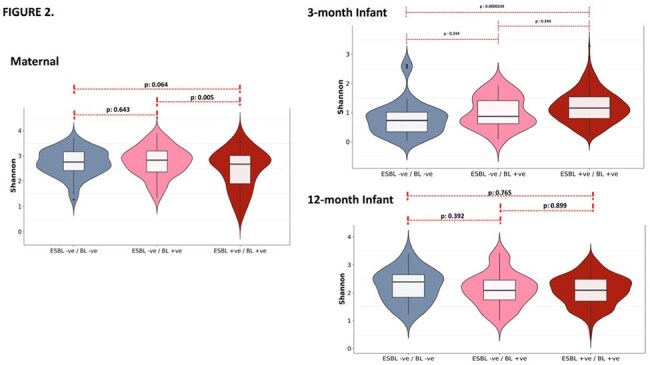 Figure 2
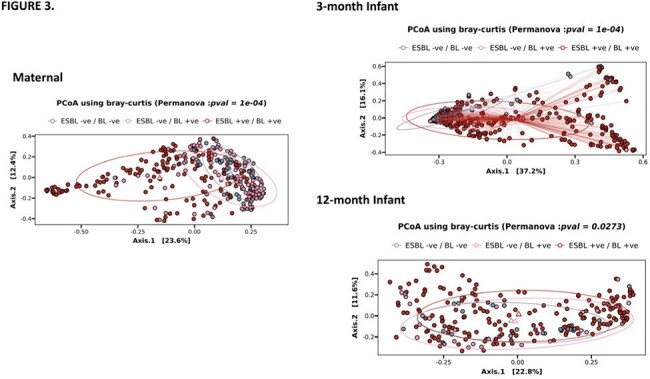 Figure 3
Peer Reviews
No public reviews on file for this paper yet. If you reviewed it on a platform where reviews are public (OpenReview, ICLR, NeurIPS, ICML), you can paste yours below so the community can read it here.
Videos
No videos yet. Explain this paper in a talk, walkthrough, or lecture? Add one.
Taxonomy
TopicsAntibiotic Resistance in Bacteria · Gut microbiota and health · Child Nutrition and Water Access