P-1417. Correlation Between Imipenem Susceptibility and Clinical Response in Patients with Extra-Pulmonary Rapidly Growing Non-Tuberculous Mycobacterium Infections
Wantin Sribenjalux, Waewta Kuwatjanakul, Atibordee Meesing, Natapong Manomaiwong, Chanikarn Sinkijcharoenchai, Yotsakorn Leelapaiboon, Passapong Susangrat, Rujipas Chuenchomkit, Kornkamon Thamwiwat, Aunshistha Suebwattanapongkul

TL;DR
The study found that imipenem susceptibility in rapidly growing non-tuberculous mycobacteria does not predict treatment outcomes, but high initial CRP levels are linked to worse results.
Contribution
This is the first study to investigate the relationship between imipenem susceptibility and clinical outcomes in extrapulmonary rapidly growing non-tuberculous mycobacterium infections.
Findings
Imipenem susceptibility was not significantly associated with short-term clinical outcomes or recurrence rates in patients with extrapulmonary RGM infections.
An initial C-reactive protein (CRP) level ≥50 mg/L was significantly associated with unfavorable clinical outcomes following treatment.
Abstract
Extrapulmonary Nontuberculous Mycobacterium (NTM) infections are an understudied condition with limited comprehensive data. Rapidly growing NTM (RGM) species account for a significant proportion of cases, and imipenem plays a crucial role in the induction phase of treatment. However, no studies have examined the relationship between imipenem susceptibility and clinical outcomes, nor the factors influencing prognosis after imipenem treatment. This retrospective descriptive study analyzed secondary data from medical records at Srinagarind Hospital (Khon Kaen University, Thailand) between February 27, 2015, and December 15, 2022. We included patients who were diagnosed with extrapulmonary NTM infection based on ICD-10 codes and confirmed by culture for RGM. A total of 56 patients were included, with a majority being female (57.1%) and a mean age of 53.6 years. The most common clinical…
Genes, proteins, chemicals, diseases, species, mutations and cell lines named across the full text — each resolved to its canonical identifier and authoritative record.
Click any figure to enlarge with its caption.
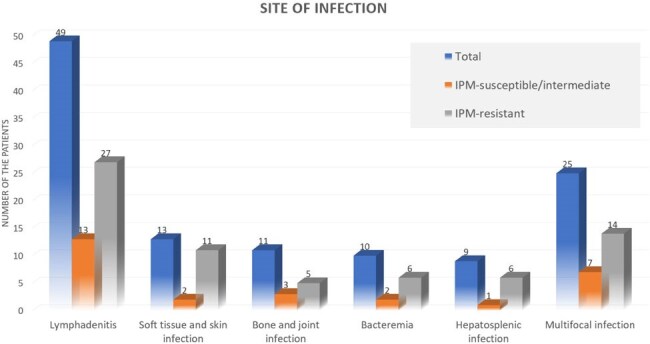 Figure 1
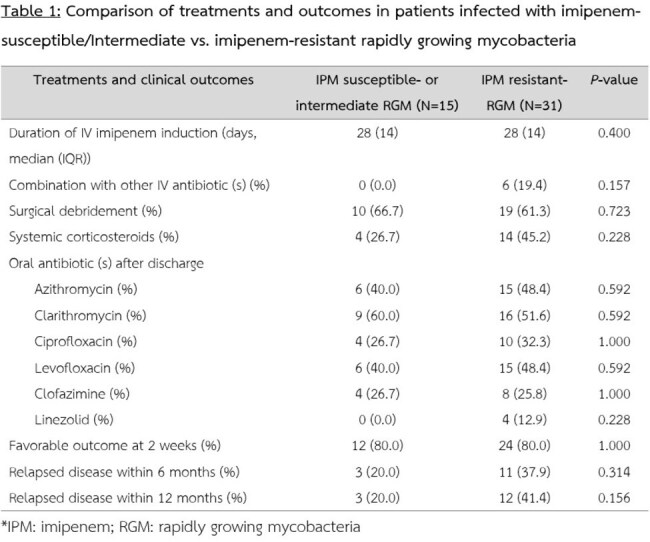 Figure 2
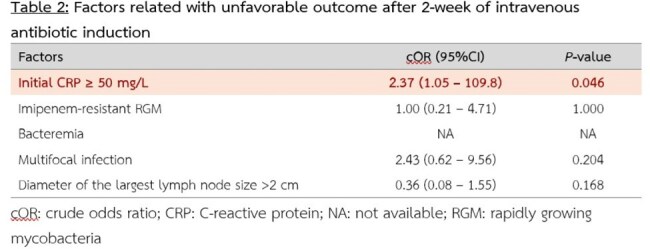 Figure 3
Peer Reviews
No public reviews on file for this paper yet. If you reviewed it on a platform where reviews are public (OpenReview, ICLR, NeurIPS, ICML), you can paste yours below so the community can read it here.
Videos
No videos yet. Explain this paper in a talk, walkthrough, or lecture? Add one.
Taxonomy
TopicsMycobacterium research and diagnosis · Medical Research and Treatments · Tuberculosis Research and Epidemiology