P-1311. Community-associated carbapenem-resistant gram-negative bacilli infection in Japan
Yuya Kawamoto, Kohei Uemura, Yasufumi Matsumara, Ryota Hase, Hideaki Kato, Takashi Matono, Naoya Itoh, Takehiro Hashimoto, Go Yamamoto, Momoko Mawatari, Takeya Tsutsumi, Tetsuya Suzuki, Koji Ohyama, Masahiro Suzuki, Aki Sakurai, Kayoko Hayakawa, David van Duin, Norio Ohmagari

TL;DR
This study examines the characteristics and outcomes of carbapenem-resistant Gram-negative bacilli infections in Japan, finding that hospital-onset cases have worse outcomes than community-associated cases.
Contribution
The study provides new insights into the clinical differences and outcomes of community-associated CR-GNB infections in Japan, a high-income country.
Findings
Hospital-onset CR-GNB infections are associated with higher in-hospital mortality and longer hospital stays compared to community-associated infections.
Aeromonas species are more prevalent in community- and healthcare-associated infections, while Stenotrophomonas maltophilia is more common in hospital-onset cases.
Thirty-day mortality is lowest in community-associated cases and highest in hospital-onset cases.
Abstract
Carbapenem-resistant Gram-negative bacilli (CR-GNB) infections are associated with high mortality and increased healthcare costs. While certain resistant pathogens, such as extended-spectrum β-lactamase-producing organisms, are increasingly identified in the community, reports of community-associated CR-GNB infections remain limited, particularly in high-income countries like Japan.Table 1.Demographic characteristics of patients with community-associated, healthcare-associated, and hospital-onset CR-GNB infections.CR-GNB, carbapenem-resistant Gram-negative bacilli; CA, community-associated; HA, healthcare-associated; HO, hospital-onset; IQR, interquartile range; IV, intravenous. a P values for comparisons among the three groups (CA, HA, HO) were calculated using the Kruskal–Wallis test for continuous variables and the chi-squared test for categorical variables. b Pairwise comparisons…
Genes, proteins, chemicals, diseases, species, mutations and cell lines named across the full text — each resolved to its canonical identifier and authoritative record.
Click any figure to enlarge with its caption.
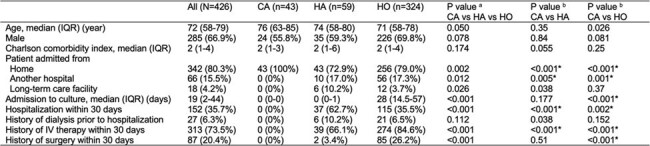 Figure 1
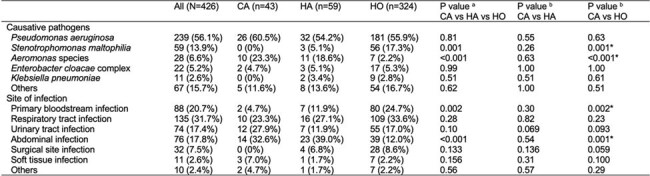 Figure 2
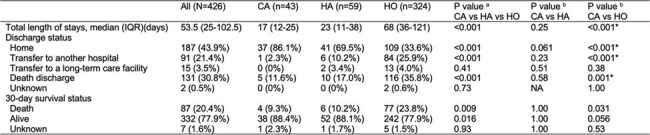 Figure 3
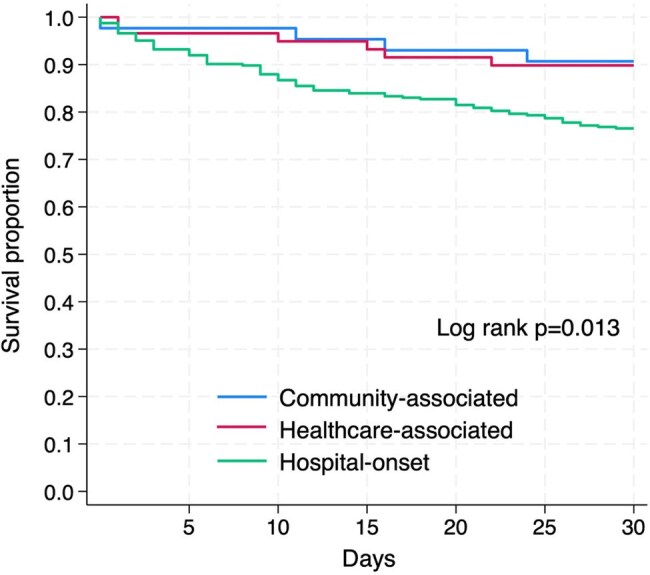 Figure 4
Peer Reviews
No public reviews on file for this paper yet. If you reviewed it on a platform where reviews are public (OpenReview, ICLR, NeurIPS, ICML), you can paste yours below so the community can read it here.
Videos
No videos yet. Explain this paper in a talk, walkthrough, or lecture? Add one.
Taxonomy
TopicsAntibiotic Resistance in Bacteria · Antibiotics Pharmacokinetics and Efficacy · Antibiotic Use and Resistance