461. The Trifecta of Threat: National Burden of Infectious Disease Syndromes, Attributable Pathogens, and Antimicrobial Resistance Trends in India from 1990–2021
Dhwani Vaghani, Sandeep Sekar Lakshmisai, Drumadala Gajbhiye, Chandana Tummala, Neelima Sinha, Thanmayee Tummala, Twisha Parikh, Sagar Patel, Chethan Raj Gundoji, Nikhil Rayarakula, Hardik Dineshbhai Desai

TL;DR
This study examines the growing threat of infectious diseases and antimicrobial resistance in India from 1990 to 2021, identifying key pathogens and syndromes contributing to the burden.
Contribution
The study provides a comprehensive analysis of infectious disease trends, pathogen attribution, and antimicrobial resistance in India over three decades.
Findings
Total deaths from infectious diseases in India increased from 4.0 million in 1990 to 4.3 million in 2021.
Streptococcus pneumoniae, Escherichia coli, and Klebsiella pneumoniae were the top pathogens linked to AMR-related deaths in 2021.
Bloodstream and respiratory infections, along with gram-negative bacteria, were identified as major contributors to the AMR burden.
Abstract
Infectious diseases (ID) continue to pose a major public health challenge, with evolving pathogen profiles and growing antimicrobial resistance (AMR) in India. A syndrome-based approach integrating pathogen attribution and resistance trends offers vital insight into India's evolving infectious disease (ID) burden—yet long-term national data capturing these combined dynamics remains scarce.Burden by Infectious Syndrome in India, Both Sexes, Age-Standardized Rate (per 100,000), 2021Burden by Pathogens in India, All Syndromes, Both Sexes, Age-Standardized Rate (per 100,000), 2021 Burden by Infectious Syndrome in India, Both Sexes, Age-Standardized Rate (per 100,000), 2021 Burden by Pathogens in India, All Syndromes, Both Sexes, Age-Standardized Rate (per 100,000), 2021 We performed a retrospective, population-based analysis covering the period 1990–2021 to estimate mortality and…
Genes, proteins, chemicals, diseases, species, mutations and cell lines named across the full text — each resolved to its canonical identifier and authoritative record.
Click any figure to enlarge with its caption.
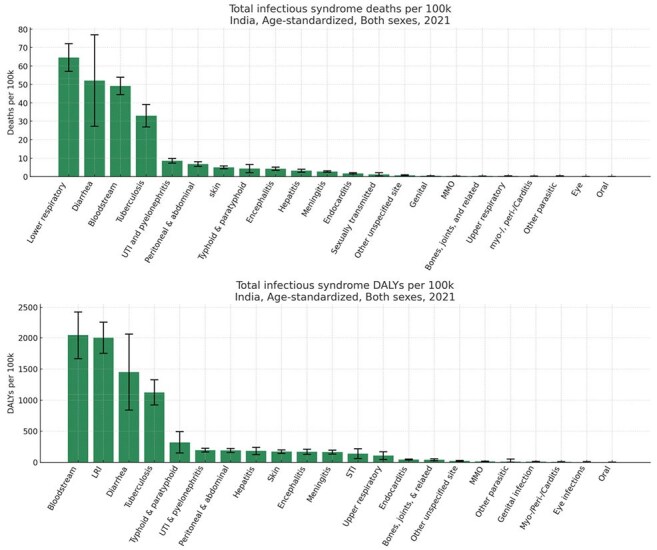 Figure 1
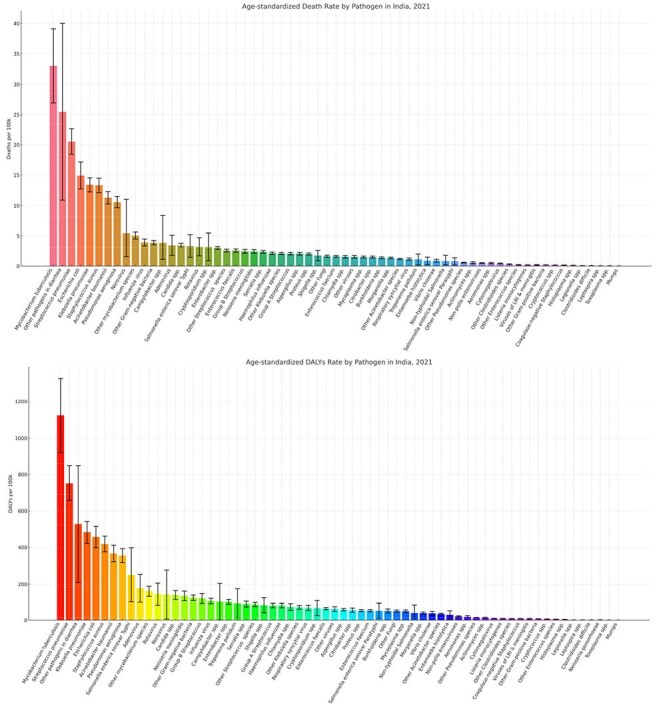 Figure 2
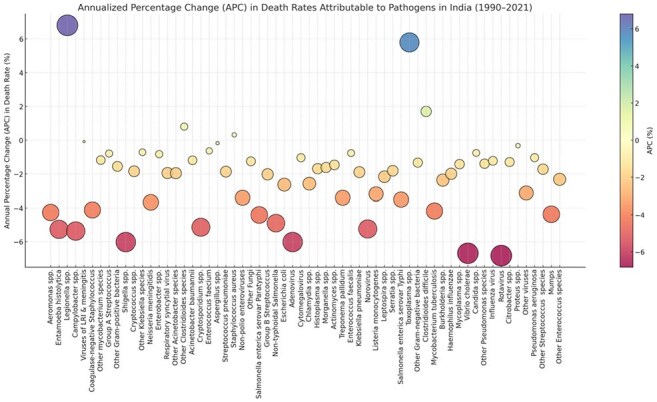 Figure 3
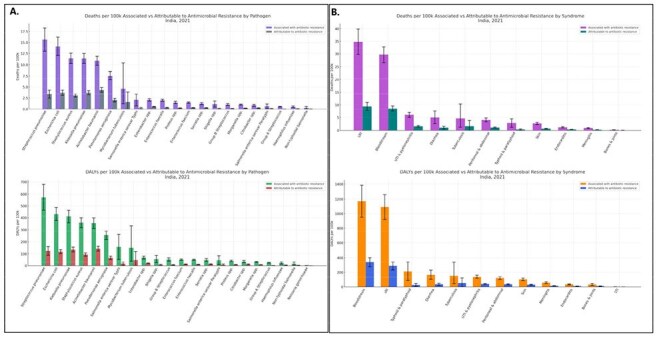 Figure 4
Peer Reviews
No public reviews on file for this paper yet. If you reviewed it on a platform where reviews are public (OpenReview, ICLR, NeurIPS, ICML), you can paste yours below so the community can read it here.
Videos
No videos yet. Explain this paper in a talk, walkthrough, or lecture? Add one.
Taxonomy
TopicsZoonotic diseases and public health · Yersinia bacterium, plague, ectoparasites research · Antibiotic Use and Resistance