P-273. User and Community Reflections and Recommendations on the Promise of HIV Molecular Epidemiology
Juan D Patino-Mateus, Olakunle Ogunbayo, Aimee Graciela Rivera-Solis, Adaiah Soibi-Harry, Claudia E Ordóñez, Julian S Ramon, Masonia Traylor, Amalia Aldredge, David Folkes, Jenna Gettings, Daniel Mauck, Latasha Terry, Eric Rangel, Anandi N Sheth, Jessica Sales, Jane Y Scott

TL;DR
This study explores how public health officials and at-risk communities view HIV Molecular Epidemiology, highlighting the need for trust, privacy, and ethical practices to support its use in public health.
Contribution
The study provides community-centered insights and recommendations for improving the ethical and effective implementation of HIV Molecular Epidemiology.
Findings
HME can aid in outreach and linkage but faces challenges due to community mistrust around privacy and criminalization.
Training for public health officials must include trauma-informed care, privacy protections, and cultural understanding.
Clear communication and relationship-building are essential for engaging communities in HME efforts.
Abstract
HIV Molecular Epidemiology (HME) uses viral genetic pol sequences to identify transmission networks and guide public health responses. While HME offers promises for addressing rapid or ongoing HIV transmission, concerns about privacy, informed consent, and potential criminalization have limited community trust and hindered widespread implementation. This study aims to explore the perceptions of public health officials (PHOs) and priority populations to inform community-centered HME practices.Characteristics of public health officials (PHOs)HME = HIV molecular epidemiologyDemographics of priority populationsMSM = men who have sex with men, TGW = transgender women, PrEP = pre-exposure prophylaxis, HME = HIV molecular epidemiology Characteristics of public health officials (PHOs) HME = HIV molecular epidemiology Demographics of priority populations MSM = men who have sex with men, TGW…
Click any figure to enlarge with its caption.
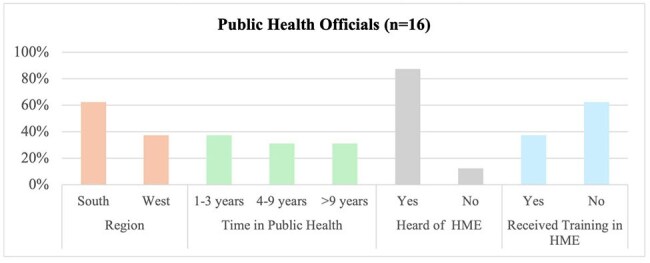 Figure 1
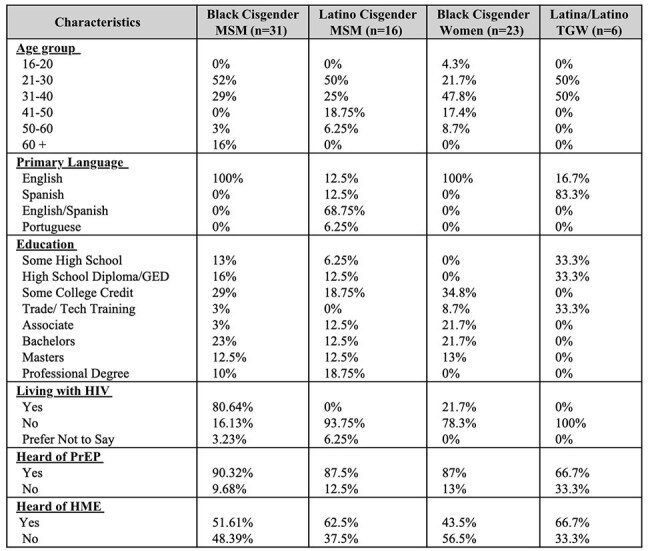 Figure 2
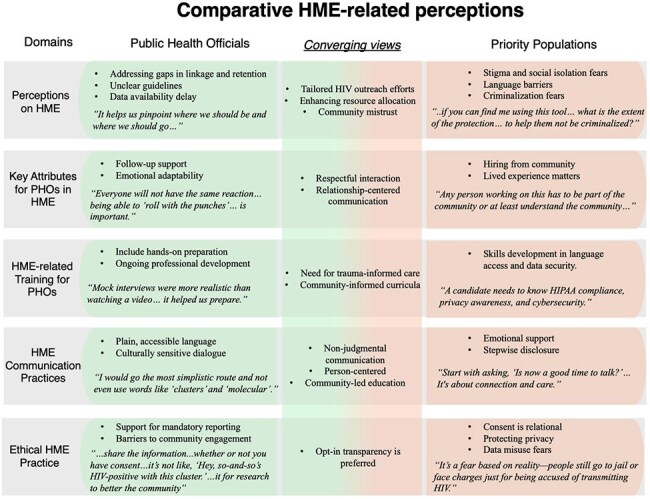 Figure 3
Peer Reviews
No public reviews on file for this paper yet. If you reviewed it on a platform where reviews are public (OpenReview, ICLR, NeurIPS, ICML), you can paste yours below so the community can read it here.
Videos
No videos yet. Explain this paper in a talk, walkthrough, or lecture? Add one.
Taxonomy
TopicsPublic Health Policies and Education · Data-Driven Disease Surveillance · HIV/AIDS Research and Interventions