550. Increase in acute rheumatic fever and rheumatic heart disease in Alaska, 2022–2025
Joe B B Silva, Victoria Balta, Minal Ahson, Veena Ramachandran, Sara Bressler, Andra Rasmussen, Heather Wheelock, Rosalyn Singleton, Kristina Morris, Adrienne Kishi, David Bridgman-Packer, James Keck, Christopher Gregory, Louisa Castrodale, Joe McLaughlin, Heather Scobie

TL;DR
Alaska has seen a recent rise in acute rheumatic fever and rheumatic heart disease, especially among Alaska Native and Native Hawaiian/Pacific Islander children.
Contribution
The study reports a significant increase in ARF/RHD incidence in Alaska and highlights disparities among Indigenous populations.
Findings
ARF and RHD incidence among children aged 3–17 increased from 3.8 and 1.9 to 5.3 and 5.3 per 100,000 persons per year between 2022 and 2024.
Incidence was highest in northern and southwestern Alaska and among Alaska Native and Native Hawaiian/Pacific Islander children.
Average annual ARF and RHD incidence among Alaska Native children from 2014–2023 was 6.2 and 8.5 per 100,000 persons, respectively.
Abstract
In February 2025, pediatricians alerted the Alaska Department of Health to a possible increase in cases of acute rheumatic fever (ARF) and rheumatic heart disease (RHD). ARF/RHD are immune-mediated sequelae of group A Streptococcus (GAS) infections. ARF primarily affects school-aged children and can progress to RHD without appropriate antibiotic treatment and prophylaxis. RHD is characterized by damage to heart valves and can result in death. Early diagnosis, appropriate antibiotic treatment, and prophylaxis for people with ARF/RHD reduce the risk of ARF recurrence and RHD progression.Table 1:Demographic characteristics of patients with ARF and RHD included in medical records review, Alaska, Jan 2022–Feb 2025. (N=52)Table 2.Incidence of ARF/RHD among ages 3-17 years from medical records review, Alaska, Jan 2022–Feb 2025. Demographic characteristics of patients with ARF and RHD included…
Genes, proteins, chemicals, diseases, species, mutations and cell lines named across the full text — each resolved to its canonical identifier and authoritative record.
Click any figure to enlarge with its caption.
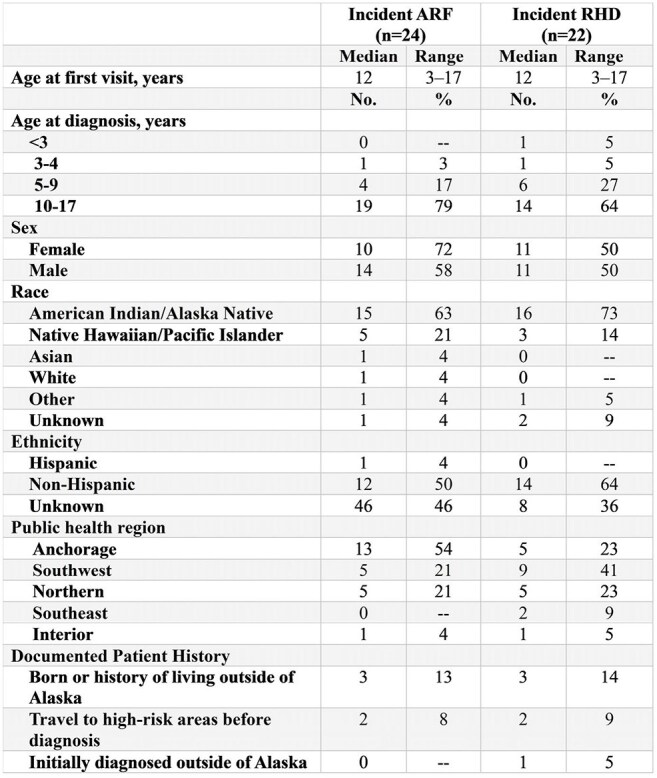 Figure 1
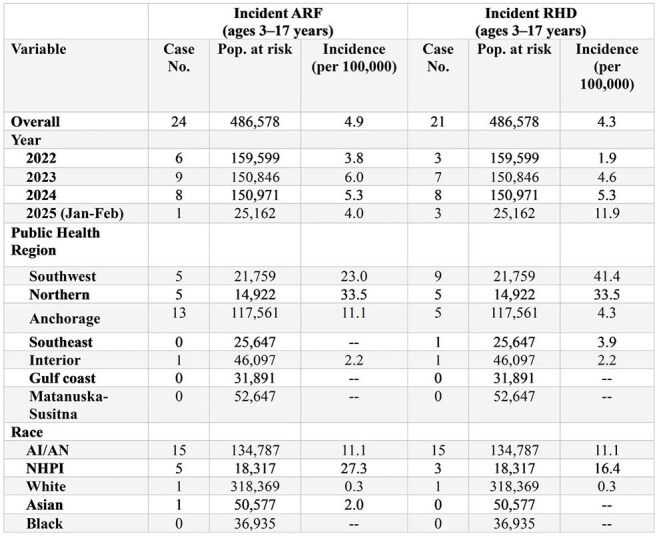 Figure 2
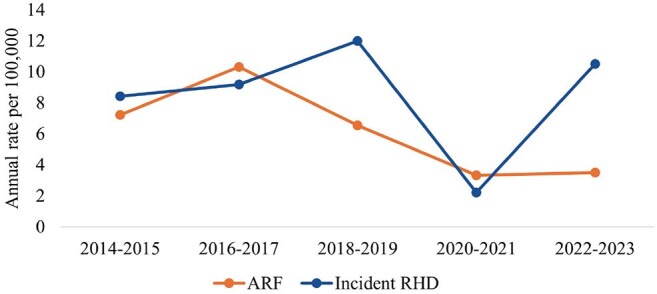 Figure 3
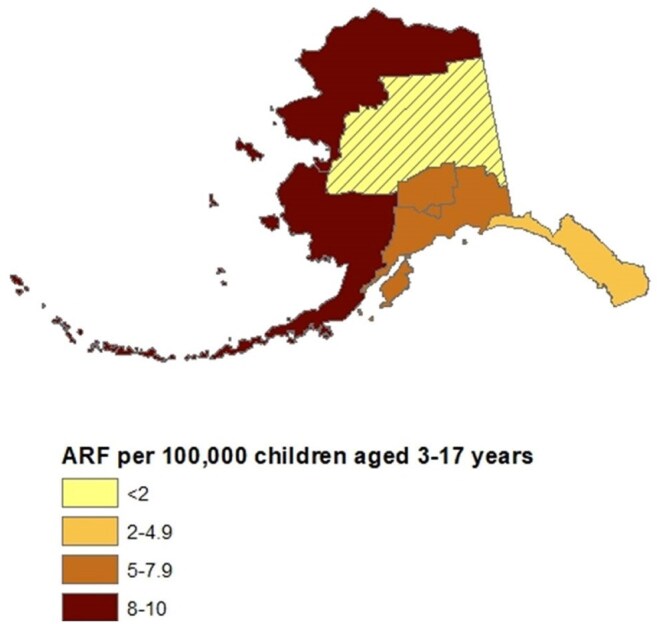 Figure 4
Peer Reviews
No public reviews on file for this paper yet. If you reviewed it on a platform where reviews are public (OpenReview, ICLR, NeurIPS, ICML), you can paste yours below so the community can read it here.
Videos
No videos yet. Explain this paper in a talk, walkthrough, or lecture? Add one.
Taxonomy
TopicsStreptococcal Infections and Treatments · Infective Endocarditis Diagnosis and Management · Neonatal and Maternal Infections